SMT Solder Paste Manufacturers.

Focused on SMT soldering processes, a one-stop electronic soldering solutions provider.

Here you can find knowledge about Soldering Material, including but not limited to usage methods, installation techniques, troubleshooting and more. Focused on SMT soldering processes. If you can't find what you need, please contact us anytime.
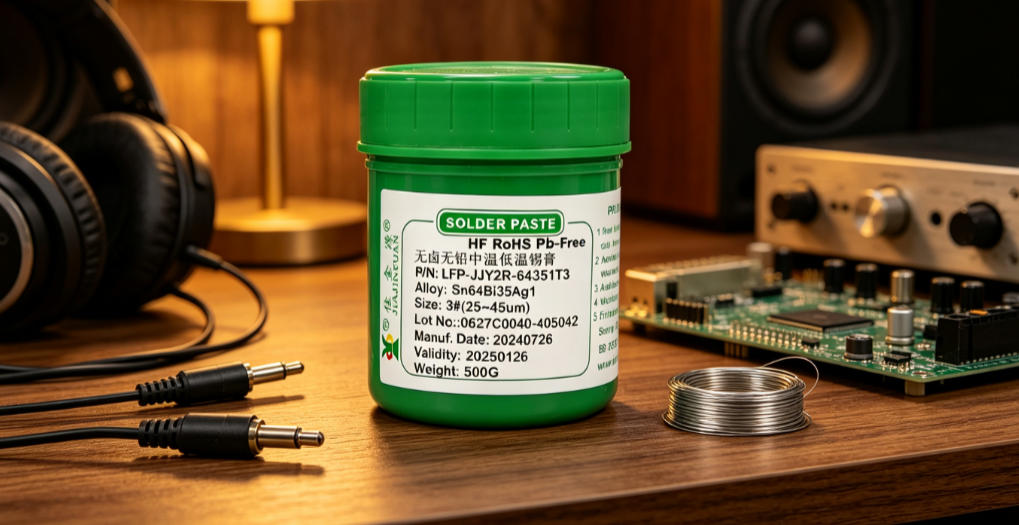
Solder paste can significantly reduce oxidation, improve wettability, and lower void rate in a nitrogen reflow soldering environment, with particularly notable improvements in soldering yield for OSP copper pads, fine-pitch QFNs, and 0201 components. Nitrogen purity must be stably controlled above 99.99% to deliver practical benefits.
Published: 2014-07-14During the FPC soldering process, the flexible board is prone to deformation when heated, which is a high-frequency failure point on the production line. Engineers from Jia Jinyuan adopted a combination of measures, including optimizing stencil aperture design, adjusting reflow soldering conveyor speed and temperature gradient, and using dedicated fixtures for pressing, to increase the first-pass yield of FPC soldering from 72% to 96.5%, focusing on solving three major pain points: solder paste misalignment, insufficient solder wetting on pads, and substrate wrinkling.
Published: 2014-06-09In circuit board soldering, cold solder joints, solder beads, and voids are high-frequency defects on production lines, directly affecting first-pass yield and long-term reliability. Based on 20 years of practical data from the Jiajinyuan SMT production line, this paper focuses on key intervention points such as solder paste printing accuracy, dynamic matching of reflow profiles, stencil aperture optimization, and nitrogen concentration gradient control, and provides immediately implementable parameter adjustment combinations and failure reproduction verification methods.
Published: 2014-05-14Reflow ovens are core equipment in SMT production lines that enable precise solder melting and reliable connections. By precisely controlling the temperature ramp-up rate, soaking time, and peak temperature through segmented temperature control, they directly affect the occurrence rate of defects such as cold solder joints, tombstoning, and cold soldering. Jiajinyuan reflow ovens can stably support 0201 components and QFN5x5 double-sided mixed mounting processes in actual mass production.
Published: 2014-04-28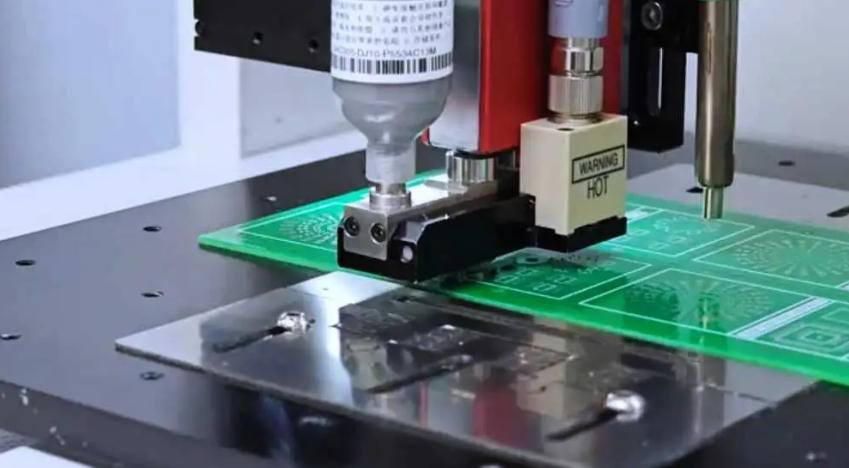
Severe spatter during solder wire welding is mostly caused by violent flux volatilization, excessively high soldering iron temperature, or moisture absorption of the solder wire. Combined with actual production line measurements, it was found that when the ambient humidity exceeds 65%RH and the solder wire is stored unsealed for more than 72 hours, the welding spatter probability increases by 3 times. Lowering the soldering iron temperature from 380℃ to 320℃ and using it in conjunction with a preheating plate can reduce solder wire welding spatter by nearly 80%.
Published: 2014-04-25When reworking and welding precision motherboards, precise temperature control must be applied to protect surrounding micro components. The Jiajinyuan JRY-850B hot air system, paired with an infrared temperature gun for real-time feedback, controls the peak temperature of BGA solder joints at 235±2℃ and limits the temperature rise of surrounding 0201 resistors to below 120℃, avoiding PCB delamination or MLCC hidden cracks caused by thermal stress.
Published: 2014-01-10Pin dip soldering uniformly covers the surface of component pins with a layer of tin-lead or lead-free solder, significantly improving pin solderability and wetting ability, and resolving cold solder joints and missed solder joints caused by plating oxidation and storage aging. It provides a stable and reliable soldering foundation for SMT placement, and is a key pre-treatment process for Jia Jinyuan's production line to handle high-density PCBs and fine-pitch QFP packages.
Published: 2013-10-14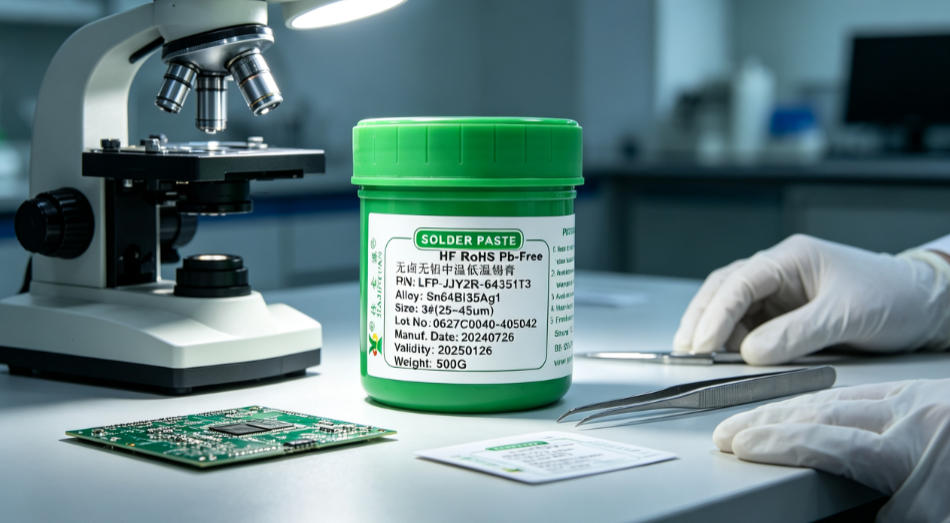
In BGA chip repair, the synergistic use of solder paste and flux paste directly affects ball mounting yield and soldering reliability. In actual production lines, the flux paste application amount and solder paste printing thickness must be dynamically adjusted based on chip size, solder ball diameter, and PCB pad oxidation level, to avoid pad corrosion caused by excessive activity or increased voids caused by insufficient activity.
Published: 2013-10-12Soldering thick-copper PCBs places extremely high demands on solder paste rheology, wetting force, and anti-slump performance. During selection, practical production-line issues caused by thick copper—such as rapid heat dissipation, high pad thermal mass, and high tendency of printing misalignment—must be comprehensively considered. Priority should be given to thick-copper solder pastes with high metal content, low thixotropic index, and specially formulated active flux, to ensure sufficient wetting and reliable solder joint formation under conventional reflow profile conditions.
Published: 2013-09-16Excessive voiding in the bottom thermal pad during QFN soldering is a high-frequency failure point in production lines, rooted in improper solder paste volume control. Jia Jinyuan SG-880 series solder paste, used with a 0.15mm stencil aperture and 25℃ environmental temperature control, can reduce the void rate to below 8%. This solution has been continuously verified on the mass production line of automotive MCU modules for 6 months.
Published: 2013-07-18Our technical team is always ready to provide professional solder material selection advice and SMT process solutions.