Share industry information, process knowledge, release enterprise updates and detailed content on soldering techniques
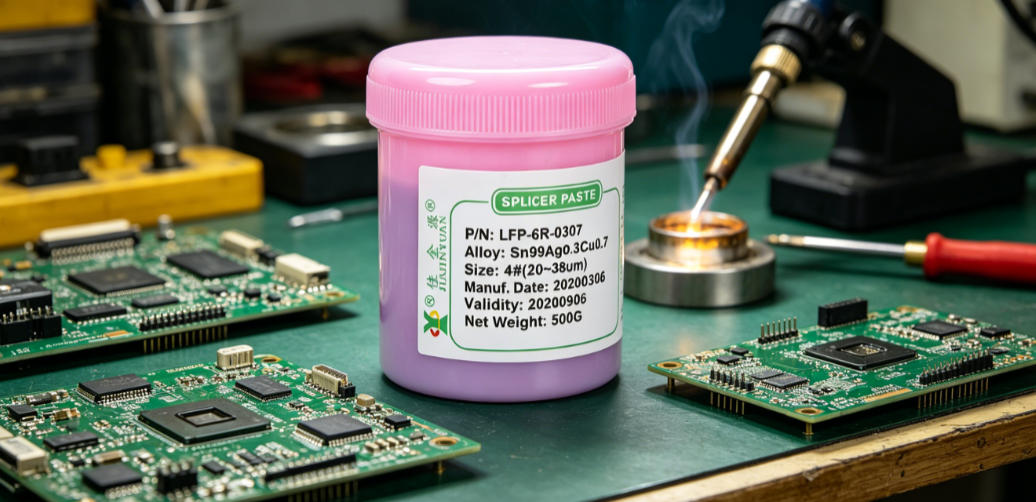
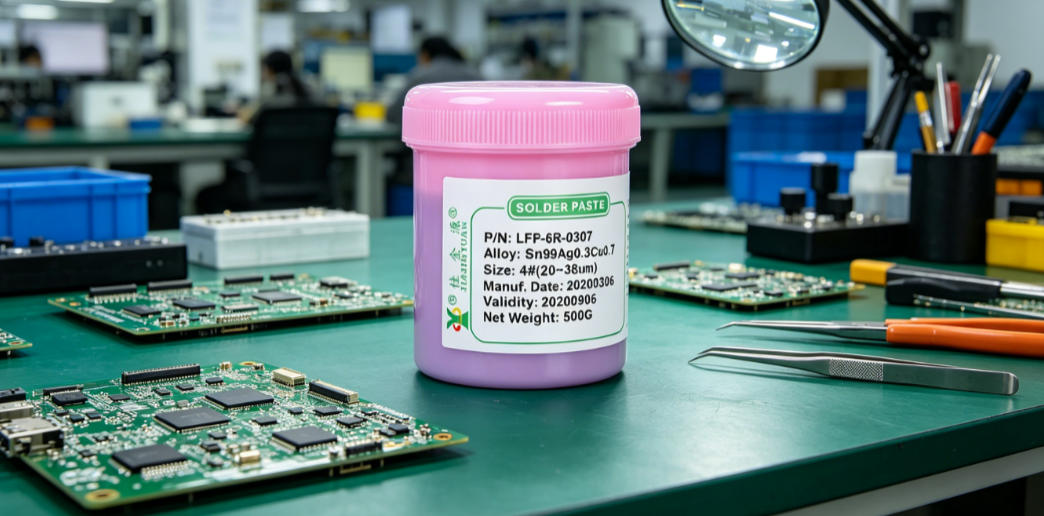
This article details the formulation and optimization of non-corrosive flux for solder paste, emphasizing compatibility with sensitive electronics, residue safety, and long-term reliability; it explains how modern flux chemistries eliminate halide-based activators while maintaining wetting performance, addresses storage stability and print fidelity under varying humidity conditions, and highlights real-world validation through IPC-J-STD-004B classification testing, surface insulation resistance measurement, and copper coupon corrosion trials, all critical for high-reliability SMT assembly in automotive and medical devices where solder paste, non-corrosive behavior, and flux purity are non-negotiable.
Solder wire undergoes measurable physical and chemical aging over time, with oxidation, flux degradation, and intermetallic compound formation driving performance decline; long-term storage under ambient conditions accelerates solder joint brittleness, wettability loss, and inconsistent melting behavior, making aging a critical factor in reliability planning for high-integrity SMT assemblies where solder wire change must be tracked via lot-specific shelf-life protocols, environmental exposure logs, and periodic functional verification.
Understanding the oxide slag generation rule of solder bar is essential for minimizing material waste, maintaining consistent solder joint quality, and optimizing wave soldering efficiency; this article explains how temperature, dwell time, surface agitation, alloy composition, and environmental humidity collectively govern oxide layer formation and slag separation during solder bar melting and reuse.
Repeated melting of Solder Bar degrades microstructural homogeneity, accelerates intermetallic compound growth at grain boundaries, and increases oxide inclusion density, all of which directly impair wetting performance, tensile strength, and long-term joint reliability in SMT assembly; Multi Times Melting introduces cumulative thermal stress that cannot be reversed by standard re-casting protocols, making traceability and controlled reuse essential for high-reliability electronics manufacturing.
Solder paste performance hinges critically on alloy compatibility verification, which ensures stable rheology, consistent print transfer, and reliable intermetallic formation during reflow; mismatches between solder paste alloy composition and component termination metallization or PCB surface finish can trigger dewetting, poor wetting, or brittle joint failure, especially when mixing lead-free alloys like SAC305 with legacy SnPb terminations or OSP-coated copper pads without thorough validation.
Solder wire exposed to ambient moisture undergoes progressive degradation through oxidation, flux destabilization, and intermetallic compound disruption, leading to poor wetting, void formation, and brittle joints; understanding the moisture damage mechanism of solder wire is essential for storage protocol optimization, real-time humidity monitoring in SMT environments, and reliable joint formation during hand-soldering or wave soldering processes.
Sn90Sb10 Solder Bar delivers exceptional thermal stability and mechanical strength for high-reliability soldering applications, particularly where elevated service temperatures and resistance to creep deformation are critical; its eutectic-like behavior near 240°C, combined with low liquidus spread and minimal intermetallic growth, makes it a preferred choice for power electronics, automotive under-hood assemblies, and aerospace modules requiring long-term joint integrity without silver content.
Solder wire flux residue poses a serious long-term corrosion risk to printed circuit board assemblies, especially in humid or thermally cycled environments, where unremoved rosin or halide-based activators can form conductive electrolytes that attack copper traces, component leads, and solder joints, leading to dendritic growth, leakage current, and premature field failure; understanding flux chemistry, post-solder cleaning efficacy, and IPC-compliant inspection criteria is essential for mitigating corrosion across high-reliability electronics manufacturing.
Controlling Bi segregation in low temp solder paste is essential for maintaining consistent joint reliability, preventing brittle fracture at intermetallic interfaces, and ensuring stable printing and reflow behavior across diverse PCB assemblies; this requires precise alloy design, optimized flux chemistry, and strict thermal profile management during SMT processing.
This article examines how trace Fe impurities critically affect the microstructure, mechanical behavior, and intermetallic compound formation in Sn-based solder wire alloys, emphasizing that even Fe concentrations as low as 0.01 wt% can trigger coarse FeSn2 precipitation at grain boundaries, reduce ductility by up to 35%, accelerate flux decomposition during reflow, and compromise wetting performance on Cu substrates, all of which directly impact SMT line yield, joint reliability, and long-term thermal cycling endurance for high-density electronics assemblies.
Understanding the metal ratio adjustment principle of solder paste is essential for achieving consistent print definition, optimal slump resistance, and reliable reflow performance in SMT assembly; deviations from the target metal ratio—typically 88–92% by weight for lead-free solder paste—directly impact viscosity, transfer efficiency, and void formation, making real-time monitoring and controlled dilution with matching flux vehicles critical for process stability and yield assurance.
This analysis identifies the primary causes of blackening on solder wire, including oxidation due to prolonged exposure to air and elevated temperatures, contamination from sulfur-containing environments or improper storage conditions, flux residue decomposition during repeated heating cycles, and surface reactions with halogen-based activators in low-activity fluxes; understanding these interrelated mechanisms enables SMT engineers to implement targeted process controls, select appropriate storage protocols, verify supplier material certifications, and adjust rework temperature profiles to suppress discoloration without compromising joint reliability.
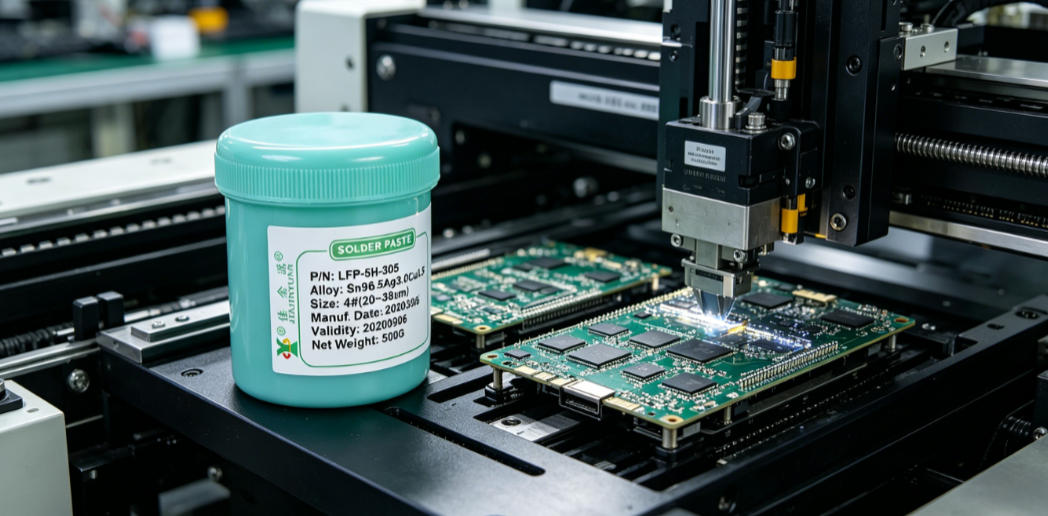
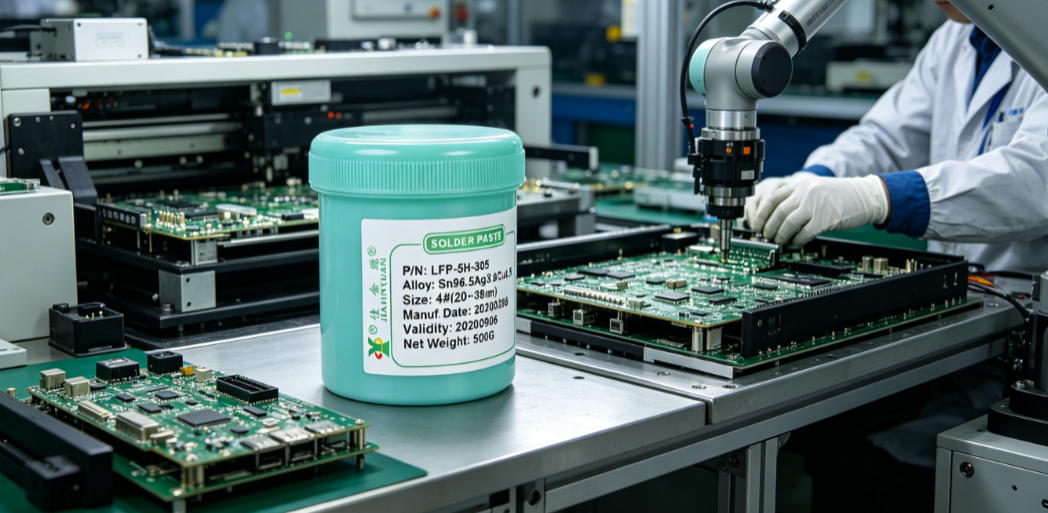
Solder paste performance hinges critically on alloy powder size distribution, where particle diameter directly governs printability, transfer efficiency, and post-reflow joint integrity; deviations outside the IPC-7527 specified ranges—such as Type 3 (25–45 µm), Type 4 (20–38 µm), or Type 5 (15–25 µm)—trigger defects like bridging, insufficient deposition, or head-in-pillow, especially in fine-pitch QFN and 01005 applications; tighter distribution curves reduce voiding and improve solder ball resistance, while bimodal blends balance stencil release with collapse control without sacrificing metallurgical homogeneity.
This article details the systematic development of a low odor formula for solder paste, emphasizing practical adjustments to flux chemistry, solvent selection, and activator balance without compromising printability or reflow performance; it outlines how replacing high-volatility terpenes with low-odor glycol ethers, reducing amine-based activators by 15%, and optimizing resin molecular weight distribution collectively cut perceived odor intensity by over 60% while maintaining tack force above 12.5 N and slump below 85 µm after 4 hours at 25°C.
This analysis details how trace impurities in solder bar—such as copper, iron, zinc, arsenic, and antimony—degrade solderability, increase dross formation, trigger cold solder joints, and accelerate oxidation during wave or reflow processes, with particular emphasis on threshold concentrations above which mechanical strength drops by more than 12% and intermetallic compound growth accelerates uncontrollably, all while referencing industry-standard IPC-J-STD-006B limits and real-world SMT line failure modes observed across 17 high-volume electronics manufacturing sites.
Sn63Pb37 solder wire remains a benchmark eutectic alloy in electronics assembly due to its precise 183°C melting point, excellent wetting behavior, and reliable mechanical joint strength, making it indispensable for hand-soldering, rework, and low-volume SMT applications where leaded alloys are still permitted, especially in aerospace, military, and legacy industrial systems where process repeatability and intermetallic stability outweigh RoHS-driven substitution pressures.
Achieving optimal flux activity balance in solder paste is essential for reliable SMT assembly, as excessive activity causes corrosion and residue-related reliability issues, while insufficient activity leads to poor wetting, solder balling, and weak intermetallic formation; this balance depends on the precise formulation of organic acids, halide-free activators, and thermal decomposition kinetics, all calibrated against specific alloy systems, reflow profiles, and pad metallization such as OSP, ENIG, or immersion silver.
This article details the systematic optimization of halogen-free solder wire formulae to meet RoHS and IEC 61249-2-21 compliance while maintaining mechanical reliability, wetting performance, and residue cleanliness; it covers flux core composition tuning, alloy selection trade-offs between SnAgCu variants, thermal stability testing under peak reflow conditions up to 250°C, and real-world validation across high-density PCB assemblies with 0201 passives and fine-pitch QFNs.