แบ่งปันข้อมูลอุตสาหกรรม ความรู้ด้านกระบวนการ เผยแพร่ข้อมูลอัปเดตระดับองค์กร และเนื้อหาโดยละเอียดเกี่ยวกับเทคนิคการบัดกรี
In 2025, the solder paste industry has entered a stage of refined development, with customers significantly raising their requirements for product consistency, stability, and traceability. As electronic manufacturing processes continue to upgrade and industry competition intensifies, enterprises need to strengthen technological R&D and quality management to meet market demand for high precision and high reliability.
Domestic halogen-free solder paste LFP?5RQ?0307 achieves nearly 100% solder wetting in QFN packages, with its high activity and alloy powder characteristics being the key factors. Optimizing printing parameters and reflow profile can further improve soldering quality.
To address the challenge of void rate control in automotive lamp welding, the LFP?5RR?305 halogen-free REACH solder paste is an ideal choice thanks to its extremely low void rate and high reliability. It is suitable for precision welding in high-heat scenarios, effectively improving product yield and stability.
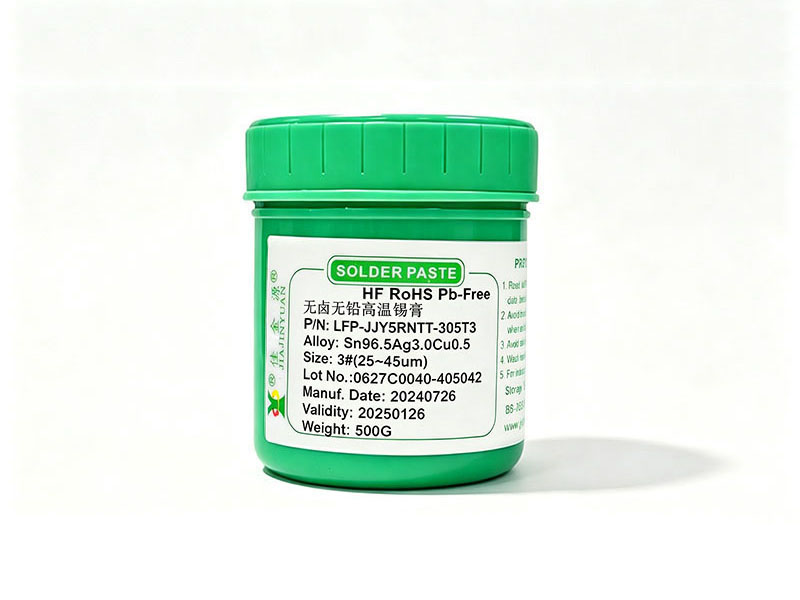
LFP?5RNTT?305 solder paste is specially designed for high-precision electronic devices such as mobile phones, Bluetooth, and fingerprint locks. Its halogen-free and lead-free properties and excellent solder climbing performance stand out in SMT processes, making it suitable for precise soldering of complex circuit boards, while meeting the dual environmental and reliability requirements of the ROL0 standard.
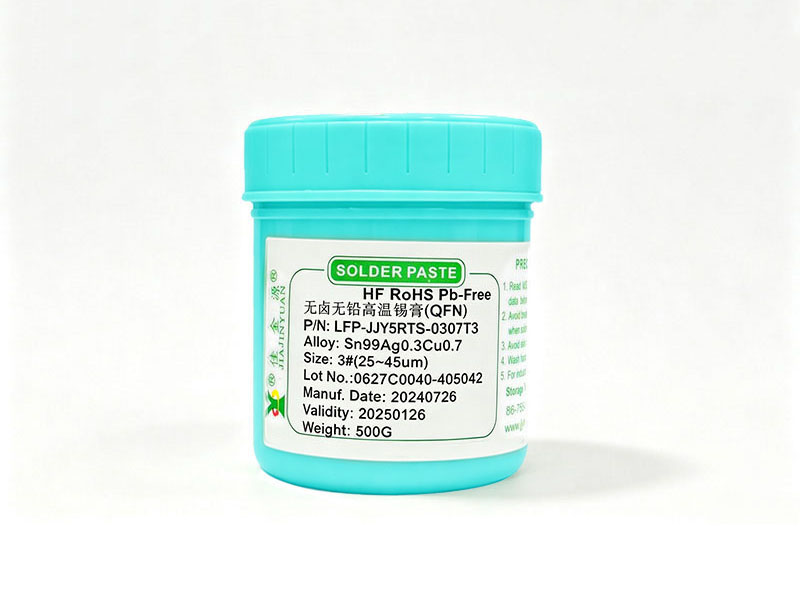
LFP?5RTS?0307 translucent residual solder paste demonstrates stable performance in medium solder fillet formation mass production for QFN/DFN packages, offers good process adaptability, and its no-clean feature significantly reduces post-processing costs, making it suitable for high-density electronic manufacturing scenarios.
For large-pitch conventional SMT production scenarios for LEDs, LFP-8MA-SC07 lead-free solder paste, with its high activity, low residue, and good solder climbing performance, is an ideal soldering material in the lighting industry and is suitable for conventional process requirements.
For the soldering scenario of copper wire lamps with temperature-sensitive crystal oscillators, the LFP?2RTHL?Sn64Bi35Ag1 medium-temperature solder paste solution demonstrates excellent soldering performance and reliability. Its unique alloy composition and process adaptability effectively solve problems in traditional soldering such as high void rate and poor solder climbing effect, providing for precision electronics
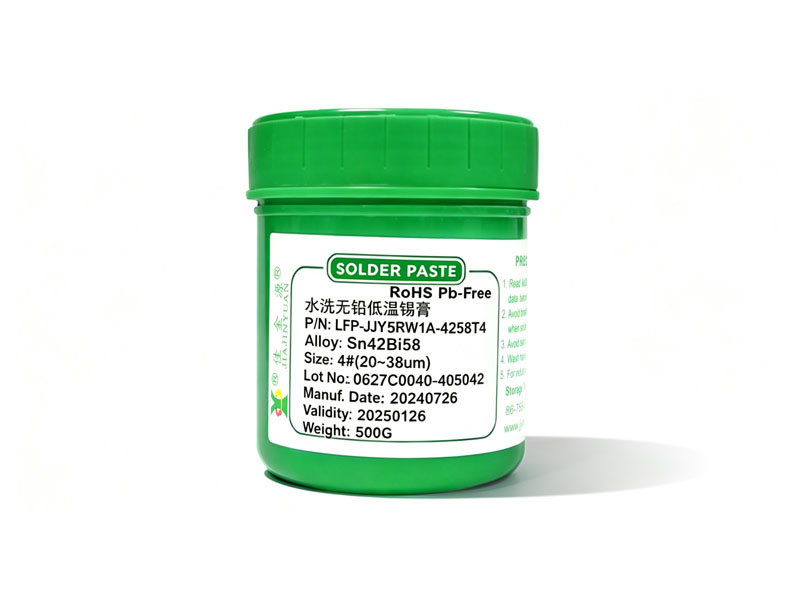
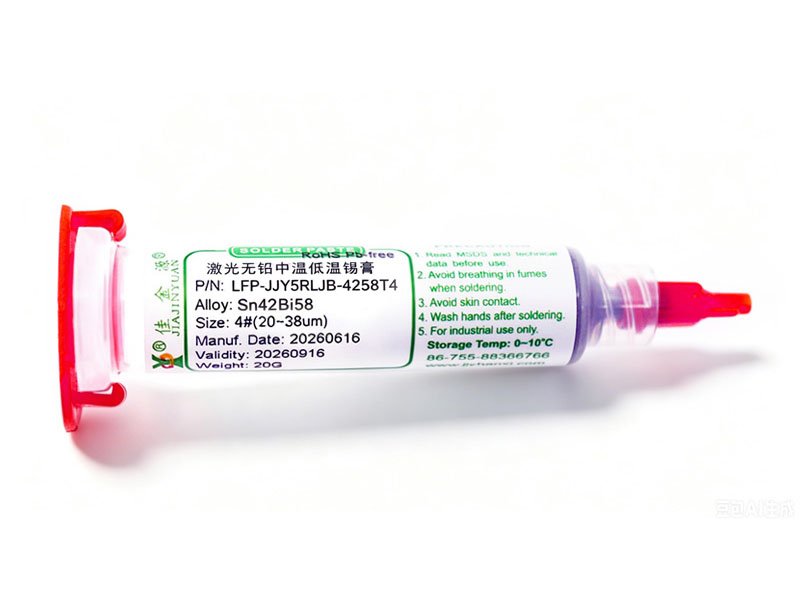
LFP?5RW1A?Sn42Bi58 water-washable low-temperature solder paste is specifically designed for nickel-plated aluminum fins of heat sinks. It leaves no residue after soldering, meets high-precision soldering requirements, and offers excellent water-wash performance and cost advantages. It is suitable for high-demand scenarios such as telecommunications and consumer electronics.
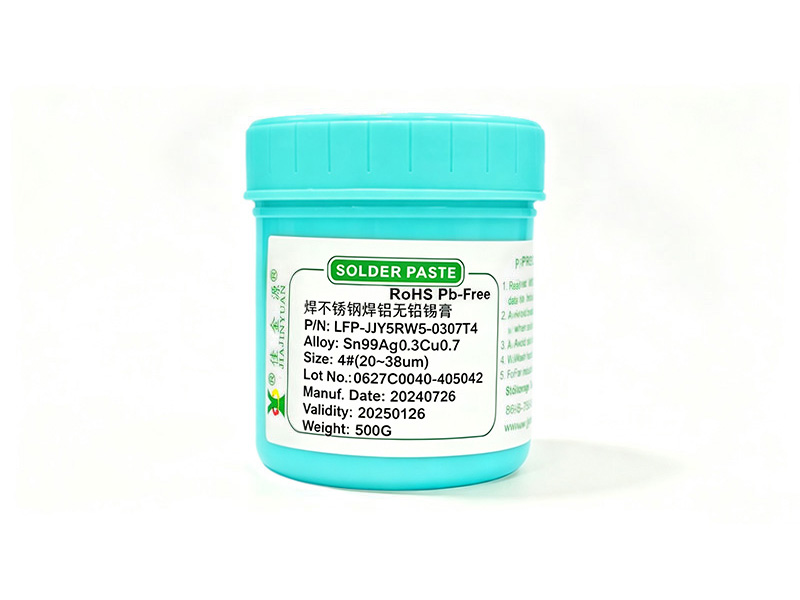
LFP?5RW5?0307 special water-wash solder paste provides solutions for the challenges of soldering aluminum and stainless steel. Its unique formula and process parameters effectively improve soldering quality, making it suitable for SMT production scenarios involving complex metal materials.
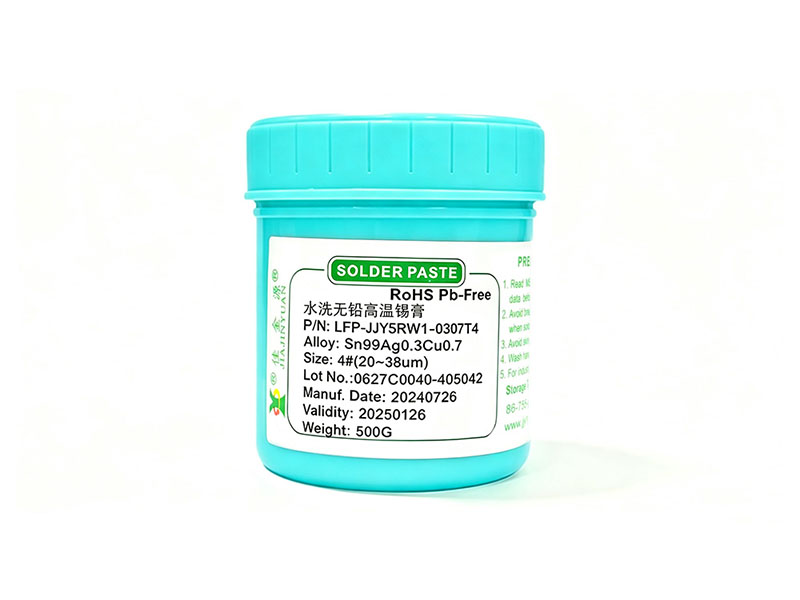
The selection of LFP?5RW1?305 water-washable high-temperature solder paste should be based on water washing process requirements and soldering temperatures, to ensure that residues are water-washable and meet high-activity demands. It is suitable for complex packaging scenarios such as QFN/DFN. During selection, attention should be paid to the matching between alloy powder particle size and post-soldering performance.
LFP?5RLJ?0307 laser high-temperature solder paste is specifically designed for jet valve laser welding, featuring high activity and low residue. It is suitable for precision dispensing scenarios such as pneumatic valves and screw valves. Its halogen-free formula and stable alloy powder ensure no solder beads during the welding process, improving process reliability and product yield.
Tight global tin ore supply is driving the development of the solder recycling and reuse industry, and the proportion of secondary tin in solder raw materials is steadily increasing.
The expansion of 5G base station construction scale has driven the application demand for lead-free solders, bringing new growth to high-reliability welding materials.
The China-US trade friction has intensified price fluctuations in solder raw materials, and the volatile prices of key metals such as tin and silver have affected cost control for solder manufacturers.
The SMT solder industry is accelerating its intelligent transformation, with Industry 4.0 technologies improving solder production consistency and quality control levels.
The COVID-19 pandemic has impacted the SMT solder supply chain, and solder manufacturers are addressing the challenges through inventory strategies and localized production.
The explosive growth of AI servers and AI terminal devices is driving the development of solder towards refinement and high reliability.
The application penetration rate of halogen-free solder paste in electronic manufacturing continues to increase, making it the preferred soldering material for high-reliability electronic products.
The Chinese SMT solder market is undergoing structural adjustment, with accelerated domestic substitution and products moving toward high-end development.
The successive revisions of the EU RoHS Directive continue to impact the global solder industry, driving solder products toward more environmentally friendly development.