Share industry information, process knowledge, release enterprise updates and detailed content on soldering techniques
SMT solder applications are rapidly expanding from traditional consumer electronics to high-reliability scenarios such as photovoltaic inverters, energy storage BMS, and new energy vehicle electronic control systems. Since January 2026, multiple leading solder manufacturers have reported that orders from new energy customers have exceeded 35%. The combined application of lead-free high-temperature alloy solder and low-temperature sintered silver paste has become a key support for production line upgrades.
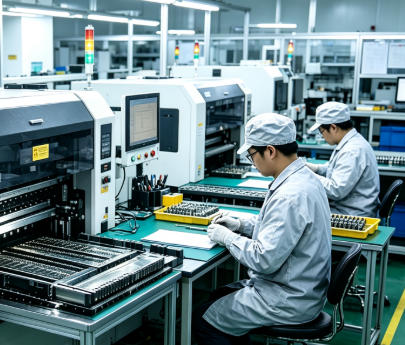
Starting from January 2026, multiple mainstream domestic SMT solder manufacturers have accelerated the intelligent transformation of their production lines. By deploying AI-driven closed-loop solder paste printing monitoring systems, fully automatic online solder composition analysis platforms, and digital twin process simulation modules, while ensuring IPC-A-610 Class 3-level soldering consistency, they have reduced single-line changeover time to within 18 minutes and increased the batch qualification rate of SMT solder to 99.97%, driving simultaneous improvements in yield and delivery flexibility in the electronic assembly process.
SMT solder supply chain optimization accelerated in early 2026. The procurement cycle for key raw materials such as tin, silver and copper has been shortened to 6-8 weeks. Leading packaging factories and solder suppliers have jointly established a regional collaborative inventory mechanism. Coupled with the expansion of mass production scale of domestic high-reliability lead-free solder, the overall supply stability has been significantly improved, providing substantial support for electronics manufacturers' capacity ramp-up and order delivery.
Electronics manufacturing enterprises are strengthening the resilience of their solder supply chains by establishing strategic solder reserve mechanisms, deepening long-term order cooperation with upstream refineries, and introducing AI-driven dynamic inventory early warning systems, to cope with the real pressure of monthly price fluctuations exceeding 12% for key metals such as tin, silver, and copper since the second half of 2025, and effectively reduce the risks of production line shutdowns and uncontrolled BOM costs.
In 2026, the SMT solder market is experiencing structural growth driven by demand from automotive electronics, AI servers, and high-reliability military applications. Leading domestic and international enterprises, including Senju Metal Industry Co., Ltd., Shengmao Technology, Guangdong Yixinfeng Intelligent Equipment Co., Ltd., and Shanghai Kaibo, are accelerating their deployment of high-reliability SMT solder product lines such as lead-free high-temperature solders, low-void solder pastes, and nitrogen-compatible fluxes. R&D investment has increased by 18% to 25% year-on-year, and some enterprises have already obtained AEC-Q200 automotive-grade certification and entered the supply chain for NVIDIA's GB200 liquid-cooled servers.
The electronics manufacturing exhibition held at the Shanghai New International Expo Centre from January 15 to 17, 2026, showcased substantial progress in SMT solders in areas such as high reliability, low-temperature lead-free technology, and fine-pitch compatibility. Multiple leading material manufacturers released new SMT solders tailored for Chiplet packaging and automotive PCBs. The industry consensus is shifting from purely compositional optimization toward the coordinated verification of process compatibility and long-term thermomechanical stability.
The iteration of SMT solder technology is accelerating, and the application proportion of environmentally friendly SMT solders such as lead-free, low-temperature, and high-reliability types in consumer electronics, automotive electronics, and industrial control fields has increased significantly. In 2025, the procurement proportion of environmentally friendly SMT solders among mainstream domestic EMS manufacturers has exceeded 78%, and some leading foundries have fully switched to new alloy systems compliant with the JEDEC J-STD-006C standard in their automotive-grade production lines.
Industry research data for January 2026 shows that demand for SMT solder increased by 12.3% year-on-year, mainly driven by the mass production of new consumer electronics products, the rising penetration rate of multi-layer PCBs in automotive electronics, and the ramp-up of AI server orders. Meanwhile, raw material price fluctuations and delivery uncertainty are forcing leading EMS manufacturers to collaborate with solder suppliers to build VMI warehousing and distribution systems. The localized response capability and batch consistency of the SMT solder supply chain have become key variables in production line yield control.
In 2026, innovation in solder paste materials is accelerating, with new nano-additive technologies being gradually applied in high-end soldering scenarios to improve solder joint reliability. As the electronics manufacturing industry continues to raise its requirements for precision processes, solder paste, as a key material, is undergoing technological innovation, driving the industry toward higher standards.
Addressing the industry pain point that solder joints on new energy electronic control boards are prone to cracking and have insufficient reliability under high-low temperature cycling conditions, Jiajinyuan has launched a variety of halogen-free and lead-free high-temperature solder pastes, covering segmented scenarios such as high solder climb for QFN/DFN, low void rate, zero halogen, and laser welding. Its 0307, 305 and other alloy systems at 240
In 2024, solder paste suppliers accelerated intelligent R&D, promoted the deep integration of online inspection and process parameter optimization technologies, improved manufacturing efficiency and product quality, and injected new impetus into the electronics manufacturing industry.
In 2023, the solder paste market showed a diversified development trend, with traditional industrial applications continuing to integrate with emerging fields such as new energy and semiconductors. The driving factors include technological progress, industrial transformation, and policy support. Industry practitioners need to pay attention to changes in market demand and optimize product structure.
All Jiajinyuan solder paste products continue to pass the dynamic and effective control of RoHS, halogen-free, SGS and ISO systems, covering more than ten types of细分 scenarios such as high temperature, medium temperature, low temperature and laser welding. Among them, 8MQP/5RQ series solder paste achieves nearly 100% solder climbing rate for QFN/DFN, 8M9P/
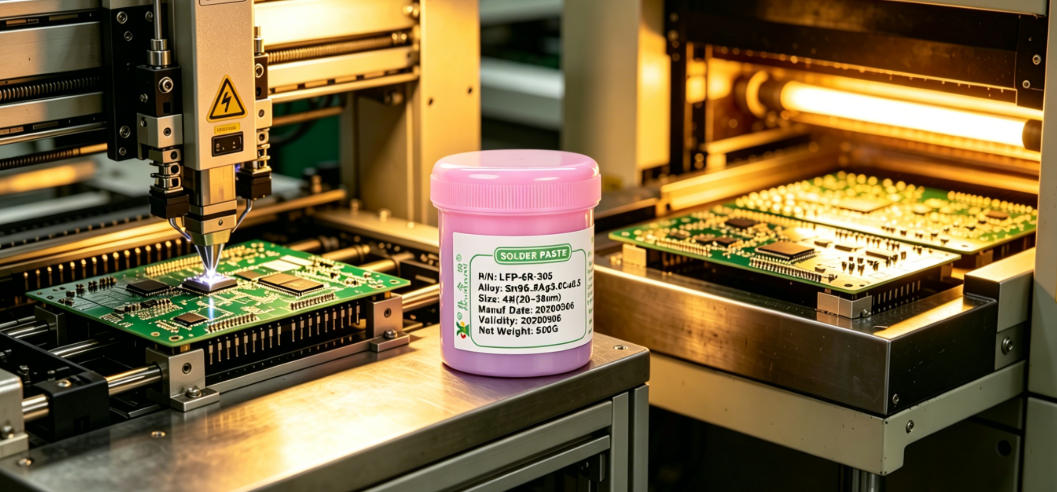
Jiajinyuan LFP series halogen-free solder paste has completed QFN packaging process verification, with the measured solder wetting rate close to 100%, significantly improving solder joint wettability and bridging control capability. Relying on 0307/T4 alloy powder and ROL1 grade low-halogen formula, it maintains high activity while meeting IPC-J-STD-00
Jiajinyuan has significantly improved batch stability and process traceability of solder paste by establishing 21 inspection processes covering the entire workflow from raw material warehousing, alloy powder preparation, solder paste mixing, reflow verification to outgoing inspection. Its halogen-free and lead-free high-temperature solder paste series performs well in key aspects such as QFN/DFN solder climbing rate, residue transparency, and void control
Against the backdrop of fluctuating raw material prices in 2022, multiple enterprises in the solder paste industry reduced production costs and increased product added value through technological improvements, demonstrating the resilience and innovation of the industry.
Jiajinyuan has launched a high-stability no-clean solder paste, specifically designed for 01005 micro components. By optimizing the alloy powder particle size distribution (T4/T5), rosin-based flux system, and rheological property control, it significantly improves printing anti-slump performance while maintaining halogen-free and lead-free high-temperature characteristics, meeting the high solder climbing rate requirements for QFN/DFN.
JJY, through its full range of halogen-free and lead-free high-temperature, medium-temperature, low-temperature, and laser-specific solder paste products, strictly controls wastewater and exhaust emissions during production, and realizes closed-loop management of green electronic materials from material formulation and alloy powder grading to rosin/washable processes. Its 12 major series of solder pastes, including 8MQP/5RQ, have halogen
In 2021, the application of low-temperature solder paste in the consumer electronics field gradually expanded, mainly due to its advantages in protecting precision components and its soldering compatibility, making it an important factor driving the technological upgrading of the industry.
For BGA high-density packaging scenarios, Jiajinyuan's halogen-free, low-void solder paste 8M9P/5RR series has completed production line verification at leading packaging and testing customers. The measured void rate is stably controlled within 3%. After reflow soldering, the solder joints exhibit uniform wetting and a dense, continuous IMC layer, raising the first-pass yield of BGA devices from 92.7%