SMT Solder Paste Manufacturers.

Focused on SMT soldering processes, a one-stop electronic soldering solutions provider.

Here you can find knowledge about Tin Ingot, including but not limited to usage methods, installation techniques, troubleshooting and more. Focused on SMT soldering processes. If you can't find what you need, please contact us anytime.

Whether solder bars can be mixed depends on the compatibility of alloy compositions and the matching degree with the process window of the wave soldering machine. Mixing different alloy solders can easily lead to risks such as melting point shift, uneven wetting, and embrittlement of solder joints. In actual production lines, common phenomena include increased solder dross, solder joint spikes, or cold solder joints. It is recommended to give priority to using solder bars from the same manufacturer and the same batch to ensure the stability of the alloy solder composition and the consistency of soldering.
Published: 2024-06-27During the rework soldering and BGA chip ball mounting process, an excessive void rate is the main cause of cold solder joints, increased thermal resistance, and early failures. Using low-void solder paste can significantly improve the metallurgical bonding quality of solder joints, and especially maintain structural integrity after multiple thermal cycles. In actual tests, the Jiajinyuan JGY-850 series solder paste stably controls the void rate within 8%. Combined with precise stencil aperture design and nitrogen-protected reflow, it increases the first-pass yield of rework soldering to 98.3%.
Published: 2024-02-28
In 2023, the solder paste market showed a diversified development trend, with traditional industrial applications continuing to integrate with emerging fields such as new energy and semiconductors. The driving factors include technological progress, industrial transformation, and policy support. Industry practitioners need to pay attention to changes in market demand and optimize product structure.
Published: 2024-02-08In the ball mounting process, adopting a low-temperature solder paste solution can significantly reduce the thermal stress on BGA chip bodies, avoiding common production line failures such as pad peeling, silicon die microcracks, and molding compound delamination. In actual tests of the Jiajinyuan LTS series solder paste, this solution achieved ball diameter consistency of ±0.02mm at a peak temperature of 185℃, while balancing wetting and spreading performance with residue insulation properties.
Published: 2024-01-28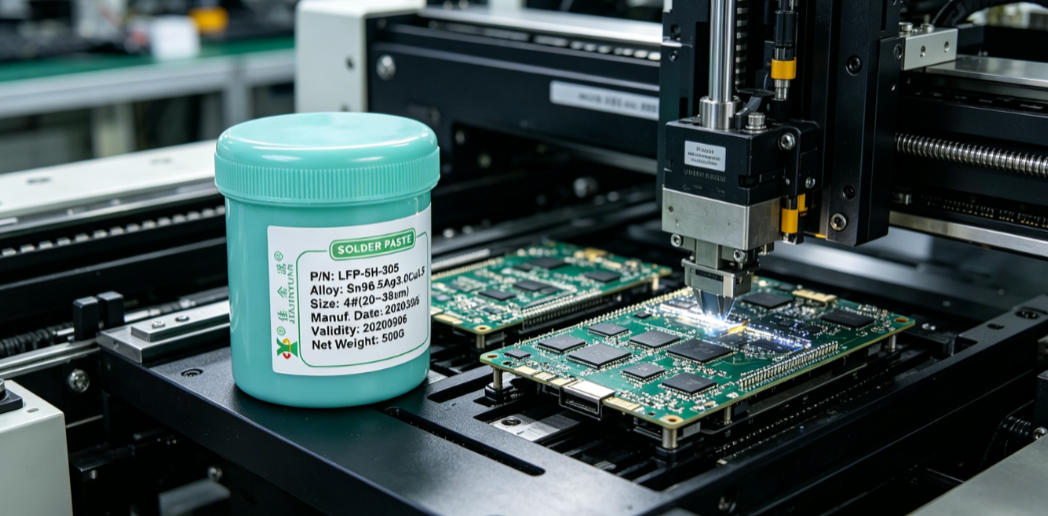
Lead-free solder paste and leaded solder paste have essential differences in composition, melting point, wettability, and reflow profile settings. The key to distinguishing them lies in the RoHS marking on the solder paste batch label, the color of flux residue, and the glossiness of solder joints. Since lead-free solder has a high melting point and high surface tension, it is necessary to increase the peak temperature and extend the time above the liquidus, while imposing higher requirements on stencil aperture design, squeegee pressure, and printing speed.
Published: 2024-01-23Solder sample testing was conducted using three types of materials—solder paste, solder wire, and solder bar—for machine testing, to realistically simulate the printing, placement, and reflow compatibility performance of JJY solder on SMT production lines. The testing focused on verifying the rheological properties of solder paste and its matching with stencil apertures, the wire feed stability of solder wire, and the melting and spreading uniformity of solder bar, providing reproducible process window data support for batch introduction.
Published: 2024-01-12X-Ray inspection is the only non-destructive method in SMT production lines that can penetrate packages to directly observe the internal structure of hidden solder joints such as BGA and QFN. It is mainly used to detect invisible defects such as solder joint voids, cold solder joints, and solder ball offset. Especially in the mass production of automotive-grade and industrial-grade high-reliability products, with 0.5μm detail resolution and real-time dynamic imaging capability, Jia Jinyuan X-Ray inspection equipment stably maintains the recognition rate of defective solder joints with a void rate exceeding 25% at over 99.7%.
Published: 2023-11-17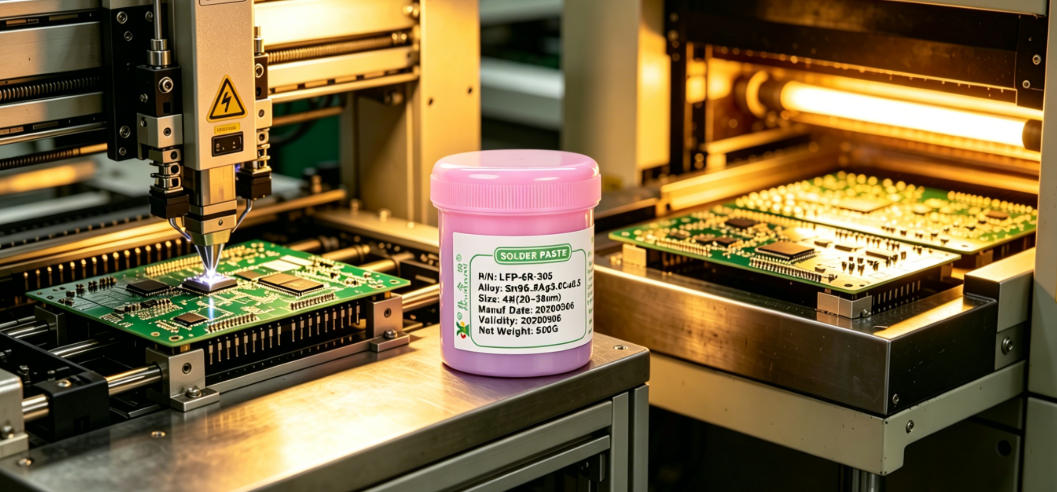
Jiajinyuan LFP series halogen-free solder paste has completed QFN packaging process verification, with the measured solder wetting rate close to 100%, significantly improving solder joint wettability and bridging control capability. Relying on 0307/T4 alloy powder and ROL1 grade low-halogen formula, it maintains high activity while meeting IPC-J-STD-00
Published: 2023-10-25For the export of solder paste to Thailand in Southeast Asia, a full set of foreign trade customs clearance documents for solder paste must be prepared, including the Certificate of Origin, FORM E, MSDS, SGS test report, and commercial invoice. Among them, FORM E qualifies for zero-tariff treatment, the MSDS must be issued by a laboratory with CNAS qualification, and all documents must strictly match the actual shipment batch; otherwise, the goods will face the risk of being returned or detained at Thai customs.
Published: 2023-08-09
Jiajinyuan has significantly improved batch stability and process traceability of solder paste by establishing 21 inspection processes covering the entire workflow from raw material warehousing, alloy powder preparation, solder paste mixing, reflow verification to outgoing inspection. Its halogen-free and lead-free high-temperature solder paste series performs well in key aspects such as QFN/DFN solder climbing rate, residue transparency, and void control
Published: 2023-07-06Our technical team is always ready to provide professional solder material selection advice and SMT process solutions.