SMT Solder Paste Manufacturers.

Focused on SMT soldering processes, a one-stop electronic soldering solutions provider.

Here you can find knowledge about SMT Solder Paste, including but not limited to usage methods, installation techniques, troubleshooting and more. Focused on SMT soldering processes. If you can't find what you need, please contact us anytime.
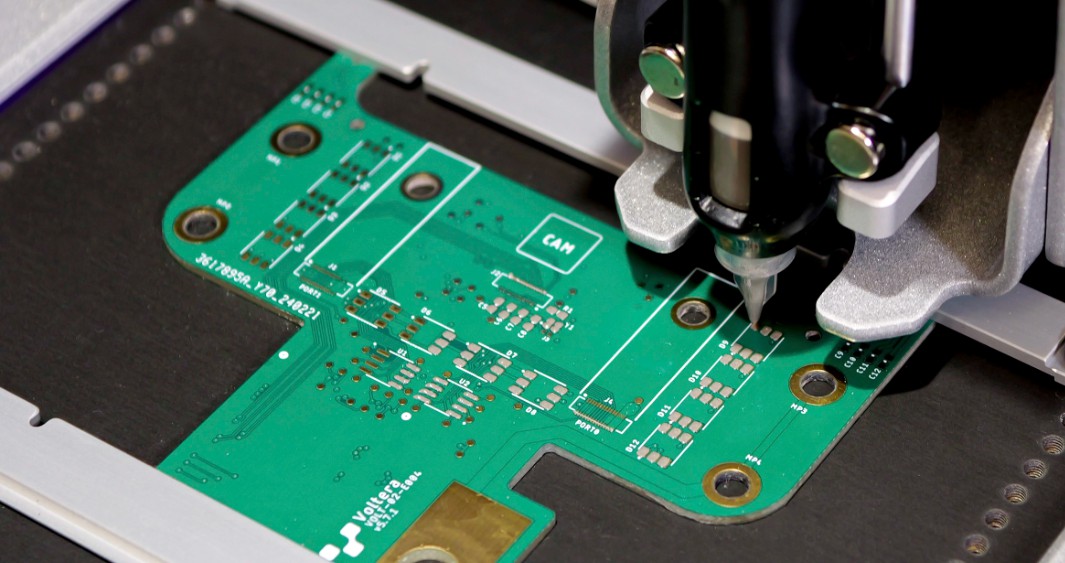
The Jiajinyuan technical team provides on-site resident services at the customer's SMT production line, conducting full-process diagnosis and process optimization for typical soldering defects such as solder bridging and tombstoning. Relying on precise selection and parameter matching of various halogen-free and lead-free high-temperature solder pastes including 8MQP/5RQ and 8MNTTP/5RNTT, combined with 030
Published: 2020-07-16In fine-pitch IC reflow soldering, the metal content, particle size distribution and flux activity of solder paste must match pad pitches below 0.4mm. Yield fluctuations exceeding 30% in reflow soldering often stem from uneven solder paste collapse or insufficient wetting after reflow. For Jiajinyuan JH-812A, the measured bridging rate on 0.35mm pitch QFN is below 0.12%. Its 25μm median particle size and 55% metal content work synergistically to suppress printing misalignment and reflow splattering.
Published: 2020-06-11This paper focuses on the practical application of sensor solders in the SMT process of electronic sensor PCBs, covering the solder selection logic for common sensors such as thermal sensors, pressure sensors, and acceleration sensors, key points for reflow profile adaptation, and production line-level troubleshooting paths for cold solder joints and missed solder joints. It emphasizes the differentiated performance of two sensor solders, Jiajinyuan SN100C and SN63Pb37, in terms of wettability, residue activity, and thermal shock resistance.
Published: 2020-05-08Standardized operations for solder paste replenishment and stirring in high-speed SMT printing production lines directly determine printing yield and equipment utilization. Based on the actual adaptability of Jiajinyuan solder paste at squeegee speeds above 300mm/s, this article details key control points such as replenishment frequency, temperature control window, and manual/automatic stirring parameter settings. All operations have been verified through 72 consecutive hours of production line testing.
Published: 2020-04-09In SMT quality control, material batch traceability is a key means of quickly identifying root causes. By binding unique codes of core materials such as solder paste, stencils, and mounter nozzles to production data, specific furnace batches, stations, and operators can be located within 30 seconds when defects occur, significantly reducing abnormal response time.
Published: 2020-01-13The core of material control on SMT placement production lines lies in establishing a full closed-loop error-proofing mechanism covering material requisition, line feeding, changeover, and material return. Through four layers of defense—physical isolation, dual-signed labels, station binding, and first-article verification—it effectively blocks the risk of component mixing and misplacement, delivering particularly significant results in high-frequency error scenarios such as mixed-model production on shared lines, frequent feeder changes, and manual feeding of bulk materials.
Published: 2019-12-14SMT stencil cleaning and maintenance directly affects solder paste printing accuracy and yield. A three-stage combined process of dry cleaning, wet cleaning, and ultrasonic cleaning must be adopted in daily operations. Corresponding cleaning agent concentrations and wiping frequencies shall be matched for solder pastes of different viscosities to avoid defects such as insufficient solder and solder bridging caused by residual paste in apertures.
Published: 2019-09-22Solder balls are a frequently occurring soldering defect in SMT placement. They form when excess solder fails to fully wet during the reflow process and aggregates into spherical solder spots, commonly found on the sides of 0402 and smaller resistors and capacitors, along the edges of QFN thermal pads, and near PCB through-holes, directly affecting product reliability and AOI pass rate.
Published: 2019-05-01Bridging is the core defect causing a sharp drop in yield for fine-pitch chips (such as 0.4mm pitch QFN and 0.3mm pitch BGA) in high-speed SMT production lines. Its causes are concentrated in the combined effect of solder paste printing offset, mismatch in stencil aperture design, and fluctuations in placement accuracy. Actual measurements on Jia Jinyuan production lines show that bridging accounts for 68% of total solder joint defects, far exceeding cold solder joints and tombstoning.
Published: 2019-03-2901005 component soldering is currently one of the most challenging process bottlenecks on SMT production lines. Its 0.4mm×0.2mm size, 0.12mm pad pitch, and extremely low heat capacity require solder paste printing accuracy of ±15μm, placement repeatability ≤±10μm, and reflow peak temperature fluctuation controlled within ±2℃. The measured yield of Jiajinyuan JTY-806 solder paste paired with JTS-300 placement machine is stable at 99.2%~99.5%, but at least 3 rounds of fine-tuning are still required for the first article after line changeover to meet the standards.
Published: 2018-11-19Our technical team is always ready to provide professional solder material selection advice and SMT process solutions.