SMT Solder Paste Manufacturers.

Focused on SMT soldering processes, a one-stop electronic soldering solutions provider.

Here you can find knowledge about SMT Solder Paste, including but not limited to usage methods, installation techniques, troubleshooting and more. Focused on SMT soldering processes. If you can't find what you need, please contact us anytime.
Selecting and handling solder paste for fine pitch SMT assembly demands precise control over rheology, metal content, particle size distribution, and storage conditions, where even minor deviations—such as a 0.5°C shift in refrigeration temperature or a 5° increase in stencil aperture ratio—can trigger bridging on 0.4mm pitch QFNs or insufficient fill on 0.3mm CSPs, and real-world success hinges on strict adherence to paste shelf life, controlled ambient humidity below 60% RH during printing, and consistent squeegee pressure between 4.5–6.5 kg/cm² across all production shifts.
Published: 2026-10-10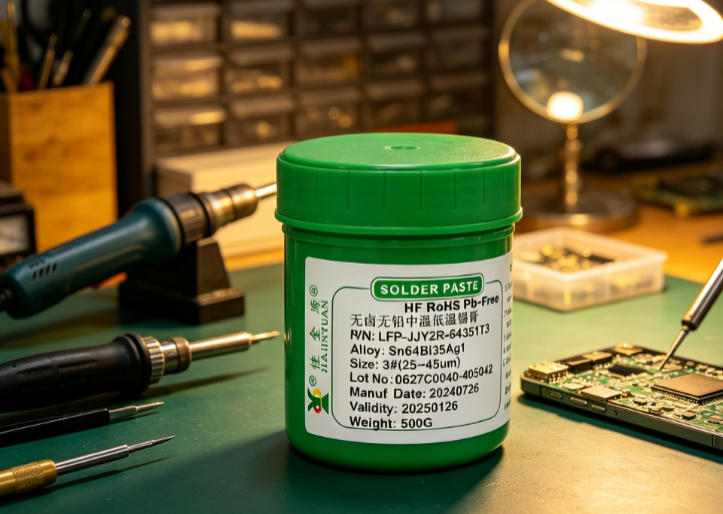
There are many types of SMT solder paste, which can be classified into different models according to their composition, application and process requirements. Selecting the appropriate solder paste can significantly improve soldering quality and production efficiency.
Published: 2026-08-28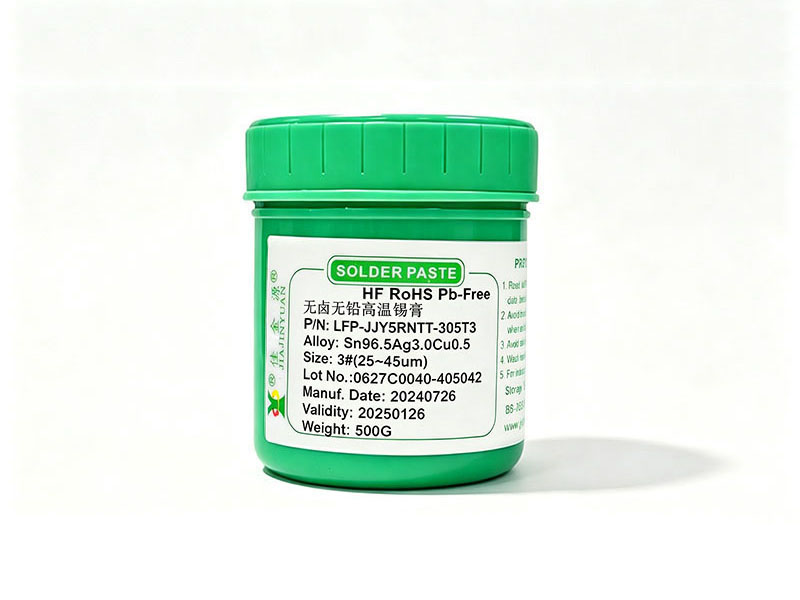
LFP?5RNTT?305 solder paste is specially designed for high-precision electronic devices such as mobile phones, Bluetooth, and fingerprint locks. Its halogen-free and lead-free properties and excellent solder climbing performance stand out in SMT processes, making it suitable for precise soldering of complex circuit boards, while meeting the dual environmental and reliability requirements of the ROL0 standard.
Published: 2026-08-28
For large-pitch conventional SMT production scenarios for LEDs, LFP-8MA-SC07 lead-free solder paste, with its high activity, low residue, and good solder climbing performance, is an ideal soldering material in the lighting industry and is suitable for conventional process requirements.
Published: 2026-08-28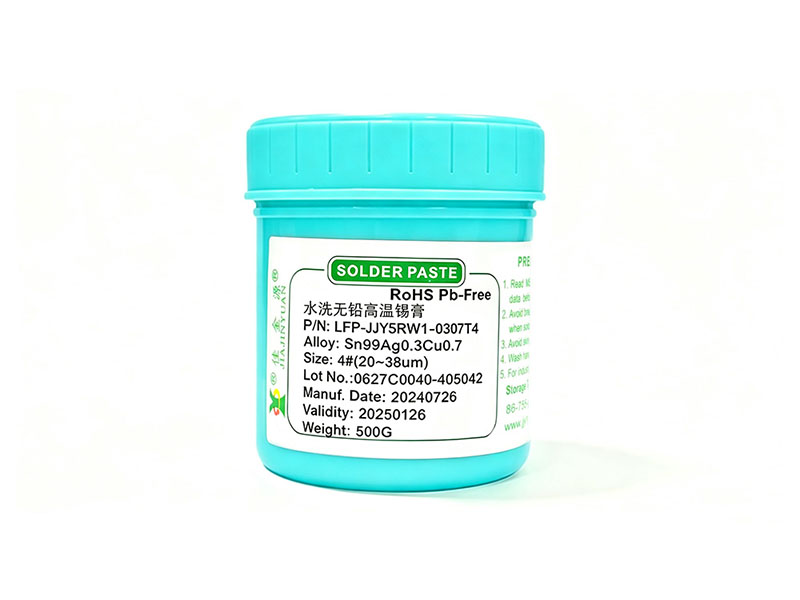
The selection of LFP?5RW1?305 water-washable high-temperature solder paste should be based on water washing process requirements and soldering temperatures, to ensure that residues are water-washable and meet high-activity demands. It is suitable for complex packaging scenarios such as QFN/DFN. During selection, attention should be paid to the matching between alloy powder particle size and post-soldering performance.
Published: 2026-08-28
In SMT manual rework soldering scenarios, the choice between rosin-core solder wire and solid-core solder wire must be closely tied to solder joint quality, operational efficiency, and rework risk. Rosin-core solder wire is suitable for rapid rework soldering of small-batch, high-density, low-heat-capacity components, while solid-core solder wire is more appropriate for large pads, high-heat-capacity components, and military or medical PCBA sensitive to residues. The two have essential differences in terms of flux activity, thermal response, cleanability, and cost.
Published: 2026-08-27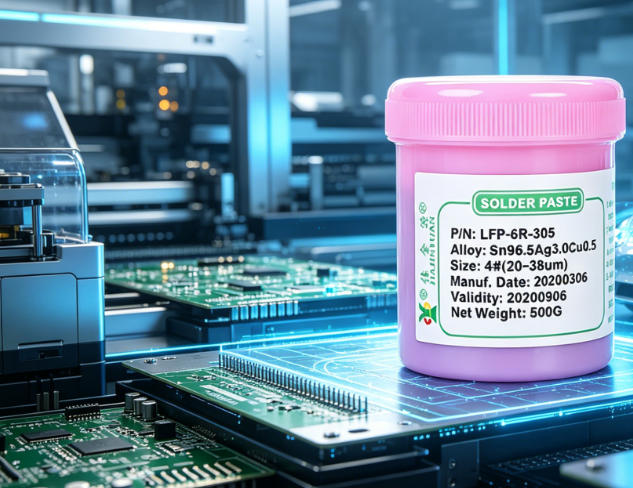
Low-residue solder paste is a key material for enabling SMT no-clean processes. It can control ionic residues below 10.06μg/cm2 NaCl equivalent after reflow soldering, avoiding leakage, corrosion, and CAF failures caused by rosin or organic acid residues. It is especially suitable for high-density, fine-pitch automotive-grade and medical electronics assembly without underfill.
Published: 2026-08-27
The shelf life of solder paste and SMT material control are currently facing three major trends: the popularization of low-temperature storage, strengthened batch traceability, and compressed open-container usage timelines. The driving factors include the deepening of lead-free processes, growth in automotive-grade orders, and stricter customer audits. Industry impacts are reflected in increased fluctuation of scrap rates, higher line changeover frequency, and more IQC inspection items. Practitioners need to incorporate solder paste from warehousing to temperature recovery into MES control nodes throughout the entire process, and work backward from the actual production line takt to determine the open-container usage window.
Published: 2026-08-27
New energy circuit boards have extremely high requirements for soldering reliability; even a slight deviation in the selection of solder paste and solder wire can cause batch defects such as cold solder joints, bridging, and excessive voiding rates. Combined with real production line failure cases, this article directly addresses core pain points such as insufficient solder paste activity matching, mismatched silver content in solder wire, and lack of coordination between reflow profile and solder paste melting point, and provides immediately executable material verification processes and parameter locking methods.
Published: 2026-08-27
Sn63Pb37 solder paste still has irreplaceable process stability in through-hole SMT production lines. Its eutectic properties bring low melting point, narrow reflow window and excellent wettability. However, limited by RoHS compliance pressure and lead-free mixed line risks, practical applications must directly address high-frequency failures such as solder joint cracking, cold solder joints, insufficient wetting, and stencil clogging, which are particularly evident in 0201 component soldering and double-sided board rework scenarios.
Published: 2026-08-27Our technical team is always ready to provide professional solder material selection advice and SMT process solutions.