


JJY, the Lead-free solder paste manufacturer, explains SMT Reflow Soldering temperature-zone specifications. In practice, the number of temperature zones of an SMT reflow oven, and the lead-free Solder paste manufacturer standards applied, are determined by the soldered products and set by SMT (surface mount technology) manufacturers.
Generally speaking, the more temperature zones an SMT reflow oven has, the better the soldering result tends to be. Most common SMT reflow ovens on the market today have eight temperature zones.
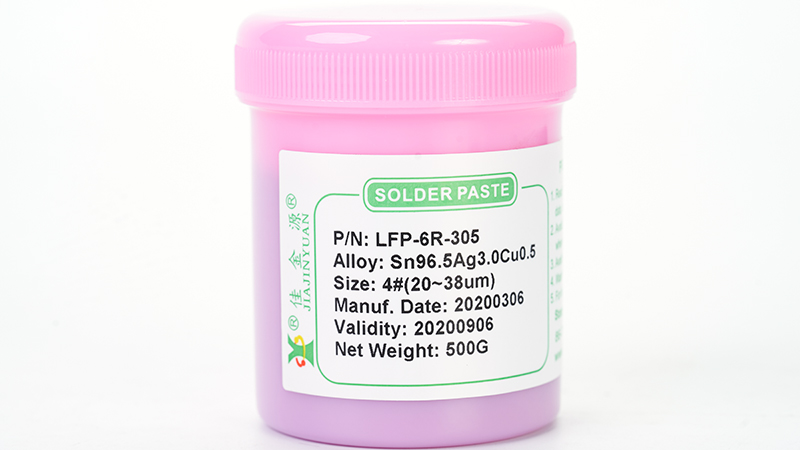
The temperature ranges provided by the SMT Flux paste manufacturer can be set independently based on the specific soldering conditions. The standardized temperature specification for an eight-zone SMT reflow oven is fairly broad: the maximum SMT reflow temperature for lead-free Solder Paste is around 245℃, while the maximum SMT reflow temperature for Leaded Solder Paste is around 215℃.
Regardless of the temperature range of the SMT reflow oven, its overall temperature zones are still divided into four major stages: preheating zone, soaking zone, reflow zone and cooling zone. The eight temperature zones of a lead-free solder paste SMT reflow oven are also divided according to these four stages.
Below are reference specifications for the four temperature zones of lead-free solder paste SMT reflow soldering:
Preheating zone: The temperature in the preheating zone is raised to 175℃ over about 100 seconds. Because the starting room temperature is 26℃, the temperature rise rate works out to 1.49℃ per second.
Soaking zone: The maximum temperature in the soaking zone is around 200℃, held for 80 seconds, with a temperature difference of 25℃ between the high and low points. Reflow zone: The peak temperature of the reflow zone is 245℃ (from 200℃), and the time to reach peak is approximately 35 seconds; the temperature rise rate of the reflow zone is 45℃ / 35 s = 1.3℃/s.
As can be seen from a correct temperature profile, reaching peak temperature takes longer on this profile, and the time above liquidus for most reflow conditions fluctuates within about sixty seconds.
Cooling zone: The cooling zone lasts for about 100 seconds, with the temperature dropping from 245℃ to around 45℃, at a cooling rate of about two degrees per second.
At Shenzhen JJY, the SMT reflow zone temperatures were set and tested at a chain speed of 50 cm/min. In practice, this profile must still be adjusted according to the standard temperature values provided by the Solder Paste Manufacturer and the specific production conditions.
Related Articles
- What are the characteristics of lead-free low-temperature tin wire? Jia Jinyuan is here to answer
- What should be noted when soldering with lead-free solder wire?
- What are the main problems existing in the soldering process of lead-free tin bars?
- SMT patch manufacturer: What are the methods to reduce the overall cost of solder paste?
- Can leaded solder paste and lead-free solder paste be used interchangeably?
- JJY Solder paste storage method and temperature treatment method before use
- [Case Analysis] Will using lead-free solder paste from morning till afternoon affect product quality?
- Can solder paste manufacturers replace halogen-free solder paste with lead-free one?


