SMT Solder Paste Manufacturers.

Focused on SMT soldering processes, a one-stop electronic soldering solutions provider.

Here you can find knowledge about QFN Solder Paste, including but not limited to usage methods, installation techniques, troubleshooting and more. Focused on SMT soldering processes. If you can't find what you need, please contact us anytime.

When selecting solder paste for fine pitch QFN assembly, engineers must weigh wetting performance, void control, halogen content, residue clarity, and reflow compatibility across real-world production conditions; solder paste A (8MQP/5RQ) delivers near-100% wetting and high activity for demanding thermal pads but carries higher halogen levels, while solder paste B (8MTSP/5RTS) offers lower halogen, cleaner residue, and robust 70–90% wetting—making it preferable for consumer electronics with tighter cleanliness and compliance requirements, especially where post-solder inspection or automated optical inspection is critical.
Published: 2026-10-18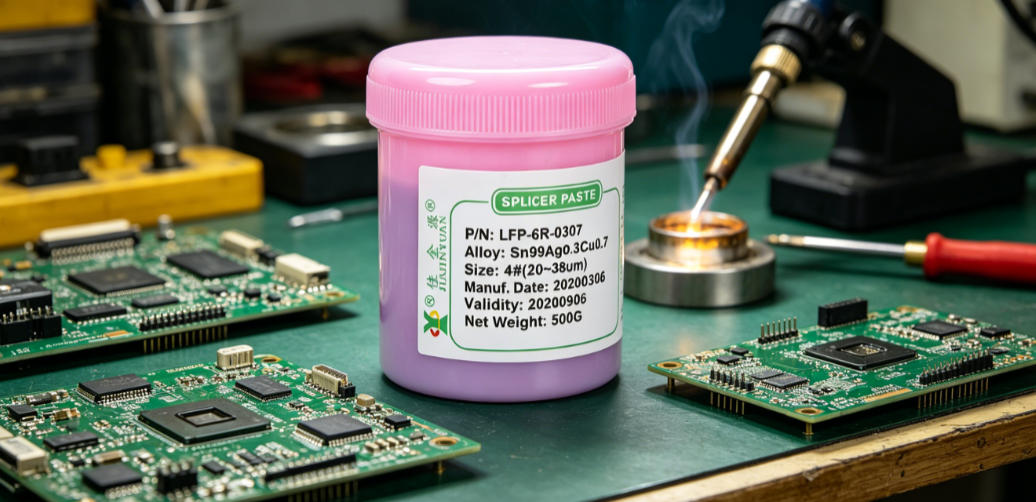
Selecting the right solder paste for fine pitch QFN assembly with stencil printing demands precise matching of alloy type, powder size, activity level, and halogen content to ensure full wetting, minimal voids, and zero bridging; T4 or T5 powder grades like 0307 or 305 are mandatory for 0.4 mm pitch QFNs, while ROL0 halogen-free formulations such as 8M9P/5RR or 8MNTTP/5RNTT deliver high thermal reliability and low residue in telecom and automotive applications.
Published: 2026-10-16Selecting the right solder paste for fine pitch QFN assembly without bridging requires balancing all
Published: 2026-10-13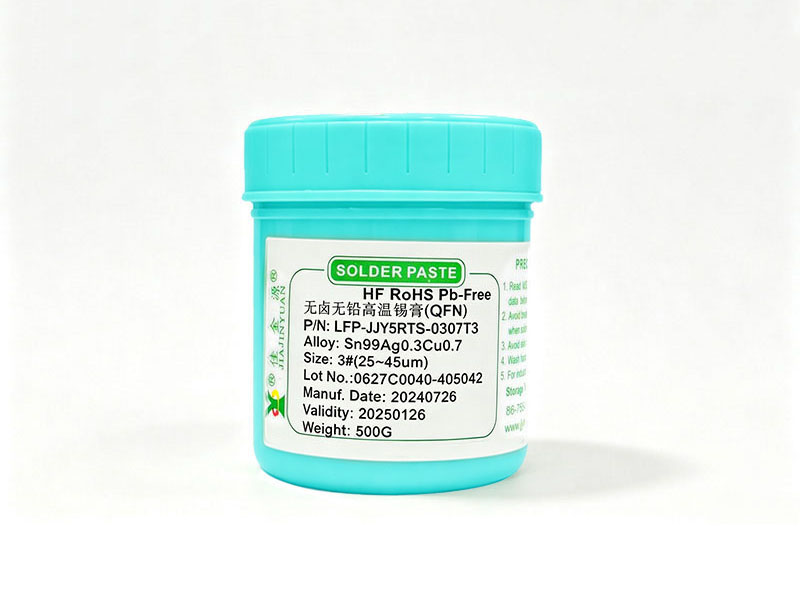
LFP?5RTS?0307 translucent residual solder paste demonstrates stable performance in medium solder fillet formation mass production for QFN/DFN packages, offers good process adaptability, and its no-clean feature significantly reduces post-processing costs, making it suitable for high-density electronic manufacturing scenarios.
Published: 2026-08-28
Domestic halogen-free solder paste LFP?5RQ?0307 achieves nearly 100% solder wetting in QFN packages, with its high activity and alloy powder characteristics being the key factors. Optimizing printing parameters and reflow profile can further improve soldering quality.
Published: 2026-08-28
The QFN void rate standard is tightening from the 25% limit in IPC-A-610 Revision G to the automotive-grade 5% requirement. The void-reduction capability of solder paste has become a dividing line for mass production yield. Low-residue, high-thixotropy, and gradient-evaporation solder pastes are rapidly replacing traditional formulations. Combined with a nitrogen atmosphere and optimized reflow profiles, this enables a systematic reduction in void rates.
Published: 2026-08-27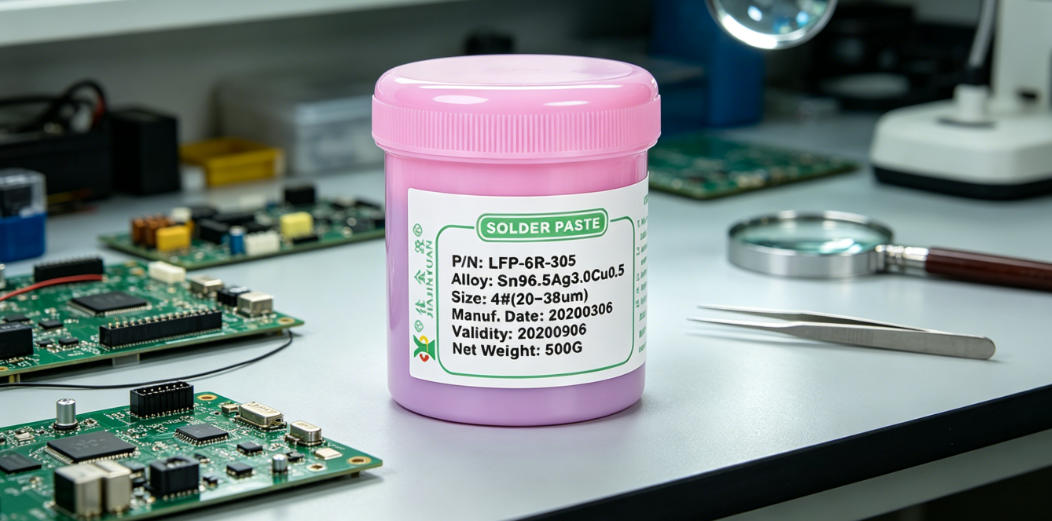
The soldering quality of QFN is highly dependent on the coordinated control of SMT stencil aperture design and reflow process parameters. IPC-7525B explicitly requires that the pad aperture area ratio be no less than 0.66, and the optimal range in actual production lines is 0.72~0.78. A ratio below 0.62 will cause the cold solder joint rate to rise sharply by more than 12%. If the reflow peak temperature deviates from the 260℃±5℃ range specified in JEDEC J-STD-020, the void rate of QFN bottom solder joints may exceed the Level 3 limit of 25% stipulated in IPC-A-610E.
Published: 2026-08-27
QFN solder balls are a typical high-frequency and difficult-to-reproduce defect in SMT failures, often occurring at the four corners of the QFN bottom thermal pad and within a 0.3mm range around it, directly causing short circuits or false ICT test results. Based on 20 years of practical production line experience, this paper focuses on four key parameters: stencil aperture ratio, reflow profile peak temperature window, solder paste activity level, and print release speed, and provides a closed-loop troubleshooting path from oven temperature measurement to stencil EDS composition verification.
Published: 2026-08-27
TLP-7RN series QFN-specific leaded solder paste is developed to address the soldering challenges of QFN packages, effectively improving solder wetting rate and soldering reliability.
Published: 2026-08-24The tombstoning issue in QFN packages is often caused by improper solder paste selection or insufficient process control. Correctly selecting solder paste and optimizing process parameters can effectively reduce such defects and improve product yield.
Published: 2026-08-24Our technical team is always ready to provide professional solder material selection advice and SMT process solutions.