SMT Solder Paste Manufacturers.

Focused on SMT soldering processes, a one-stop electronic soldering solutions provider.

Here you can find knowledge about FPC Solder Paste, including but not limited to usage methods, installation techniques, troubleshooting and more. Focused on SMT soldering processes. If you can't find what you need, please contact us anytime.
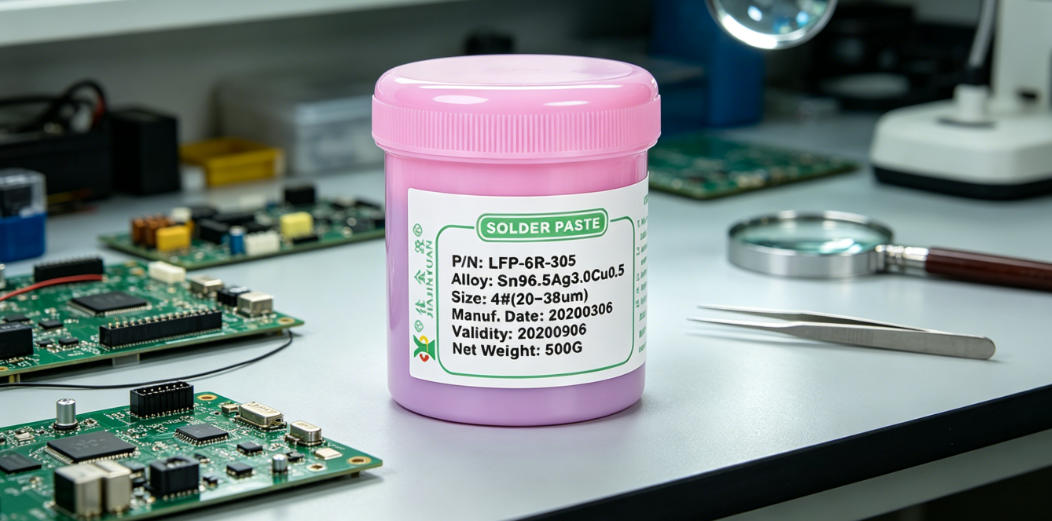
Welding of FPC flexible boards is highly sensitive to solder paste printing accuracy and mounting pressure. Based on a review of real production line failures, this paper horizontally compares the occurrence rates of bridging, tombstoning, and cold soldering under different solder paste viscosities, metal contents, thixotropic properties, and various mounting pressure ranges (0.15N~0.6N) in typical scenarios such as fine-pitch ICs, double-sided pads, and high-density blind/buried via FPCs. It is clarified that for solder paste printing, models with 4# powder, 88.5% metal content, viscosity of 220Pa·s, and thixotropic index >4.2 should be prioritized, while mounting pressure must be dynamically set according to pad size, and must not be uniformly set to 0.3N.
Published: 2026-08-27During FPC soldering, using low-temperature solder paste and solder wire can significantly reduce the thermal stress on the substrate, avoiding thermal damage phenomena such as coverlay wrinkling, copper foil peeling, and PI layer discoloration. It is especially suitable for high-density, multi-layer stacked flexible printed circuit boards with IC bonding. Jiajinyuan low-temperature solder paste starts melting at 138℃, with the peak temperature controlled below 210℃. Combined with nitrogen protection, it can further suppress oxidation and improve wettability.
Published: 2023-09-03When the fine line spacing in FPC soldering is less than 0.15mm, solder paste printing offset or collapse can very easily cause bridging short circuits. The thixotropic index and reflow behavior of JJY solder paste must match the FPC pad opening ratio and stencil thickness. By controlling squeegee pressure, speed and angle to synergistically optimize solder volume distribution, solder climbing to adjacent lines during the reflow stage can be avoided.
Published: 2019-10-18The solder joint cracking rate of FPC soldered flexible screen modules under repeated bending scenarios is significantly reduced. The key lies in optimizing the solder paste printing accuracy, matching the reflow soldering temperature profile to the thermal expansion characteristics of the FPC substrate, and strictly controlling the FPC mounting offset and Z-axis pressure. Jiajinyuan's actual measurement shows that the cracking rate after 200,000 bending cycles is less than 0.3%, which is far better than the industry's conventional level of 0.8%.
Published: 2017-02-14During the FPC soldering process, the flexible board is prone to deformation when heated, which is a high-frequency failure point on the production line. Engineers from Jia Jinyuan adopted a combination of measures, including optimizing stencil aperture design, adjusting reflow soldering conveyor speed and temperature gradient, and using dedicated fixtures for pressing, to increase the first-pass yield of FPC soldering from 72% to 96.5%, focusing on solving three major pain points: solder paste misalignment, insufficient solder wetting on pads, and substrate wrinkling.
Published: 2014-06-09FPC soldering has extremely stringent requirements for halogen residue, wettability, and residue insulation of solder paste. Jiajinyuan halogen-free solder paste strictly controls bromine and chlorine content below 900ppm, leaving no corrosive ion residue after reflow, while maintaining excellent slump resistance and 0.3mm fine-pitch printing stability. It has been successfully applied to high-end product lines exported to the EU, Japan, and South Korea, such as automotive camera modules and foldable screen hinge FPCs.
Published: 2011-04-25When performing rework soldering on FPC flexible boards, traditional solder paste requires a peak temperature above 235°C, which easily causes substrate blistering, copper foil peeling, or cover film cracking. In contrast, low-temperature solder paste reduces the reflow peak to 180°C ± 5°C, significantly lowering thermal stress while ensuring wetting, spreading, and solder joint strength. It is a key solder paste selection strategy that balances reliability and yield in precision rework of flexible printed circuits.
Published: 2011-02-15Our technical team is always ready to provide professional solder material selection advice and SMT process solutions.