SMT Solder Paste Manufacturers.

Focused on SMT soldering processes, a one-stop electronic soldering solutions provider.

Here you can find knowledge about Cold Solder Prevention, including but not limited to usage methods, installation techniques, troubleshooting and more. Focused on SMT soldering processes. If you can't find what you need, please contact us anytime.
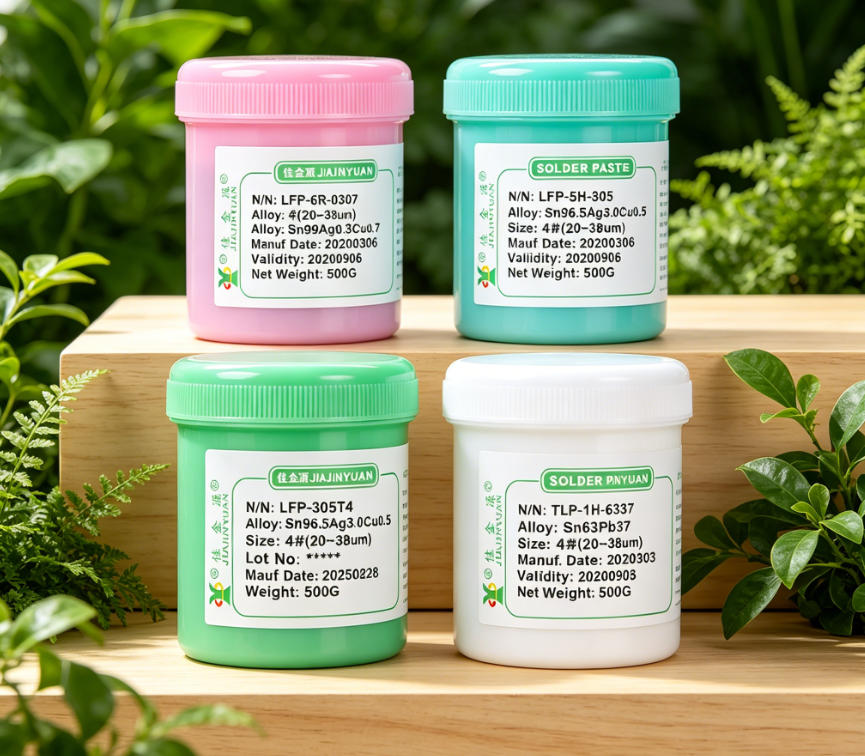
Managing solder paste slump and cold slump is essential for maintaining print fidelity and preventing bridging during reflow preparation, especially with fine-pitch components like QFN/DFN; key factors include storage at 0–10°C, controlled ambient humidity below 60% RH, stencil aperture ratios above 0.66, and viscosity retention within ±15% over 4 hours using T3–T5 alloy powders like 0307 or 305 at 240–260°C peak reflow temperatures.
Published: 2026-10-17
Refrigerating solder paste prevents it from rapidly deteriorating at room temperature and ensures stable soldering quality. Refrigerating solder paste can effectively extend its shelf life and reduce waste, making it an indispensable key step in the SMT process.
Published: 2026-08-28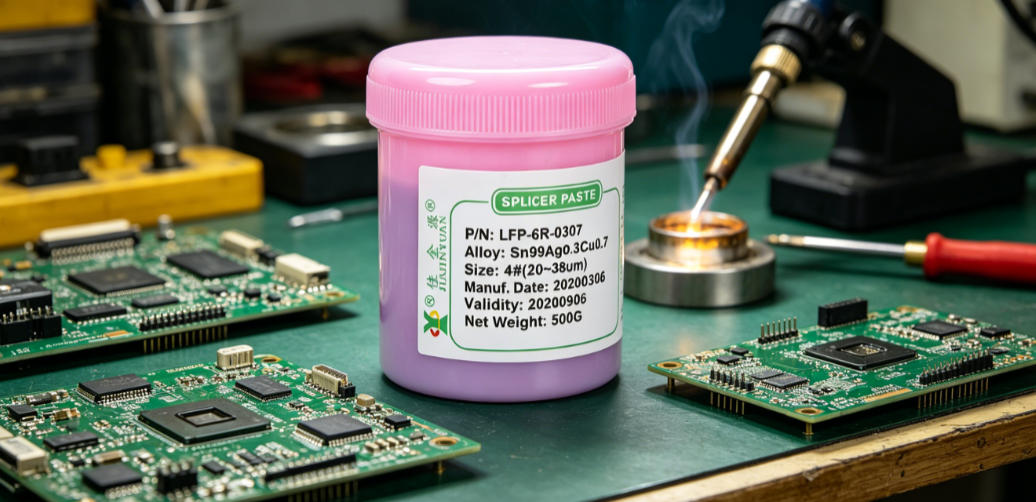
Frequent open solder joint defects on 0201 components often stem from a mismatch between the rheological properties of solder paste and the aperture accuracy of SMT stencils. Based on measured data from mass production lines, this paper points out that selecting no-clean solder paste with a thixotropic index ≥0.75 and particle size D50 ≤18μm can increase solder joint tensile strength by 32%. When paired with a laser-etched SMT stencil with an aperture area ratio ≥0.65, the open solder joint rate drops from 4800ppm to 620ppm.
Published: 2026-08-27
The BGA cold solder joint issue cannot be simply attributed to SMT solder paste; a systematic investigation is required into hard parameters such as reflow profile peak temperature (235±2℃), heating rate (1.2~1.8℃/s), soak time (60~90s), as well as solder paste metal content (88.5~89.2%), viscosity (750~850 Pa·s), and particle size D50 (20~25μm). Switching solder paste is only effective when verification confirms insufficient flux activity or excessive metal powder oxidation.
Published: 2026-08-27Improper solder paste stirring can easily lead to cold soldering risks and affect soldering quality. Correct solder paste stirring operations can reduce the defect rate and ensure stable production.
Published: 2026-08-24Cold soldering is the most hidden fatal defect in SMT production lines. Insufficient reflow peak temperature prevents the solder paste from fully melting and wetting the pads, resulting in cold solder joints and false soldering. Jia Jinyuan solder paste can only complete the eutectic reaction above 183°C, and its wetting force drops sharply when the temperature is below 205°C. Cold solder joints have a gray surface without metallic luster, and the thrust test value is more than 50% lower than the standard value.
Published: 2024-06-15X-Ray inspection is the only non-destructive method in SMT production lines that can penetrate packages to directly observe the internal structure of hidden solder joints such as BGA and QFN. It is mainly used to detect invisible defects such as solder joint voids, cold solder joints, and solder ball offset. Especially in the mass production of automotive-grade and industrial-grade high-reliability products, with 0.5μm detail resolution and real-time dynamic imaging capability, Jia Jinyuan X-Ray inspection equipment stably maintains the recognition rate of defective solder joints with a void rate exceeding 25% at over 99.7%.
Published: 2023-11-17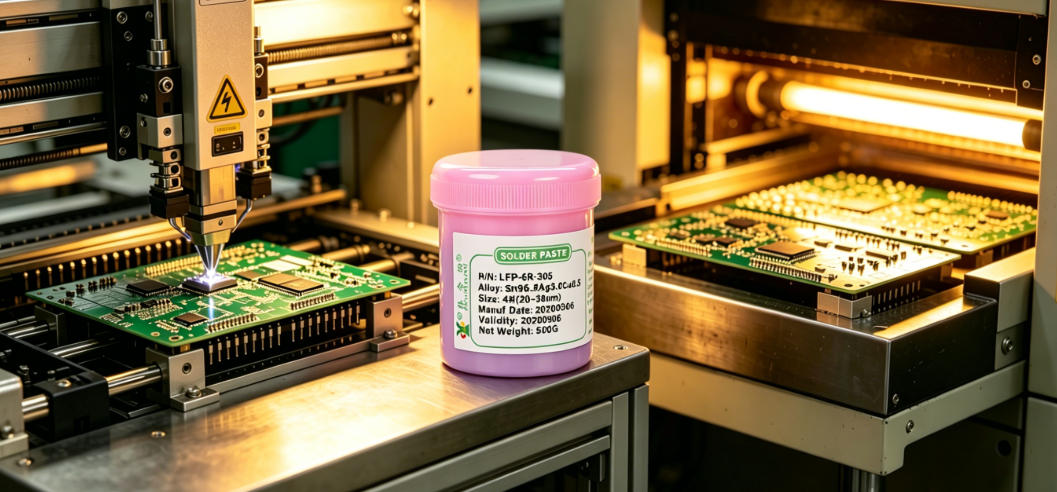
Jiajinyuan LFP series halogen-free solder paste has completed QFN packaging process verification, with the measured solder wetting rate close to 100%, significantly improving solder joint wettability and bridging control capability. Relying on 0307/T4 alloy powder and ROL1 grade low-halogen formula, it maintains high activity while meeting IPC-J-STD-00
Published: 2023-10-25During dip soldering, temperature runaway in manual dip soldering pots is the main cause of cold solder joints and missed solder joints. For the JiajinYuan manual dip soldering pot, the solder bath temperature must be stably controlled at 255℃±3℃, the preheating zone maintained at 90℃~110℃, and the dip soldering time strictly limited to 3 seconds±0.5 seconds. Imbalance in the coordination of these three factors will cause bridging or poor wetting.
Published: 2023-06-14To address the frequently occurring issues of solder paste tombstoning, cold solder joints, and poor wetting on OSP gold-plated pads in SMT production lines, and drawing on 20 years of on-site commissioning experience, this paper provides immediately actionable countermeasures from four aspects: solder paste selection compatibility, stencil aperture design redundancy, reflow profile activity window control, and collaborative management of PCB pad surface conditions, directly targeting the root causes of uneven solder paste wetting and cold solder joint defects.
Published: 2023-05-12Our technical team is always ready to provide professional solder material selection advice and SMT process solutions.