


When partners are using Low-temperature tin wire, they often find that there is a problem of excessive Flux splashing. So, what causes the flux splashing? Next, let Shenzhen JJY answer some questions for our partners.
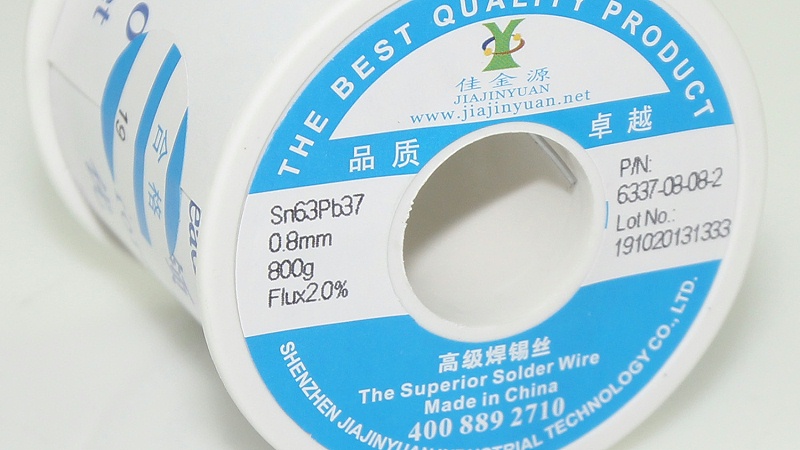
Too much flux is used. During the soldering process, the flux melts first when heated. When it expands, the tin on the surface has not yet melted, which builds up the expansion force of the flux. When the tin on the surface finally melts, the flux inside bursts out, causing splashing. The solution is to reduce the Flux Content while keeping the soldering speed feasible.
A rather crucial point is whether the customer uses intermittent or continuous soldering. The intermittent soldering method can reduce the flux. For the continuous soldering method, the rosin content should be higher; otherwise, it will affect the soldering. You can moderately control the heat of the soldering iron. It is better to use a constant-temperature soldering iron.
It is related to the formulation inside the flux. In the production process, the flux inside the Tin wire contains gas or moisture. When burning rosin, the temperature control and burning time should be long enough to allow the moisture of the rosin and the surfactant to evaporate completely.
When the tin wire used contains a relatively high tin content, a soldering iron with lower power can be used. This can reduce the occurrence of flux splashing. Multicore Solder Wire can also be selected. This can disperse the expansion force of the flux when heated and reduce splashing.
Changing the properties of rosin and increasing its viscosity can cause some inconveniences and is generally not advisable. If you want to know more about low-temperature tin wire, welcome to consult Shenzhen JJY. Let's learn and grow together!
Shenzhen JJY Industrial Technology Co., Ltd. is a company that has been engaged in the research of Solder Paste, solder wire (low-temperature solder wire), lead-free solder paste, and Leaded Solder Paste for more than ten years. Solder rod We are a manufacturer of solder paste and solder wire, offering lead solder paste and related products.
Related Articles
- What are the characteristics of lead-free low-temperature tin wire? Jia Jinyuan is here to answer
- What should be noted when soldering with lead-free solder wire?
- Can low-temperature tin wire be used when facing the problem of difficult welding of lamp heads?
- How to solve the problem of leakage when soldering low-temperature tin wire?
- How to test the quality of solder paste and solder paste? JJY Solder Paste Manufacturer
- The influence of low-temperature solder wire solder joint brightness and how to improve it?
- What are the differences between high-temperature solder paste and low-temperature solder paste? JJY is here to popularize knowledge for everyone
- What are the reasons for the large amount of smoke in low-temperature tin wire soldering?


