


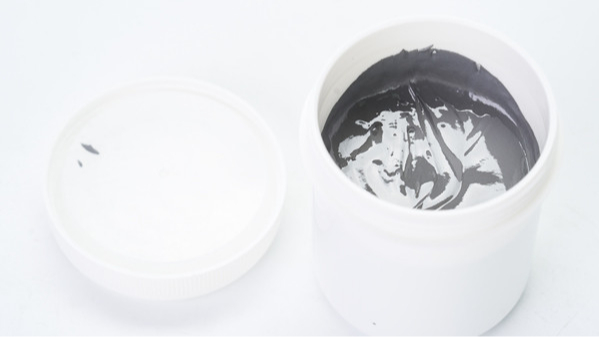
How to test the quality of Solder Paste? There are many types of solder paste on the market at present, and I believe everyone has encountered many of them. Generally speaking, for large companies, this is not a major concern because they have their own fixed suppliers. However, it is different for newly established companies. To choose suitable solder paste, you also need to consider whether it meets your own product requirements. Because solder paste quality simultaneously affects the overall connectivity of electronic devices after soldering — not only structurally but also in terms of the on-off characteristics of electrical equipment — if you rely on field trial methods such as overcurrent reflow, it not only wastes time but also shows large variations between different circuit boards of the same batch. Next, as a Solder paste manufacturer, JJY will tell you how the tests are usually conducted:
The first method to identify genuine and fake tin is as follows: Tin is a silvery-white metal. The surface of newly cast Tin Ingots made of environmentally friendly tin often forms a golden-yellow oxide film. When a tin bar is bent forcefully, due to tin's twinning effect, a rustling sound is produced. If you bite it, it feels like a rustling sound, called the tin cry. The louder the tin cry, the better. This is the basic knowledge for identifying environmentally friendly tin. There are many unscrupulous merchants who often use zinc and potassium to deceive people, because potassium and zinc also make a rustling sound. The main difference is that when burned for more than two minutes, environmentally friendly tin is not afraid of fire, while potassium and zinc are. After being burned for more than two minutes, they will smoke, with blue or red colors. The difference lies here.
Inspection process for solder paste quality:
1. For inspection of solder powder, a low-magnification optical microscope can be used to precisely measure the particle size of the tin powder and examine the distribution of tin powder particles. If the metallic tin powder has relatively smooth particles and good sphericity, it indicates that the quality of this solder paste powder is relatively good and will not easily affect the quality of SMT printing on the stencil.
2. The metal elements in solder paste are precisely measured using an atomic absorption spectrometer. Generally, the test items cover all harmful chemical elements such as cadmium. If the solder paste is a halogen-containing solder paste, it is also necessary to check in advance whether the halogen components in the solder paste meet the regulations.
3. Viscosity test: The viscosity of solder paste greatly affects its printability on the stencil. If a solder paste has high viscosity, its slump resistance is greatly improved, but its printability is not good, which may affect release. The solder paste may stick to the stainless steel stencil, resulting in poor printing.
4. Stencil printability test: SMT Solder Paste printing on a stencil is an indispensable process in surface-mount soldering. Therefore, it is essential for solder paste to have good printability. QC personnel can take a small amount of solder paste to conduct printability tests to verify whether the stencil printability of this solder paste is excellent.
5. The workability and spreadability of solder paste can be further divided into moisture resistance and soldering resistance. The main purpose of this test is to check whether the solder paste will become rough after drying, and whether the joint strength after soldering meets the requirements. This quality test can be carried out using discarded circuit boards and electronic components that have long been disassembled.
6. The inspection of whether the solder joint is smooth and glossy can be carried out by applying solder paste to a glass slide and then soldering it in a reflow oven. After soldering, observe with the naked eye whether the solder joint has luster. You can also see how much solder paste residue remains on the glass slide after soldering.
Summary of requirements for solder paste:
1. It has excellent reflow characteristics.
2. It has low viscosity during printing and high viscosity after printing.
3. It has effective release performance from the stencil and squeegee.
4. It does not dry out at room temperature but dries out easily at reflow temperature.
Want to know about solder paste, Low-temperature solder paste, Solder Wire, and Solder Bar? Dear partners, welcome to consult Shenzhen JJY Industrial Technology Co., LTD. Let's learn and grow together!
Related Articles
- How to select solder paste for fine pitch QFN assembly without bridging
- What should be noted when soldering with lead-free solder wire?
- Troubleshooting inconsistent solder paste release from nano coated stencils
- How to select and handle solder paste for fine pitch SMT assembly
- Best practices for stencil printing with lead free solder paste
- Adjusting aperture design to improve solder paste release for 01005 components
- What Are the Solder Paste Manufacturers in Changzhou?
- Solder bridging between adjacent pins causing short circuits, key prevention for fine-pitch ICs


