SMT Solder Paste Manufacturers.

Focused on SMT soldering processes, a one-stop electronic soldering solutions provider.

Here you can find knowledge about Flux Content, including but not limited to usage methods, installation techniques, troubleshooting and more. Focused on SMT soldering processes. If you can't find what you need, please contact us anytime.
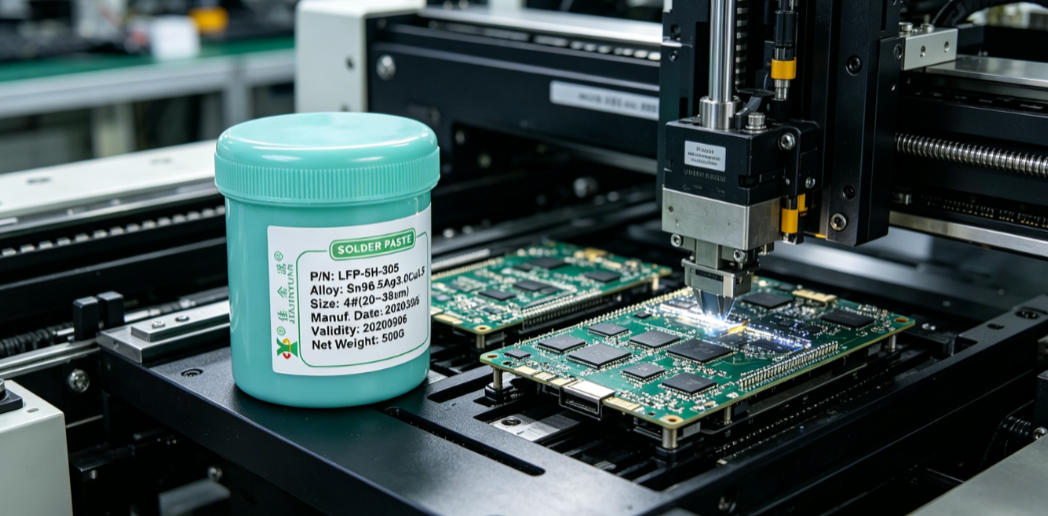
Solder paste is a core material in the SMT process, and its performance directly affects soldering quality. In actual production, the viscosity, particle size, and flux composition of solder paste are the key factors for selection. Different application scenarios require matching specific models to ensure solder joint strength and reliability.
Published: 2026-08-28
Solder paste is an indispensable soldering material in the SMT process, and whether tin powder and soldering flux can be used to make solder paste has become a focus of attention in the industry. By analyzing the composition and production principle of solder paste, this paper clarifies the limitations of tin powder and soldering flux in practical applications, and provides professional guidance for related operations.
Published: 2026-08-28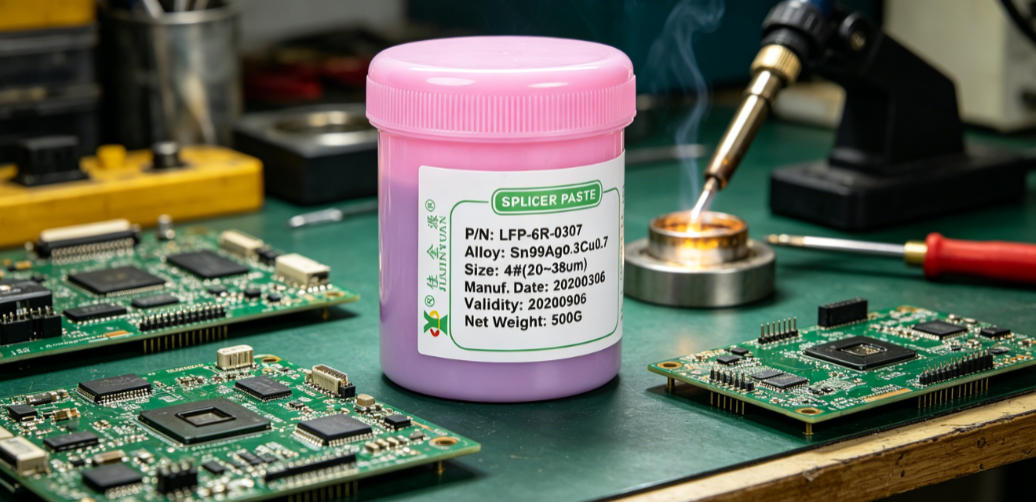
The flux content of solder wire directly affects the wetting performance of solder joints: excessively high flux content easily causes blackened residues and PCB corrosion, while excessively low flux content leads to poor wetting and frequent cold solder joints. Based on real failure cases from SMT production lines, this paper analyzes the wetting failure mechanism caused by abnormal flux content, and provides both emergency remediation measures and long-term root-cause solutions.
Published: 2026-08-27
The classification of solder wire flux types must strictly align with the activity grades, halogen content, and residue cleanability requirements for rosin-based, no-clean, and water-soluble fluxes specified in the IPC J-STD-004B standard. Although water-soluble fluxes offer the advantages of high activity and easy cleaning, they carry a risk of chloride ion residue exceeding the 2.5μg/cm2 limit. If the production line fails to implement the deionized water rinsing process specified in IEC 61189-2, it will easily lead to PCBA corrosion failure.
Published: 2026-08-27
The compatibility between wave soldering flux and solder bars directly affects solder joint gloss, wetting uniformity, and residue morphology. Based on production line measured data, this paper horizontally compares the combined performance of three types of fluxes—rosin-based, no-clean, and water-soluble—paired with 63/37, 60/40, and SAC305 solder bars respectively. The analysis is conducted from four dimensions: wetting angle variation, solder joint reflectivity, bridging occurrence rate, and cleaning difficulty. It is clarified that for scenarios requiring high gloss, rosin-based flux paired with 63/37 solder bars is preferred, while for high reliability requirements, water-soluble flux paired with SAC305 is favored.
Published: 2026-08-27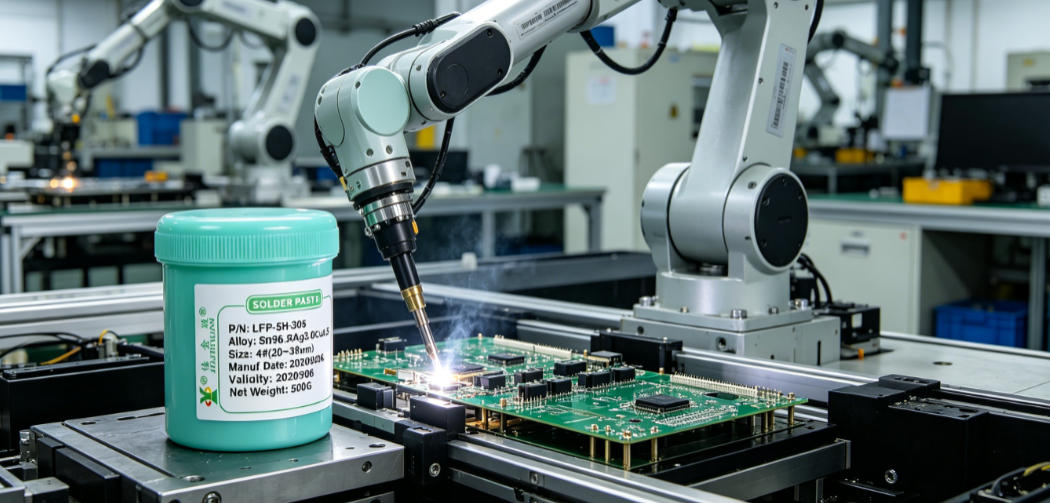
Flux spatter from solder wire causing PCB component damage is a common persistent issue in SMT rework and hand soldering, rooted in differences in flux activity, volatilization rate, melt viscosity, and solder wire structure. Based on production line measurements, this paper compares the spatter tendency, residual corrosivity, and operational tolerance window of three types of solder wire flux—rosin-based, no-clean, and water-soluble—in typical scenarios such as 0402 chip resistor rework, QFN32 thermistor device touch-up soldering, and high-power LED pad reinforcement. It explicitly recommends rosin-based solder wire for high-density fine-pitch rework, restricts water-soluble type exclusively to copper-free bare aluminum substrates, and identifies no-clean type as having the best overall performance in conventional through-hole and double-sided board soldering.
Published: 2026-08-27
Poor soldering performance on manual solder wires is mostly caused by the imbalance between flux activity and residue. When selecting a flux, focus on four hard parameters: rosin-based proportion, halogen content, activation temperature, and spreadability. A chloride ion content of 0.5%~1.2%, an activation range of 180℃~220℃, and a spreadability of over 92% are the key thresholds for a reliable manual solder wire flux.
Published: 2026-08-27
The post-soldering corrosion risk of SMT solder paste is highly dependent on the chemical composition of the solder paste flux. Different systems, such as rosin-based, water-soluble, and no-clean, exhibit significant differences in ionic residue, halogen content, and activation temperature. The probability of post-soldering corrosion increases notably when the chloride ion concentration exceeds 0.5μg/cm2, the softening point of rosin resin is below 120℃, or the pKa value of organic acids is less than 4.2.
Published: 2026-08-27After reflow soldering, solder joints turn black, which is mainly related to flux residues in the solder paste. By controlling solder paste usage, optimizing reflow soldering parameters, and strengthening the cleaning process, residue problems can be effectively reduced and soldering quality can be improved.
Published: 2026-08-24Jiajinyuan lead-free flux has RoHS and SGS third-party test reports. Tested by authoritative third-party laboratories, the product's hazardous substances are controlled within standard limits and comply with the environmental protection specifications of the electronics manufacturing industry. This test report can be used for customer factory audit, foreign trade project document submission, and internal archiving.
Published: 2026-08-24Our technical team is always ready to provide professional solder material selection advice and SMT process solutions.