SMT Solder Paste Manufacturers.

Focused on SMT soldering processes, a one-stop electronic soldering solutions provider.

Here you can find knowledge about Void Reduction, including but not limited to usage methods, installation techniques, troubleshooting and more. Focused on SMT soldering processes. If you can't find what you need, please contact us anytime.

To address the challenge of void rate control in automotive lamp welding, the LFP?5RR?305 halogen-free REACH solder paste is an ideal choice thanks to its extremely low void rate and high reliability. It is suitable for precision welding in high-heat scenarios, effectively improving product yield and stability.
Published: 2026-08-28
The QFN void rate standard is tightening from the 25% limit in IPC-A-610 Revision G to the automotive-grade 5% requirement. The void-reduction capability of solder paste has become a dividing line for mass production yield. Low-residue, high-thixotropy, and gradient-evaporation solder pastes are rapidly replacing traditional formulations. Combined with a nitrogen atmosphere and optimized reflow profiles, this enables a systematic reduction in void rates.
Published: 2026-08-27
The BGA void issue has long plagued the yield of high-reliability packaging. Starting from the intrinsic properties of solder paste materials, this paper reveals how key parameters such as the volatilization path of flux, the thickness of the oxide film on metal powder, and the melt viscosity of the alloy synergistically induce voids. It focuses on analyzing the measured value of low-residue, high-wetting solder paste with a narrow particle size distribution in reducing the void rate by more than 35%.
Published: 2026-08-27
To address the frequent solder bridging and solder spike defects of large-size QFP devices in the SMT process, this paper starts from solder paste selection, and combines printing accuracy, reflow thermal response and metal powder distribution characteristics to elaborate on special solder pastes with high thixotropy, narrow particle size distribution (D50=18.5μm) and 90.2% metal content, such as
Published: 2026-08-27
Addressing the widespread issue of excessive solder paste voids in high-thermal-dissipation PCBs during SMT reflow soldering, this paper draws on 20 years of practical production line experience to systematically outline 6 types of high-frequency failure phenomena. These cover real-world causes including heat sink design defects, mismatched stencil apertures, improper solder paste selection, uncontrolled printing parameters, imbalanced reflow profiles, and fluctuating nitrogen purity. For each cause, immediately actionable calibration steps and routine preventive measures are provided, directly targeting the core process bottlenecks for SMT void improvement in high-thermal-dissipation PCBs.
Published: 2026-08-27
Flux spatter from solder wire causing PCB component damage is a common persistent issue in SMT rework and hand soldering, rooted in differences in flux activity, volatilization rate, melt viscosity, and solder wire structure. Based on production line measurements, this paper compares the spatter tendency, residual corrosivity, and operational tolerance window of three types of solder wire flux—rosin-based, no-clean, and water-soluble—in typical scenarios such as 0402 chip resistor rework, QFN32 thermistor device touch-up soldering, and high-power LED pad reinforcement. It explicitly recommends rosin-based solder wire for high-density fine-pitch rework, restricts water-soluble type exclusively to copper-free bare aluminum substrates, and identifies no-clean type as having the best overall performance in conventional through-hole and double-sided board soldering.
Published: 2026-08-27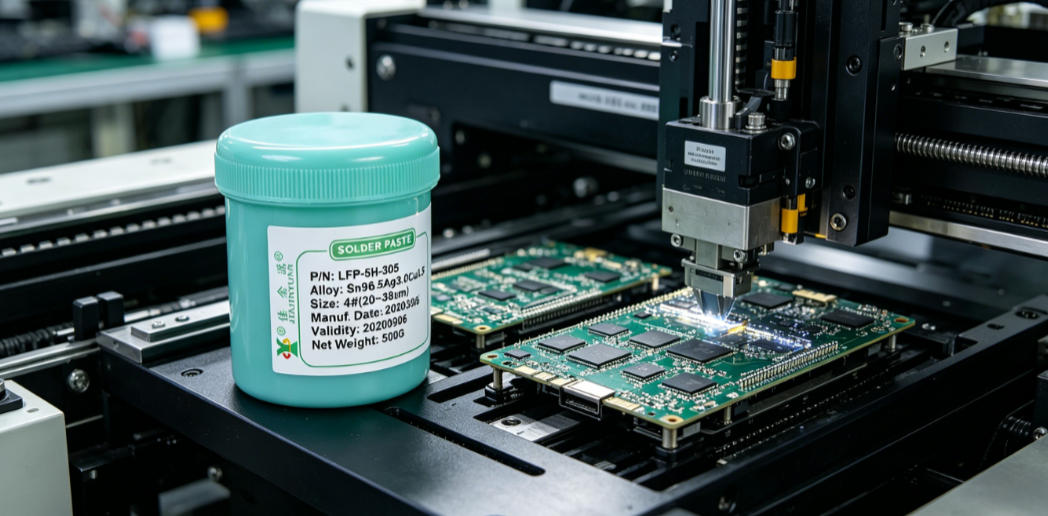
Excessive BGA voiding rate is a high-frequency cost leakage point in SMT production lines. Based on measured data from mass production lines, this paper proposes six actionable SMT process optimization measures covering key links such as solder paste selection, stencil aperture design, printing parameters, reflow profile, and nitrogen purity control. Each measure is annotated with applicable scenarios, quantified benefits, and implementation risks. The combined strategy of stencil aperture optimization and dynamic nitrogen purity monitoring is recommended as a priority, with an estimated annual cost reduction of 186,000 yuan per line.
Published: 2026-08-27
When excessive voids occur in SMT soldering, simultaneously investigate the solder paste metal content, flux volatilization curve, and actual temperature deviations in each reflow oven zone. Focus on verifying whether the preheat ramp exceeds 2°C/s, whether the peak temperature is below 235°C or above 245°C, and whether the time above liquidus is less than 60 seconds or exceeds 90 seconds.
Published: 2026-08-27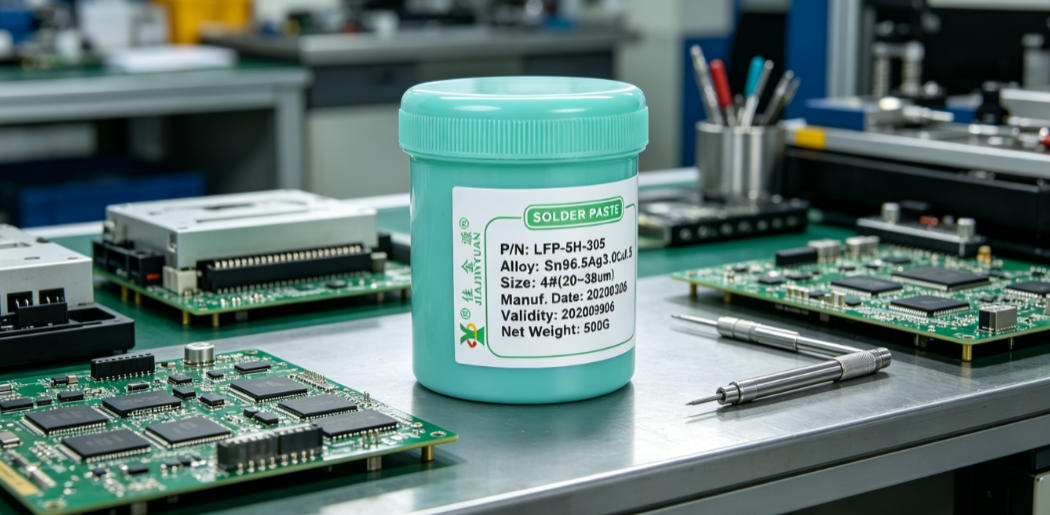
After solder paste is returned to room temperature, solder balls and spattering are likely to occur. The main causes are uneven volatilization of flux due to temperature difference, aggravated oxidation of metal powder, and sudden viscosity change. Standardized operation requires strict control of temperature, standing, stirring, and management of the time limit after opening, to avoid repeated freezing and thawing and excessive exposure time.
Published: 2026-08-26This article directly addresses the practical pain point of tombstone defects caused by poor reflow profile matching during solder paste selection. Based on five sets of real production line failure data, it restores phenomena item by item, locates root causes, and provides immediately executable debugging steps and verification methods. All solutions have been verified in mass production, focusing on the coupling relationship between solder paste activity, melting point distribution, wetting rate and furnace temperature window.
Published: 2026-08-24Our technical team is always ready to provide professional solder material selection advice and SMT process solutions.