SMT Solder Paste Manufacturers.

Focused on SMT soldering processes, a one-stop electronic soldering solutions provider.

Here you can find knowledge about Tin Ingot, including but not limited to usage methods, installation techniques, troubleshooting and more. Focused on SMT soldering processes. If you can't find what you need, please contact us anytime.

The SMT solder paste cleaning process must be precisely matched to the solder paste type. Although no-clean solder paste is nominally described as requiring no cleaning, the risk of ionic residue still needs to be evaluated in high-reliability scenarios. Water-washable solder paste, by contrast, must be paired with a complete cleaning process such as deionized water spraying, ultrasonic cleaning, or brushing. The two types differ fundamentally in cleaning equipment selection, water quality control, and residue inspection.
Published: 2026-08-27
01005 components are gaining rapid adoption in high-density PCB assembly, and solder paste printing precision has become a yield bottleneck. The industry is addressing this challenge through stencil aperture optimization, closed-loop control of squeegee pressure, and hierarchical management of solder paste rheological properties, while production lines need to simultaneously upgrade AOI recognition algorithms and operators' microscope re-inspection capabilities.
Published: 2026-08-27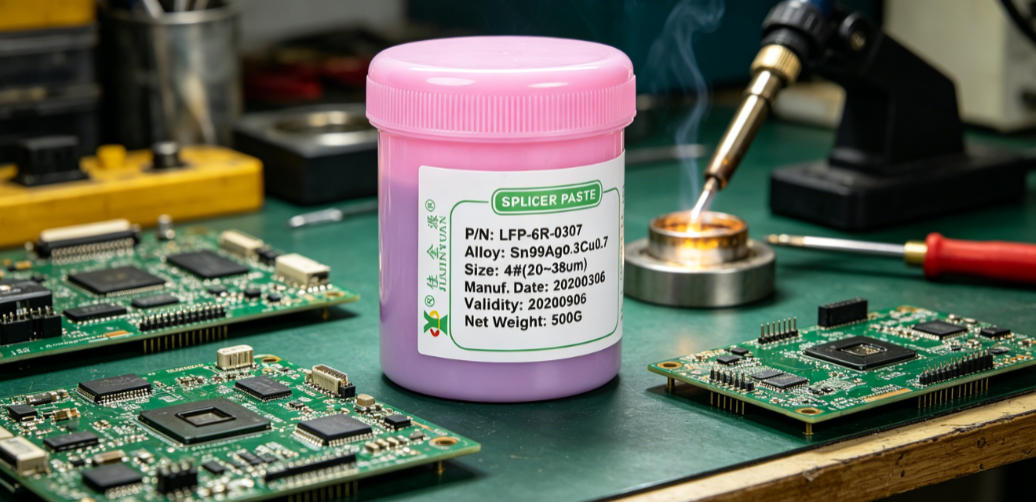
Abnormal solder paste viscosity during SMT soldering of fine-pitch chips can lead to typical defects such as solder bridging, insufficient solder, and misalignment. Based on real production line fault scenarios, this paper analyzes the causal chain between solder paste viscosity fluctuations and mismatched stencil printing parameters, and provides emergency and fundamental solutions including fine-tuning of squeegee pressure, environmental temperature and humidity control, and standardization of solder paste warm-up and stirring.
Published: 2026-08-27
In BGA reballing and soldering, the amount of solder paste used and the temperature process directly affect solder ball formation rate and solder joint reliability. Based on 20 years of production line experience, this article systematically outlines 12 key control points, covering solder paste selection, stencil aperture design, printing parameter matching, reflow profile zone setting, and common defect attribution. All recommendations are verified through real mass production.
Published: 2026-08-27
Solder paste mixing and solder paste warming are hidden cost black holes in SMT production lines. Standardized operations can reduce solder paste scrap rate by 12%, reduce printing defect rate by 3.8%, and extend stencil life by 20%. Based on 20 years of production line measured data, this article provides 6 immediately executable cost-reduction actions, covering real scenarios such as warming time control, mixing method switching, environmental temperature and humidity linkage, and batch management optimization.
Published: 2026-08-27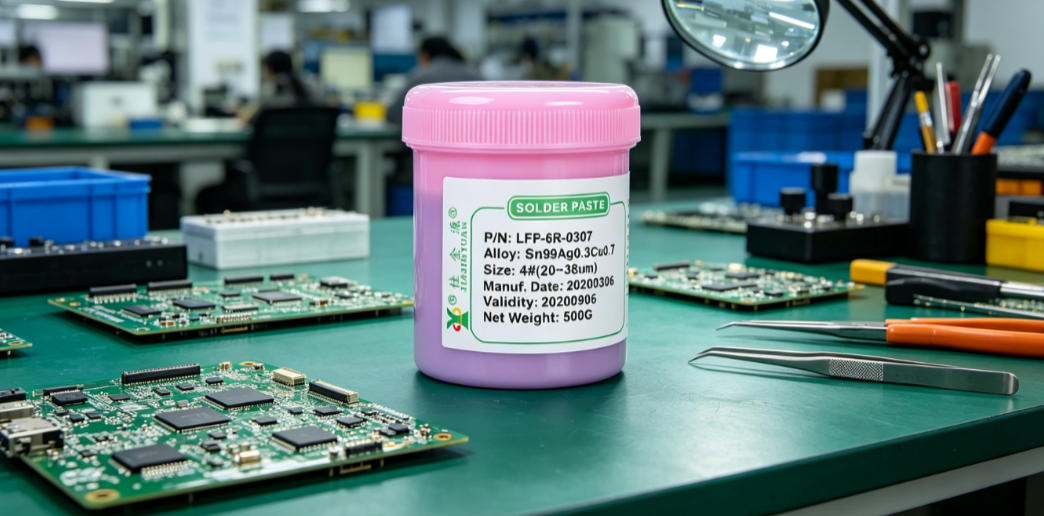
The selection of wave soldering bars requires comprehensive consideration of core parameters such as melting point, oxidation resistance, and copper corrosion rate. The typical Sn63/Pb37 solder bar has a melting point of 183°C, while that of Sn99.3/Cu0.7 is 227°C. The key to solder dross treatment lies in controlling the thickness of the liquid surface oxide film and the angle of the scraper. It is recommended to set the inclination angle of the scraper between 5° and 8°, and cooperate with mechanical scraping every 4 hours and nitrogen protection.
Published: 2026-08-27
The reflow profile settings for SAC305 solder paste directly affect solder joint wettability, void rate, and component reliability. Based on 20 years of production line measurement experience, this paper analyzes the causes of key parameter mismatches in each stage of preheating, soaking, reflow, and cooling for SAC305 solder paste, focusing on common soldering defects. It also provides immediately actionable practical solutions such as temperature bandwidth adjustment, chain speed fine-tuning, and thermocouple measurement calibration, while highlighting the hidden impacts of stencil aperture design, ambient temperature and humidity, and nitrogen purity on reflow profile stability.
Published: 2026-08-27
The SMT solder paste operation process covers five major stages: thawing, stirring, printing, component placement, and reflow soldering. The core of cost reduction across the entire process lies in reducing solder paste waste, extending stencil life, lowering the rework rate, and optimizing equipment energy consumption. Based on real production line data, this paper proposes 8 actionable measures covering four dimensions: personnel operation, parameter setting, auxiliary material management, and equipment maintenance.
Published: 2026-08-27
PCB pad plating directly affects solder paste wettability. Different plating types exhibit significant differences in interfacial reaction rate, intermetallic compound formation, and oxidation tendency during the reflow phase, leading to frequent defects such as cold solder joints, tombstoning, and poor solder wetting. Based on real production line failure cases, this article directly addresses the practical performance differences of mainstream plating types including ENIG, OSP, immersion silver, and HASL across solder paste printing, component placement, and reflow stages.
Published: 2026-08-27
Uneven thickness in SMT printing is one of the most frequent solder paste printing defects on production lines, directly causing soldering defects such as insufficient solder, solder bridging, and tombstoning. The root cause often lies in the combined effect of stencil tension attenuation, squeegee wear, and uneven PCB support. It is necessary to quickly locate deviation points by combining real-time SPI data, and then achieve a thorough solution through stencil life management, closed-loop calibration of squeegee pressure, and optimization of fixture structure.
Published: 2026-08-27Our technical team is always ready to provide professional solder material selection advice and SMT process solutions.