


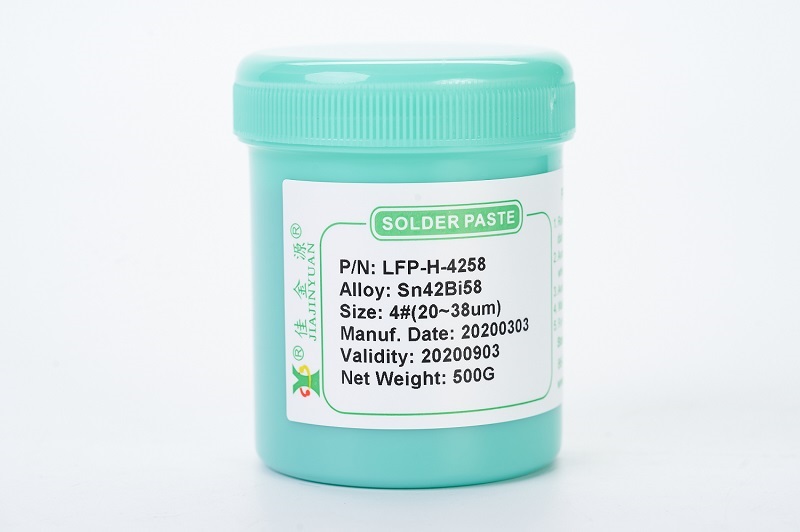
Low-temperature lead-free solder paste — what are its advantages? Generally, this type contains bismuth (Bi) and is a bit more brittle. Aluminum-substrate LED high-power lamps mostly use low-temperature Solder Paste, which has a melting point of 138℃. Products that cannot withstand high temperatures can only use low-temperature solder paste, but its soldering performance is not as good as that of high-temperature solder paste. The main reason for using low-temperature solder paste is that the product design cannot withstand conventional temperature requirements, such as LED or COB PCBs.
Low-temperature solder paste also has its advantages and disadvantages:
Disadvantages: Low-temperature solder paste is a Sn-Bi alloy, and its solder joints are prone to brittle cracking, so it is not suitable for products with general strength requirements. In addition, components are prone to falling off when using low-temperature solder paste — especially connector products that need to be plugged and unplugged during assembly are very likely to fall off.
Advantages: Low-temperature solder paste is relatively cheaper than medium-temperature and high-temperature solder paste because it contains silver, which reduces costs. Also, because the melting point of low-temperature solder paste is 138℃, lower furnace temperatures reduce energy consumption.
Related Articles
- What are the characteristics of lead-free low-temperature tin wire? Jia Jinyuan is here to answer
- What should be noted when soldering with lead-free solder wire?
- Can low-temperature tin wire be used when facing the problem of difficult welding of lamp heads?
- How to solve the problem of leakage when soldering low-temperature tin wire?
- How to test the quality of solder paste and solder paste? JJY Solder Paste Manufacturer
- The influence of low-temperature solder wire solder joint brightness and how to improve it?
- What are the differences between high-temperature solder paste and low-temperature solder paste? JJY is here to popularize knowledge for everyone
- What are the reasons for the large amount of smoke in low-temperature tin wire soldering?


