SMT Solder Paste Manufacturers.

Focused on SMT soldering processes, a one-stop electronic soldering solutions provider.

Here you can find knowledge about PCBA Soldering Material, including but not limited to usage methods, installation techniques, troubleshooting and more. Focused on SMT soldering processes. If you can't find what you need, please contact us anytime.
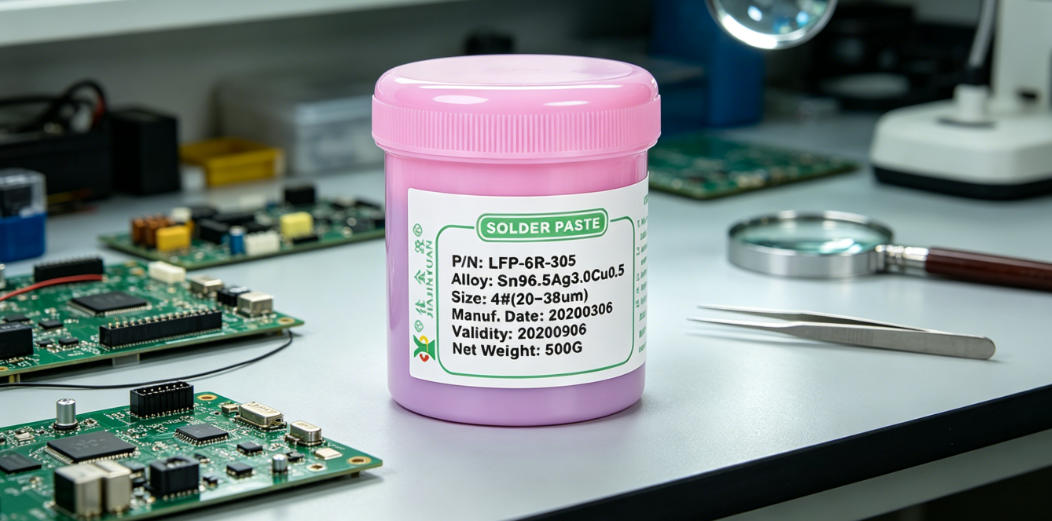
The amount of PCBA solder paste directly affects soldering quality and production efficiency. Reasonably controlling the amount of solder paste can reduce waste and improve product reliability. In actual production, comprehensive adjustments need to be made in combination with factors such as stencil aperture design, printing parameters, and component layout to ensure that the solder paste evenly covers the pads and avoid problems such as cold solder joints or short circuits.
Published: 2026-08-28PCBA reliability testing is a key method for verifying finished product solder joints in real service environments. Through three types of rigorous tests—temperature cycling resistance, random vibration, and damp heat aging—it exposes hidden defects such as cold solder joints, dry solder joints, and abnormal growth of interfacial intermetallic compounds. In particular, it provides data support for solder joint failure modes of high-density packages such as BGA and QFN, offering a direct basis for JJY's production line process optimization and customer delivery risk control.
Published: 2025-06-13PCBA soldering materials have complete SGS certifications, covering all categories including lead-tin alloys, lead-free solder pastes, fluxes and cleaning agents, and comply with mandatory export standards such as IEC 61249, RoHS 2.0 and REACH. They can be directly used for complete machine exports to the EU, North America, Japan and South Korea, avoiding customs clearance delays or batch returns caused by missing material qualifications.
Published: 2024-07-14PCBA soldering materials cover a full range of auxiliary materials including solder paste, solder wire, flux, cleaning agent and nitrogen. Their selection and control directly determine the SMT placement first-pass yield and long-term reliability. The Jiajinyuan series performs stably under stringent parameters such as reflow soldering peak temperature of 235℃±5℃, solder paste viscosity of 700±100Pa·s, and flux solid content of 18.5%.
Published: 2021-04-07The selection and control of solder materials in electronics manufacturing directly determine the first-pass yield of PCBA. The metal content, viscosity, and slump resistance of solder paste must match the stencil apertures, reflow profile, and component density of the production line. Jia Jinyuan solder paste performs excellently in 0.3mm pitch QFN printing, while solder wire and solder bar require focused monitoring of rosin residue and wetting angle consistency.
Published: 2020-08-29Solder auxiliary materials are indispensable supporting consumables in the PCBA soldering process, among which flux and PCB cleaning solvent directly affect soldering wettability, residue control and subsequent reliability. The Jiajinyuan series flux is compatible with 0201 to QFN0.4mm pads in SMT reflow soldering and wave soldering scenarios. Its rosin-based active ingredients take effect at 150℃ and complete activation at 235℃. When used with Jiajinyuan halogen-free PCB cleaning solvent, the ROSE method ion contamination value can be achieved <0.78μg/cm2.
Published: 2019-12-02Through on-site testing of Jiajinyuan domestic solder on the SMT production line under combinations of different temperature zone profiles, stencil apertures, and squeegee pressure settings, the soldering performance on circuit boards was evaluated. It was found that the difference in wettability and void rate between this domestic solder and imported materials is less than 8%. After optimizing solder paste storage temperature control and fine-tuning the nitrogen purity of the reflow oven, the first-pass yield of PCBA increased from 92.3% to 96.7%, significantly reducing circuit board soldering defects such as cold solder joints, tombstoning, and bridging.
Published: 2019-08-26Thermal cycling testing is a key method for PCBA reliability testing. Through harsh conditions of -40℃ to +125℃, temperature rise and fall completed within 5 minutes, and a 15-minute dwell per cycle, it simulates temperature stress changes of products in real environments, focuses on exposing microcracks in solder joints and fatigue failure of the IMC layer, and directly reflects the impact of SMT placement processes and reflow profiles on long-term service life.
Published: 2018-12-26The one-stop provision of PCBA soldering materials must closely align with the actual needs of the production line. As a core material, solder paste must match stencil apertures, reflow profiles, and component spacing. Jia Jinyuan solder paste shows no obvious slump during 24 consecutive hours of printing on 0.3mm pitch QFN. When paired with flux of the corresponding activity level, low-oxygen solder wire, and high-purity solder bar, it ensures consistent yield in SMT placement and manual soldering rework.
Published: 2018-05-23Selective wave soldering significantly reduces changeover time and fixture debugging frequency by precisely positioning soldering areas and skipping already surface-mounted components. In multi-variety, small-batch PCBA production, it compresses the preparation cycle per batch to within 15 minutes, greatly improving overall equipment effectiveness, and serves as the core process support for Jiajinyuan models to achieve high output in small and medium batch order scenarios.
Published: 2017-12-09Our technical team is always ready to provide professional solder material selection advice and SMT process solutions.