SMT Solder Paste Manufacturers.

Focused on SMT soldering processes, a one-stop electronic soldering solutions provider.

Here you can find knowledge about Flux, including but not limited to usage methods, installation techniques, troubleshooting and more. Focused on SMT soldering processes. If you can't find what you need, please contact us anytime.
The one-stop provision of PCBA soldering materials must closely align with the actual needs of the production line. As a core material, solder paste must match stencil apertures, reflow profiles, and component spacing. Jia Jinyuan solder paste shows no obvious slump during 24 consecutive hours of printing on 0.3mm pitch QFN. When paired with flux of the corresponding activity level, low-oxygen solder wire, and high-purity solder bar, it ensures consistent yield in SMT placement and manual soldering rework.
Published: 2018-05-23Cold solder joint is one of the most frequent soldering defects on SMT production lines. Pad oxidation and insufficient flux activity are the two main causes: the former prevents solder paste from wetting the copper surface, while the latter makes the oxide film difficult to remove. When the two factors overlap, the incidence of cold solder joint can increase by more than 3 times. The Jiajinyuan JHY-805 series flux has a measured wetting angle of <25° on OSP boards, effectively suppressing the formation of cold solder joints.
Published: 2018-05-09Nitrogen reflow is a key method for improving soldering reliability in high-end SMT processes, but higher nitrogen concentration is not always better. Actual measurements on Jia Jinyuan's production lines show that within the 99.5% to 99.9% range, every 0.1 percentage point increase raises nitrogen consumption costs by 8%, while the improvement in solder joint void rate slows down. The target value must be dynamically set based on PCB thickness, BGA solder ball size, and solder paste activity grade.
Published: 2016-08-20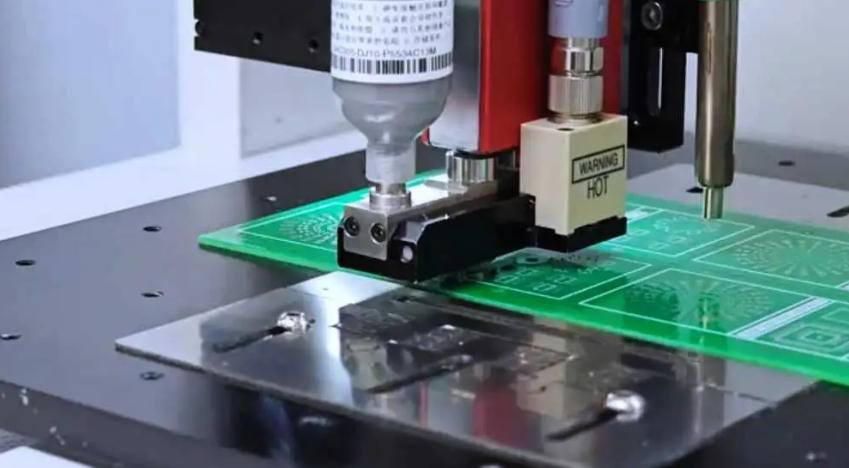
The acid value of solder paste directly affects solder wettability and residual corrosion risk. Acidic solder paste is suitable for difficult-to-solder metals but requires strict control of the cleaning process, while neutral solder paste is mostly used for high-reliability PCBs and no-clean scenarios. Selection must be comprehensively determined based on the oxidation degree of the substrate, the material of component pins, the reflow temperature window, and the production line's cleaning capability.
Published: 2015-11-01Ionic contamination of solder paste, decreased insulation resistance, and electrochemical migration are hidden yield killers in SMT production lines. Based on Jiajinyuan's 20 years of practical experience in third-party solder paste testing, this paper analyzes the migration pathways of halogen residues, organic acid activators, and metal ions in flux solder paste under temperature and humidity environments, and identifies failure precursor features that conventional solder paste testing cannot cover.
Published: 2014-11-20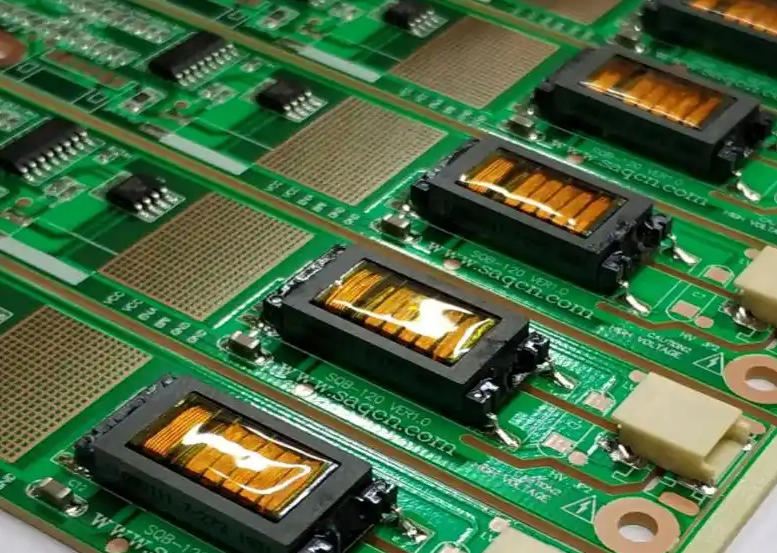
The rosin flux inside the solder wire plays key roles during the soldering process, such as removing oxide films, reducing surface tension, and improving wettability. Its content and distribution directly affect the smoothness of solder joints, tin wetting speed, and cold solder joint rate, making it a core indicator of the actual soldering performance of solder wires.
Published: 2013-11-27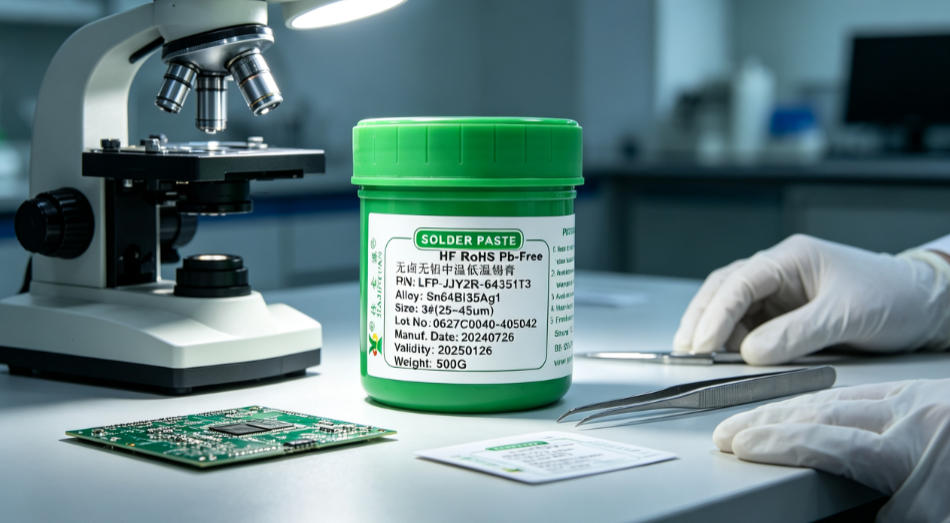
In BGA chip repair, the synergistic use of solder paste and flux paste directly affects ball mounting yield and soldering reliability. In actual production lines, the flux paste application amount and solder paste printing thickness must be dynamically adjusted based on chip size, solder ball diameter, and PCB pad oxidation level, to avoid pad corrosion caused by excessive activity or increased voids caused by insufficient activity.
Published: 2013-10-12Nitrogen reflow involves introducing high-purity nitrogen into the reflow oven to significantly reduce the oxygen content in the chamber to below 100 ppm, thereby inhibiting the oxidation reaction of metal components such as tin, silver, and copper in the solder paste at high temperatures, improving the brightness and wettability of solder joints, and reducing void rate and cold solder risks. It is a key process method for the stable mass production of Jia Jinyuan series reflow ovens in the soldering of fine-pitch devices such as QFN and BGA.
Published: 2013-04-16Voiding directly affects solder joint reliability in SMT soldering. Its main causes include insufficient volatilization of solder paste flux, pad oxidation, and improper reflow heating ramp-up, which often interact with each other in actual production lines. Jiajinyuan solder paste shows variations in void rate under different stencil aperture designs and reflow profile matching, requiring coordinated optimization across printing, storage, and reflow profile stages.
Published: 2013-02-08For reworking oxidized PCB pads, two issues must be addressed simultaneously: the surface oxide layer and poor wetting. Jia Jinyuan high-activity flux can effectively reduce CuO and lower interfacial tension. Combined with light mechanical scraping and nitrogen-protected reflow, it raises the first-pass rework yield of oxidized pads to over 92%, significantly outperforming the 65% achieved by traditional rosin-based flux.
Published: 2012-09-29Our technical team is always ready to provide professional solder material selection advice and SMT process solutions.