SMT Solder Paste Manufacturers.

Focused on SMT soldering processes, a one-stop electronic soldering solutions provider.

Here you can find knowledge about Flux, including but not limited to usage methods, installation techniques, troubleshooting and more. Focused on SMT soldering processes. If you can't find what you need, please contact us anytime.
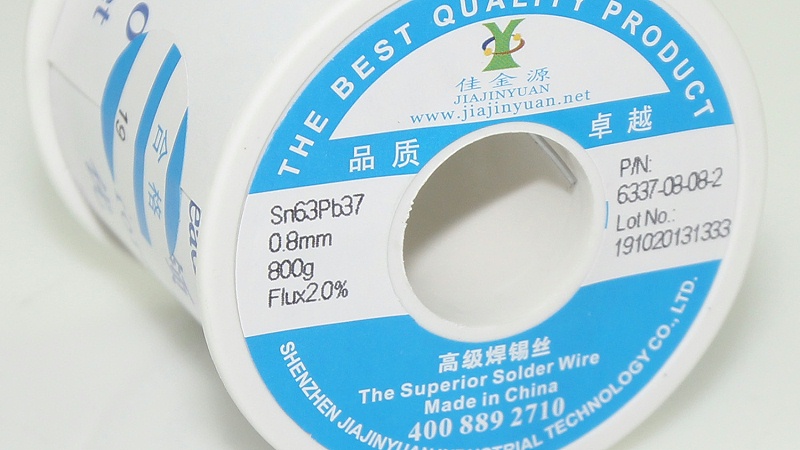
The partners are applyingLow-temperature tin wireDuring the process, it is often found that there is
Published: 2026-05-12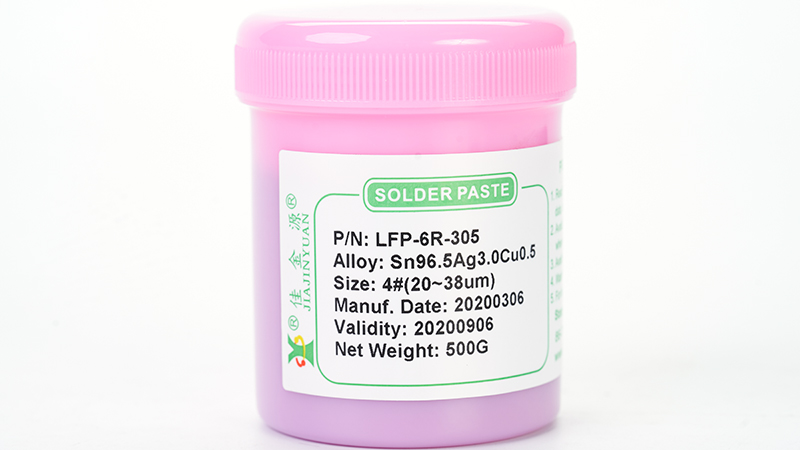
JJYSolder paste manufacturerIt will have an impact on the production and packaging process of solder
Published: 2026-05-12Unstable soldering quality of OSP boards often stems from a mismatch between the activity of solder paste flux and the chemical stability of the OSP film, leading to poor wetting, cold solder joints, or blackened solder joints. Jiajinyuan series solder paste precisely removes the OSP film without corroding the copper surface through a gradient activity design, and its controllable stripping capability for 0.3μm thick OSP film has been verified on multiple production lines.
Published: 2025-09-27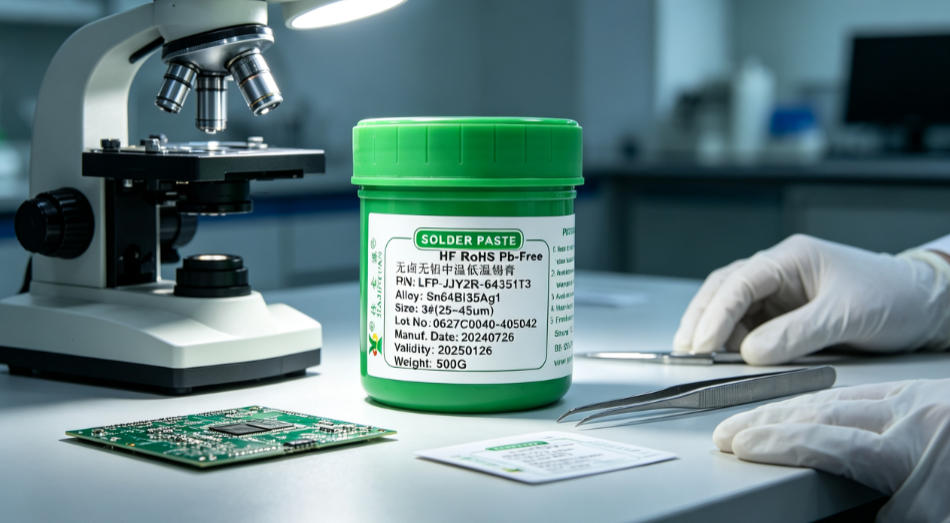
Flux paste and solder paste have completely different functional roles in SMT placement soldering. Flux paste contains no metal powder and has no forming capability, so it cannot replace solder paste to achieve solder joint bonding and structural support. It can only serve as an auxiliary supplement to solder paste or a flux reinforcement method for local rework.
Published: 2024-04-09For the typical solder paste defect of solder paste flux splatter contaminating PCBs, actionable improvement countermeasures that can be implemented immediately are proposed from four aspects: solder paste selection, stencil aperture design, printing parameter matching, and pre-reflow standing control. The synergistic matching of solder paste flux activity and viscosity is emphasized, avoiding reliance solely on cleaning or process compromises.
Published: 2024-01-16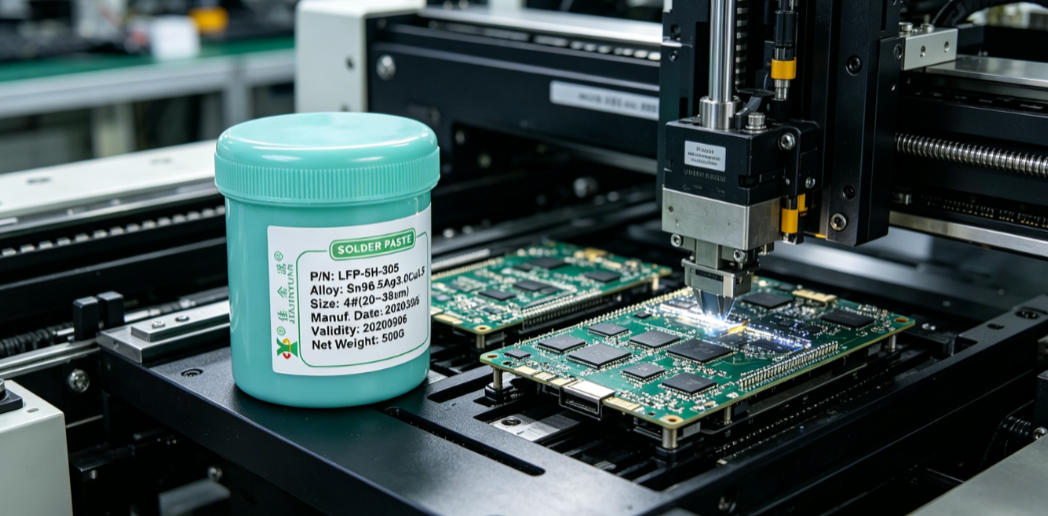
Although solder paste, solder cream, and solder wire all belong to electronic soldering consumables, their flux composition design logic is completely different. Solder paste emphasizes high viscosity and thixotropy to support precision dispensing; solder cream requires a balance of printability and reflow activity, adopting a combination of medium rosin content and volatile solvents; solder wire relies on low-solid-content flux in the core to achieve continuous supply and rapid volatilization. The three cannot be used interchangeably.
Published: 2023-11-04PCB pad treatment is a key pre-process for ensuring first-pass SMT soldering yield. Activation with Jia Jinyuan flux can effectively dissolve copper surface oxides, inhibit re-oxidation, and improve the wetting and spreading ability of solder paste. It demonstrates stable and reliable performance, especially in removing oxide layers on the pad surfaces of OSP boards and long-term stored PCBs.
Published: 2023-02-14Nitrogen reflow in BGA/QFN precision soldering suppresses oxidation, improves wettability, and optimizes the flowability of molten metal, stably reducing the void rate from 18%~25% under air reflow to 4.2%~6.8%. The measured purity of the Jiajinyuan nitrogen generator reaches 99.999%, with a dew point ≤ -60℃. Combined with precise flow control (15~25L/min) and real-time monitoring of furnace oxygen concentration (≤100ppm), it can directly reuse existing reflow oven hardware to complete production line upgrades.
Published: 2022-09-19
Whether solder paste solidifies and fails during low-temperature storage depends on its formulation system and storage conditions. Common rosin-based solder paste tends to stratify or increase in viscosity below 5°C, but this does not mean complete failure. Its printing performance can be restored as long as it is returned to a constant temperature of 25°C for more than 4 hours and fully stirred. The key to solder paste storage is to avoid repeated freeze-thaw cycles and moisture intrusion.
Published: 2022-02-18If excessive flux remains after solder paste reflow soldering, especially between high-density PCBs or fine-pitch components, ionic contamination can easily form, leading to reduced insulation resistance, excessive leakage current, or even short-circuit failures. Although no-clean solder paste is nominally specified as not requiring cleaning, the active components of its flux residue, when coupled with moisture on the board surface, can still significantly degrade surface insulation performance.
Published: 2021-08-28Our technical team is always ready to provide professional solder material selection advice and SMT process solutions.