SMT Solder Paste Manufacturers.

Focused on SMT soldering processes, a one-stop electronic soldering solutions provider.

Here you can find knowledge about Circuit Board Soldering, including but not limited to usage methods, installation techniques, troubleshooting and more. Focused on SMT soldering processes. If you can't find what you need, please contact us anytime.
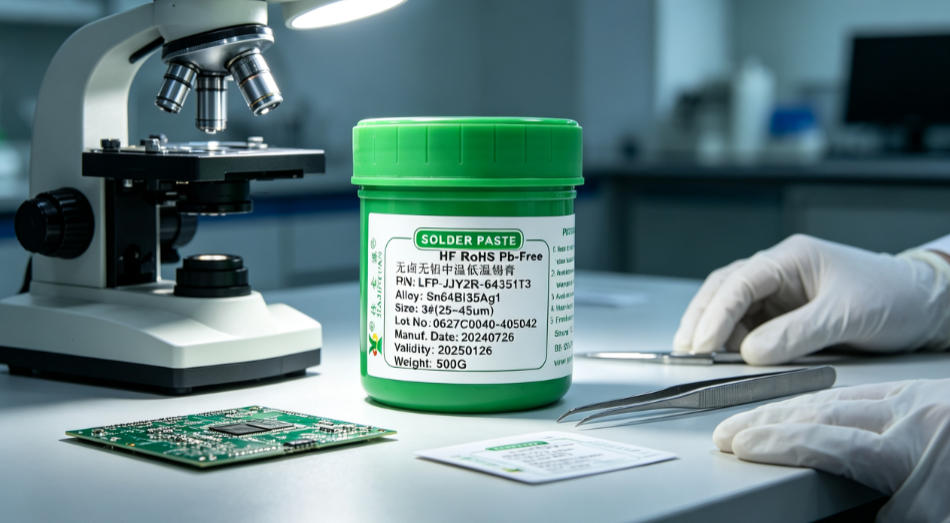
Solder paste printing on circuit boards is a key step in the SMT process, directly affecting soldering quality and production efficiency. By selecting the appropriate solder paste type, controlling printing parameters, and optimizing operational procedures, product yield can be effectively improved.
Published: 2026-08-28
Excessive solder paste can easily cause short circuits and damage to LED beads. The main reason is that solder paste accumulates on the circuit board to form a conductive path, triggering abnormal current. In actual production, the printing volume and distribution uniformity of solder paste must be strictly controlled to avoid LED bead burnout or poor soldering caused by solder paste short circuits.
Published: 2026-08-28
New energy circuit boards have extremely high requirements for soldering reliability; even a slight deviation in the selection of solder paste and solder wire can cause batch defects such as cold solder joints, bridging, and excessive voiding rates. Combined with real production line failure cases, this article directly addresses core pain points such as insufficient solder paste activity matching, mismatched silver content in solder wire, and lack of coordination between reflow profile and solder paste melting point, and provides immediately executable material verification processes and parameter locking methods.
Published: 2026-08-27
Frequent solder bridging short-circuit issues in fine-pitch ICs often stem from mismatched solder paste viscosity with printing accuracy and reflow behavior. Based on 20 years of measured data from SMT production lines, this paper points out that solder paste viscosity needs to be controlled within the range of 350±30Pa·s to balance squeegee transfer rate and pad retention, while reducing the risk of solder bridging in fine-pitch ICs.
Published: 2026-08-27Bridge is one of the most common and hardest-to-eliminate defects in fine-pitch IC soldering, manifesting as abnormal molten solder connection between adjacent pins that causes short circuits. Production line data from Jia Jinyuan shows that bridges account for over 67% in QFN0.4mm and BGA0.3mm packages, with the root causes concentrated in the combination of solder paste printing misalignment, improper stencil aperture design, and local overshoot of peak reflow soldering temperature.
Published: 2026-06-23Thick copper board welding must address three major challenges: large heat capacity, rapid heat dissipation, and difficult wetting caused by copper surface oxidation. During the SMT placement stage, the reflow peak temperature must be increased to 265℃±3℃ and the time above the liquidus line must be extended to over 90 seconds. For wave soldering, a combination of high-activity no-clean flux with a preheating temperature of 150℃, wave height of 10mm, and conveyor angle of 5° must be used. Otherwise, cold solder joints, excessive solder joint void rates, and pad peeling on thick copper PCBs are highly likely to occur.
Published: 2025-02-16Bridging is one of the defects most likely to cause batch short circuits in the SMT process, and pre-reflow AOI inspection can intercept bridging risks before soldering, avoiding a sharp increase in rework difficulty caused by high-temperature curing. Jiajinyuan AOI equipment, through high-resolution imaging and dynamic threshold algorithms, accurately identifies micron-level bridging trends after solder paste printing and after component placement is completed but before entering the reflow oven.
Published: 2024-02-04Circuit board soldering faces multiple challenges of high reliability, fine pitch, and heat-sensitive components in the medical, communication, and new energy sectors. Based on practical production line experience, this paper focuses on key processes such as solder paste selection, stencil aperture design, reflow profile optimization, and BGA rework, emphasizing solder joint wettability, void rate control, and cold solder joint identification methods. All parameters are derived from measured data from Jia Jinyuan production lines, without theoretical deduction.
Published: 2023-01-22Manual soldering is an irreplaceable key process in circuit board repair and rework. Especially during BGA rework, 0201 component touch-up soldering, and operations in heat-sensitive areas of multilayer boards, the coordinated matching of soldering iron temperature, solder wire activity, and solder paste rheological properties directly determines solder joint reliability. Jiajinyuan solder paste stands out in low-temperature wettability, residue insulation, and reflow stability. When used with constant-temperature soldering irons and micro-diameter soldering tips, it can significantly reduce the risk of thermal damage.
Published: 2022-09-05PCBA soldering materials cover a full range of auxiliary materials including solder paste, solder wire, flux, cleaning agent and nitrogen. Their selection and control directly determine the SMT placement first-pass yield and long-term reliability. The Jiajinyuan series performs stably under stringent parameters such as reflow soldering peak temperature of 235℃±5℃, solder paste viscosity of 700±100Pa·s, and flux solid content of 18.5%.
Published: 2021-04-07Our technical team is always ready to provide professional solder material selection advice and SMT process solutions.