
Focused on SMT soldering processes, a one-stop electronic soldering solutions provider.

Here you can find knowledge about Solder Paste Viscosity, including but not limited to usage methods, installation techniques, troubleshooting and more. Focused on SMT soldering processes. If you can't find what you need, please contact us anytime.
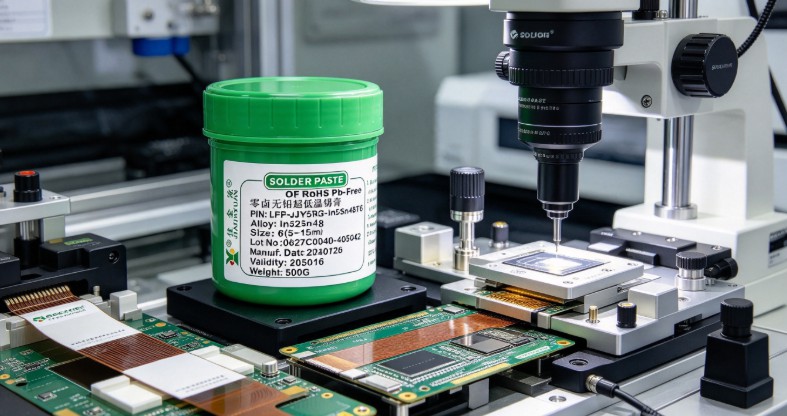
This technical guide validates how solder paste viscosity degrades after extended stencil dwell time, focusing on real-world SMT line conditions where pastes like LFP-JJY5RQ-0307T4 and LFP-JJY5RR-0307 sit for 30–90 minutes before printing, with viscosity loss exceeding 15% at 25°C ambient when exposed beyond 45 minutes, directly impacting QFN爬锡 consistency and aperture release below 0.3mm pitch.
Published: 2026-10-16
Solder paste viscosity adjustment is a key step in the SMT process, directly affecting soldering quality and production efficiency. Adding specific additives or adjusting formulation ratios can effectively improve the viscosity performance of solder paste, but the choice must be flexible based on the actual application environment.
Published: 2026-08-28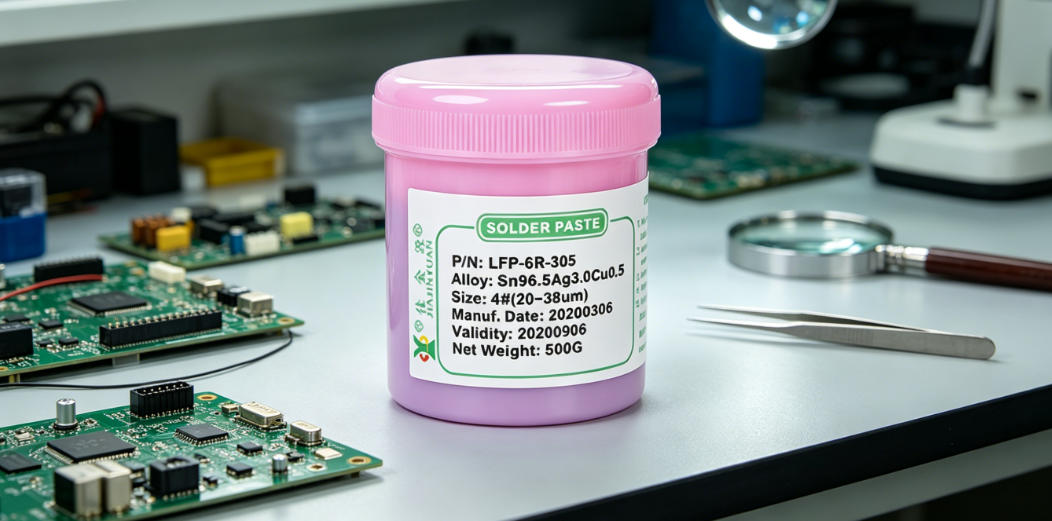
Solder paste viscosity adjustment is a key step in the SMT process, directly affecting printing quality and soldering results. By adjusting the height of the solder paste, its fluidity and adhesion can be optimized to meet different production requirements.
Published: 2026-08-28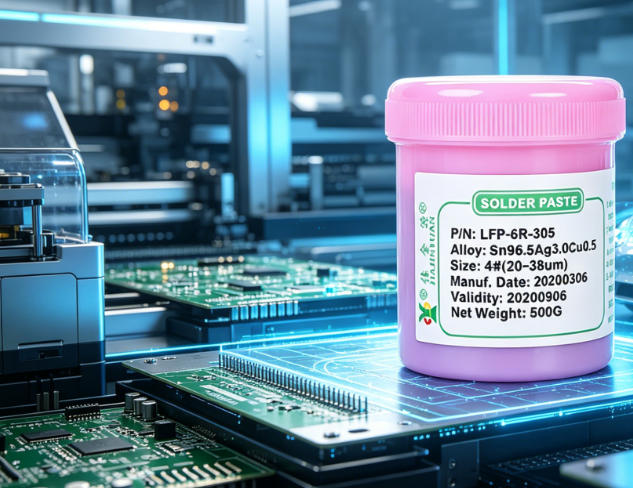
Solder paste tackiness standards are a key metric for measuring whether solder paste can stably adhere to a PCB during the printing process, directly affecting soldering quality and production efficiency. Through actual testing and process adjustment, ensuring solder paste tackiness complies with industry specifications can effectively prevent printing defects and subsequent failures.
Published: 2026-08-28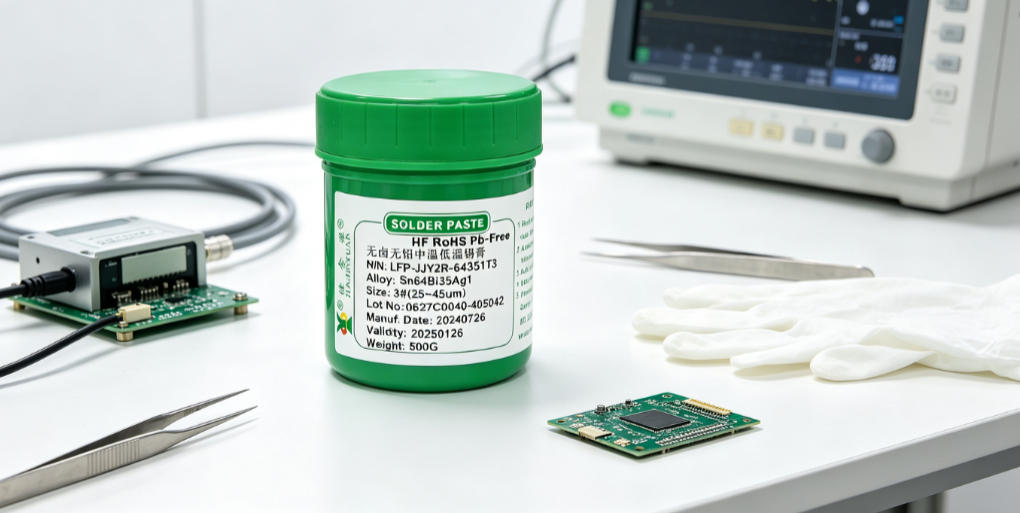
Solder paste viscosity management is a key step in the SMT process, directly affecting soldering quality. By adjusting the squeegee angle, controlling ambient temperature and humidity, and stirring properly, the fluidity of the solder paste can be effectively improved to ensure printing accuracy.
Published: 2026-08-28
The viscosity and thixotropic index of solder paste directly affect SMT printing accuracy and solder joint yield. IPC-J-STD-005 specifies that the viscosity range of solder paste is 200–800 Pa·s (25℃), and the thixotropic index should be ≥0.75. When the measured value is below 0.65, it is easy to cause solder spikes, bridging and insufficient solder; when it is above 0.95, it will lead to poor demolding and edge collapse. The production line needs to conduct actual measurement and temperature calibration every 4 hours using a Brookfield LVDV-II+ with matching cone-and-plate rotors to avoid data drift caused by an ambient temperature difference exceeding ±2℃.
Published: 2026-08-27
Abnormal solder paste viscosity during SMT soldering of fine-pitch chips can lead to typical defects such as solder bridging, insufficient solder, and misalignment. Based on real production line fault scenarios, this paper analyzes the causal chain between solder paste viscosity fluctuations and mismatched stencil printing parameters, and provides emergency and fundamental solutions including fine-tuning of squeegee pressure, environmental temperature and humidity control, and standardization of solder paste warm-up and stirring.
Published: 2026-08-27
Frequent solder bridging short-circuit issues in fine-pitch ICs often stem from mismatched solder paste viscosity with printing accuracy and reflow behavior. Based on 20 years of measured data from SMT production lines, this paper points out that solder paste viscosity needs to be controlled within the range of 350±30Pa·s to balance squeegee transfer rate and pad retention, while reducing the risk of solder bridging in fine-pitch ICs.
Published: 2026-08-27The viscosity of solder paste fluctuates sharply, directly affecting soldering quality and production efficiency. By observing the condition of the solder paste, using testing tools, and applying adjustment methods, problems can be quickly identified and resolved to ensure process stability.
Published: 2026-08-24Bridge formation is one of the most frequent soldering defects on SMT production lines. Low solder paste viscosity leads to aggravated slump after printing, while overly large stencil apertures directly expand the excess solder volume margin. The combination of the two makes it extremely easy to form solder bridges between adjacent pads. For the commonly used 8800 series solder paste from JJY, when its viscosity at 25℃ falls below 140 Pa·s and the aperture area exceeds the pad by more than 15%, the incidence of bridge formation rises significantly.
Published: 2025-01-01Our technical team is always ready to provide professional solder material selection advice and SMT process solutions.