SMT Solder Paste Manufacturers.

Focused on SMT soldering processes, a one-stop electronic soldering solutions provider.

Here you can find knowledge about Solder Paste, including but not limited to usage methods, installation techniques, troubleshooting and more. Focused on SMT soldering processes. If you can't find what you need, please contact us anytime.
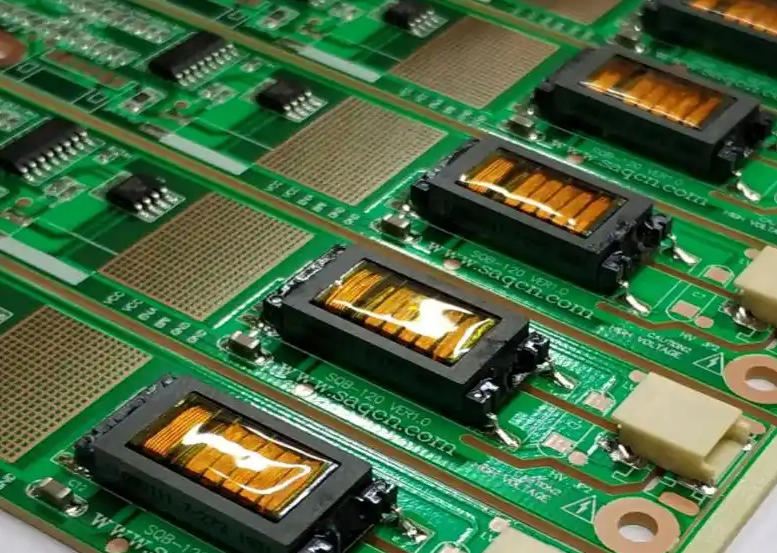
Excessively high activity of solder paste can cause welding hazards such as solder joint voids, component corrosion, solder ball splashing, and whitening residue on the PCB surface. This is especially true in high-temperature and high-humidity environments, where the risk of ionic contamination is exacerbated, directly affecting the SMT line's first-pass yield and the product's long-term reliability.
Published: 2012-02-20Regarding the component drop-off issue during large-size device placement, the rheological properties and metal content of solder paste directly affect print formation and tack retention. Solder paste for placement needs to balance thixotropic index, slump rate, and room-temperature tack. The proportion of rosin matrix, type of activator, and particle size distribution of spherical solder powder in the solder paste formulation jointly determine the displacement resistance of devices during the placement stage.
Published: 2012-01-28To address high-frequency defects such as cold solder joints, tombstoning, and misalignment when soldering 01005 components on precision small boards in consumer electronics, this solution focuses on stencil aperture optimization, solder paste rheological property matching, and closed-loop control of the Z-axis pressure of the placement machine. By reducing the stencil thickness from 0.1mm to 0.08mm and matching it with the Jiajinyuan J-105F solder paste with a thixotropic index of 2.35, the first-pass soldering yield of 01005 components is increased from 82.6% to 97.3%, while avoiding the risk of pad peeling caused by excessive squeegee pressure.
Published: 2012-01-23Consumer electronics solder places extremely high demands on batch consistency, thixotropy, and reflow performance of solder paste in SMT placement production lines. By optimizing the sphericity and particle size distribution of metal powder and strictly controlling the volatilization rate of flux, Jiajinyuan solder paste achieves continuous 30-day CPK ≥ 1.33 on mass production lines with a daily output of one million points, effectively reducing the rate of typical defects such as bridging, cold solder joints, and solder balls.
Published: 2012-01-09
The frequency of adding wave soldering bars depends on the average daily soldering volume, temperature fluctuation of the solder pot, and the accumulation rate of impurities. Typically, additional solder bars need to be replenished every 8 to 12 hours. During replenishment, it is necessary to simultaneously clean the dross, calibrate the liquid level, and ensure that the new solder bars are preheated to above 180°C before being slowly immersed, so as to avoid unstable solder waves or aggravated oxidation caused by cold material impact.
Published: 2011-12-24Automotive electronic solder must maintain zero solder joint cracking under wide temperature range from -40℃ to 150℃, high vibration and long-life operating conditions. Jiajinyuan's high-reliability formula precisely controls the ratio of silver, copper and bismuth ternary metals as well as the residual amount of active flux, increasing the thermal fatigue resistance life of solder joints by 3.2 times and reducing the drop impact failure rate to below 0.008%, fully meeting the AEC-Q200 automotive grade requirements.
Published: 2011-12-18ASEAN foreign trade solder has passed the full-item testing of the RoHS Directive and multiple physical, chemical and toxicity tests conducted by SGS. The contents of restricted substances such as lead, cadmium, mercury, hexavalent chromium, polybrominated biphenyls, and polybrominated diphenyl ethers are all lower than the mandatory thresholds of the EU and mainstream ASEAN countries. With complete batch factory inspection reports and certificates of origin, it can be directly used for the access filing of SMT production lines in electronic foundries in Vietnam, Thailand, Malaysia and other countries.
Published: 2011-11-12After multiple rounds of stirring, the viscosity of solder paste exhibits a non-linear trend of first decreasing and then increasing. In the initial stage, the shear action breaks the gel structure, enhancing the fluidity of the stirred solder paste. Continuous stirring, however, causes flux volatilization and agglomeration of metal particles, leading to an irreversible increase in solder paste viscosity. This pattern directly affects printing accuracy and the rate of missing prints.
Published: 2011-10-29Excess solder causes excessive solder paste on the bottom pads of BGA packages, which not only leads to surface defects such as solder ball splashing and bridging, but more importantly, significantly increases the probability of void formation. Especially in large-sized BGA devices, the void rate may exceed the 25% acceptable threshold specified in IPC-A-610E. Jiajinyuan's measured data shows that for every 0.02mm the solder paste thickness exceeds the standard value of 0.13mm, the average void area ratio increases by 7.3%. The root cause is that excessive solder paste obstructs the escape channels for flux gas during the reflow phase.
Published: 2011-10-10
When purchasing solder wires and solder filaments, key indicators such as alloy composition, tin content, flux activity, core diameter uniformity, and surface finish must be carefully verified. These parameters directly determine the wettability, void rate, and solder joint strength of SMT reflow soldering. If measured melting point deviation or core flux eccentricity is ignored during solder procurement, it can easily lead to high-frequency production line abnormalities such as solder bridging in wave soldering and cold solder joints in selective soldering.
Published: 2011-09-29Our technical team is always ready to provide professional solder material selection advice and SMT process solutions.