SMT Solder Paste Manufacturers.

Focused on SMT soldering processes, a one-stop electronic soldering solutions provider.

Here you can find knowledge about Solder Paste, including but not limited to usage methods, installation techniques, troubleshooting and more. Focused on SMT soldering processes. If you can't find what you need, please contact us anytime.
RoHS solder SGS testing certification is a mandatory threshold for export-oriented EU electronic assembly production lines. Jiajinyuan RoHS solder has passed SGS's full set of heavy metal and organic substance testing, with all six items—lead, cadmium, mercury, hexavalent chromium, polybrominated biphenyls, and polybrominated diphenyl ethers—meeting the standards. Customs clearance documents include the original SGS report, Declaration of Conformity, Material Safety Data Sheet, and batch factory inspection records, and the complete set of documents can be directly used for customs declaration and customer factory audits.
Published: 2011-04-11Loss of temperature and humidity control in the SMT printing workshop will cause fluctuations in solder paste viscosity, leading to defects such as insufficient solder, solder bridging, and misalignment. Jiajinyuan solder paste has the most stable viscosity under an environment of 22℃±2℃ and 45%RH±5%RH. When the temperature difference exceeds 3℃ or the humidity deviation exceeds 8%RH, the printing defect rate will rise. Process control must be achieved through closed-loop monitoring and zoned humidity control.
Published: 2011-03-20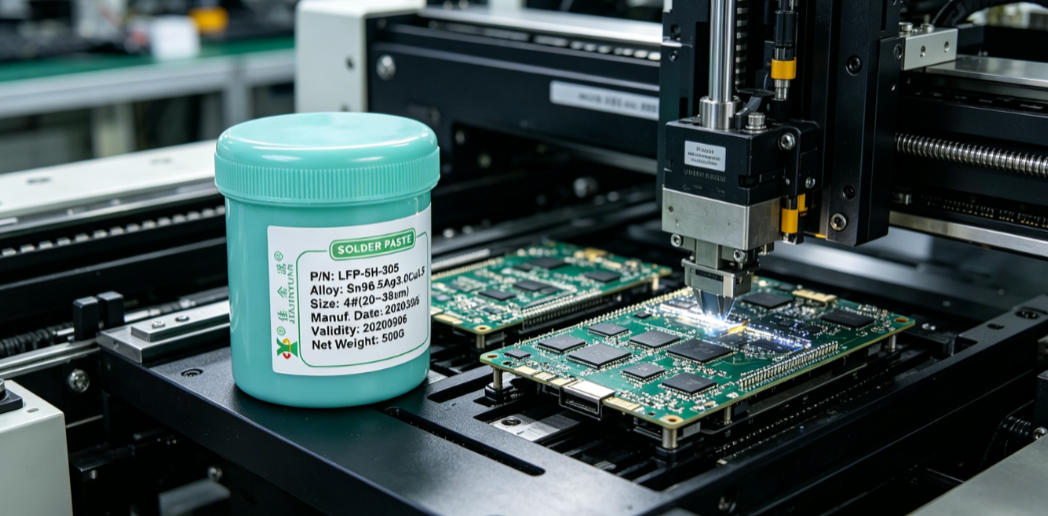
Solder paste, solder wire, and solder bar have clearly defined roles in SMT and manual soldering: solder paste is used for stencil printing of surface-mount components, solder wire is suitable for repair touch-up soldering and small-batch through-hole soldering, while solder bar is exclusively used in wave soldering machines. The three have essential differences in metal content, flux activity, melting point curve, and storage requirements, and selection must match the process path, equipment capability, and reliability level.
Published: 2011-03-10Domestic solder covers wire diameters from 0.3mm to 3.0mm, all temperature ranges (183℃~227℃) for both leaded and lead-free variants, and three flux systems: rosin, no-clean, and water-washable. It is compatible with multiple scenarios including high-speed SMT printing, wave soldering, dip soldering, and manual touch-up soldering. The Jiajinyuan series has a measured wetting angle ≤35°, bridging rate below 0.08%, and residual ion content <0.5μg/cm2. No adjustment to stencil apertures or reflow temperature profile is required when switching materials on the production line.
Published: 2011-03-06This article elaborates on the actual industry fluctuation logic of solder paste unit purchase price and minimum order quantity, explains the price composition in combination with different brands, metal contents and packaging specifications, clarifies that production line verification requirements and process parameters must be provided for solder paste sample applications, points out that the conventional solder paste procurement cycle is 5 to 12 working days, and urgent orders can be shortened to 3 days, but inventory and logistics routes must be confirmed simultaneously.
Published: 2011-02-23When performing rework soldering on FPC flexible boards, traditional solder paste requires a peak temperature above 235°C, which easily causes substrate blistering, copper foil peeling, or cover film cracking. In contrast, low-temperature solder paste reduces the reflow peak to 180°C ± 5°C, significantly lowering thermal stress while ensuring wetting, spreading, and solder joint strength. It is a key solder paste selection strategy that balances reliability and yield in precision rework of flexible printed circuits.
Published: 2011-02-15
Flux paste residue must be thoroughly removed with a matching solder cleaning agent; otherwise, it will lead to false ICT test results, corrosion of gold wire solder joints, or reduced adhesion of conformal coating. In actual production lines, isopropyl alcohol-based cleaning agents deliver consistent results for rosin-based flux paste but evaporate quickly; water-based cleaning agents are suitable for no-clean flux paste but require extended rinsing time; hydrocarbon-based cleaning agents have strong solvency for high-solid-content flux paste but carry the risk of swelling equipment seals.
Published: 2011-02-03Consumer electronics solders must balance low melting point, high wettability, and low corrosivity of residues. Especially in high-density PCBA soldering for mobile phone earphones and similar devices, Jia Jinyuan SN96.5AG3.0CU0.5 solder has been experimentally measured to have a wetting angle of <25° on 0.3mm pitch BGA and 0201 components, with the post-reflow ICT test defect rate stably controlled within 80ppm.
Published: 2011-01-18Silver-plated board soldering is a critical step in the SMT process where abnormalities such as pad blackening, poor wetting, and excessively thin IMC layers are prone to occur. Based on actual production line cases from Jia Jinyuan, this article focuses on the dependence of silver-plated board soldering on the quality of PCB silver surface treatment, and provides a detailed explanation of practical key points such as silver layer thickness control, OSP residue impact, reflow profile adaptation, and stencil aperture compensation.
Published: 2011-01-04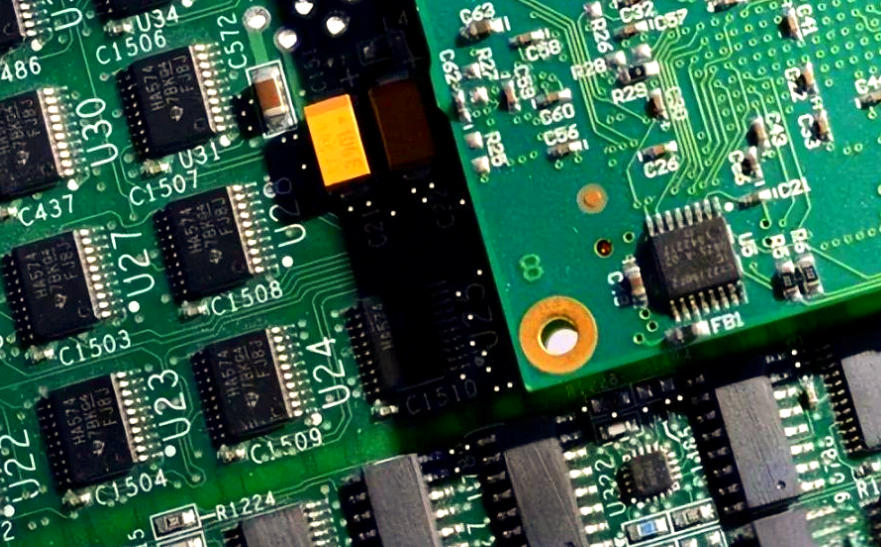
Solder wire and solder filament are often used interchangeably in SMT production lines, but they actually refer to the same type of flux-cored solder, with the difference only lying in industry customary naming conventions. "Solder wire" is more commonly used in the colloquial language of electronics factories, while "solder filament" is frequently seen in purchase orders and supplier documents. For specification identification, key focus should be placed on diameter tolerance, flux content, rosin type, and J-STD-006 certification markings.
Published: 2010-12-11Our technical team is always ready to provide professional solder material selection advice and SMT process solutions.