SMT Solder Paste Manufacturers.

Focused on SMT soldering processes, a one-stop electronic soldering solutions provider.

Here you can find knowledge about Solder Melting Point, including but not limited to usage methods, installation techniques, troubleshooting and more. Focused on SMT soldering processes. If you can't find what you need, please contact us anytime.
Excess solder is the most easily overlooked yet highly consequential defect in the SMT printing process. Excessive solder paste transfer is directly caused by oversized stencil apertures and improper setting of squeegee angle, pressure, and speed parameters, which in turn triggers cascading issues such as bridging between pads, tombstoning, and post-reflow solder balls. On-site data from JJY shows that when the aperture area ratio exceeds 1.05 and the squeegee pressure is >6.5kg, the incidence of excess solder increases by 3.2 times.
Published: 2014-07-15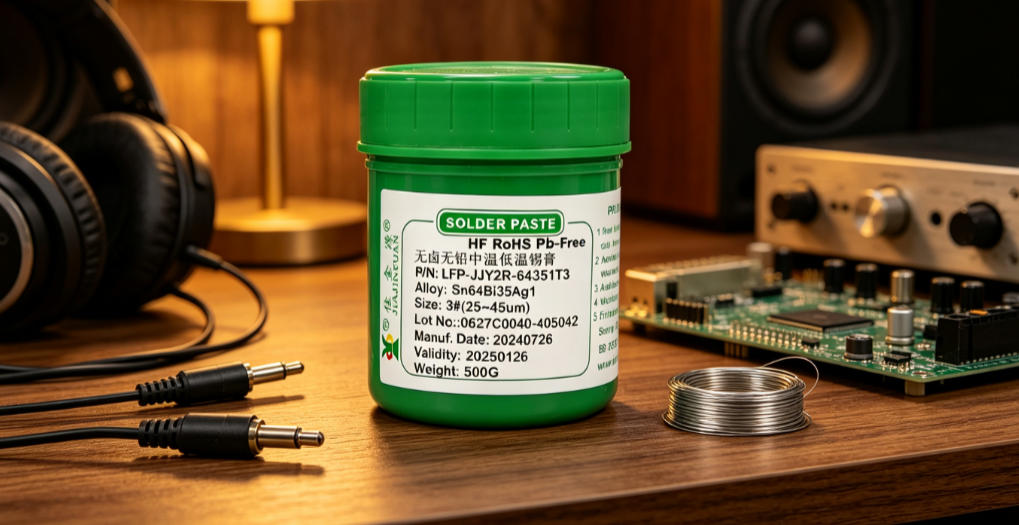
Solder paste can significantly reduce oxidation, improve wettability, and lower void rate in a nitrogen reflow soldering environment, with particularly notable improvements in soldering yield for OSP copper pads, fine-pitch QFNs, and 0201 components. Nitrogen purity must be stably controlled above 99.99% to deliver practical benefits.
Published: 2014-07-14SGS solder has passed authoritative SGS testing and a complete report has been issued. All environmental protection indicators, including lead, cadmium, mercury, hexavalent chromium, polybrominated biphenyls, and polybrominated diphenyl ethers, can be traced batch by batch, meeting the mandatory requirements of IEC 62321 and RoHS 2.0, providing verifiable compliance assurance for SMT production lines.
Published: 2014-06-23During the FPC soldering process, the flexible board is prone to deformation when heated, which is a high-frequency failure point on the production line. Engineers from Jia Jinyuan adopted a combination of measures, including optimizing stencil aperture design, adjusting reflow soldering conveyor speed and temperature gradient, and using dedicated fixtures for pressing, to increase the first-pass yield of FPC soldering from 72% to 96.5%, focusing on solving three major pain points: solder paste misalignment, insufficient solder wetting on pads, and substrate wrinkling.
Published: 2014-06-09In circuit board soldering, cold solder joints, solder beads, and voids are high-frequency defects on production lines, directly affecting first-pass yield and long-term reliability. Based on 20 years of practical data from the Jiajinyuan SMT production line, this paper focuses on key intervention points such as solder paste printing accuracy, dynamic matching of reflow profiles, stencil aperture optimization, and nitrogen concentration gradient control, and provides immediately implementable parameter adjustment combinations and failure reproduction verification methods.
Published: 2014-05-14Reflow ovens are core equipment in SMT production lines that enable precise solder melting and reliable connections. By precisely controlling the temperature ramp-up rate, soaking time, and peak temperature through segmented temperature control, they directly affect the occurrence rate of defects such as cold solder joints, tombstoning, and cold soldering. Jiajinyuan reflow ovens can stably support 0201 components and QFN5x5 double-sided mixed mounting processes in actual mass production.
Published: 2014-04-28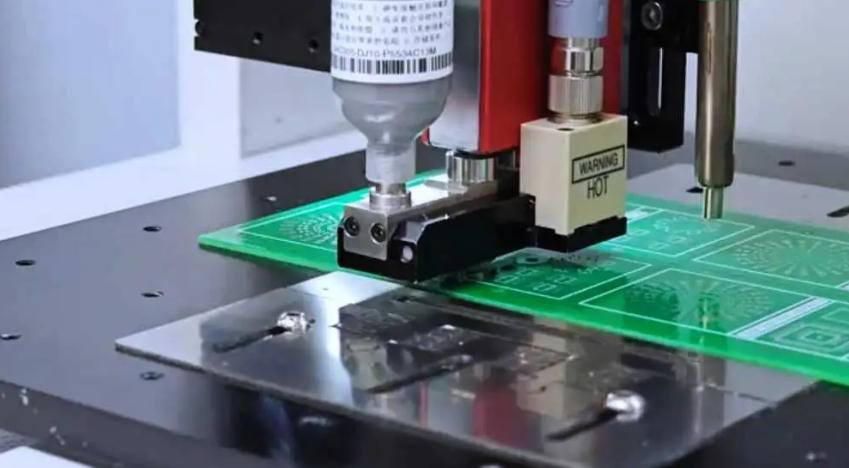
Severe spatter during solder wire welding is mostly caused by violent flux volatilization, excessively high soldering iron temperature, or moisture absorption of the solder wire. Combined with actual production line measurements, it was found that when the ambient humidity exceeds 65%RH and the solder wire is stored unsealed for more than 72 hours, the welding spatter probability increases by 3 times. Lowering the soldering iron temperature from 380℃ to 320℃ and using it in conjunction with a preheating plate can reduce solder wire welding spatter by nearly 80%.
Published: 2014-04-25Addressing the frequent solder bridging, shorting, and solder ball defects of solder paste that occur during SMT placement of devices with 0.3~0.4mm fine-pitch pins, this paper proposes a rapid, reproducible optimization pathway for solder paste printing parameters based on real production line cases. It covers key control points including stencil aperture design, squeegee pressure and speed matching, and solder paste pre-warming and stirring specifications, and emphasizes the decisive influence of solder paste printing stability on the subsequent formation of solder balls during reflow soldering.
Published: 2014-04-07Consumer electronics solder faces the dual challenges of solder bead residue and high solder joint void rate in SMT production lines. Jiajinyuan low-solder-bead low-void consumer electronics solder optimizes the metal powder particle size distribution and flux activity ratio, reducing the number of post-soldering solder beads for 0201 components to ≤3 per square centimeter and stably controlling the BGA solder joint void rate at ≤8%, significantly improving the first-pass yield of consumer electronics solder on high-density PCBs.
Published: 2014-03-19The thickness and aperture design of SMT stencils are core variables determining the forming quality of solder paste printing. For 0402 and 0201 components, the solder paste volume deviation between 0.12mm and 0.15mm stencils can reach 28%. When the aperture aspect ratio is less than 1.5, the edge collapse rate increases by 3 times. Measured data from Jia Jinyuan's production line shows that, under the same pad conditions, trapezoidal apertures improve the solder paste release rate by 12% compared to rectangular apertures.
Published: 2014-02-02Our technical team is always ready to provide professional solder material selection advice and SMT process solutions.