SMT Solder Paste Manufacturers.

Focused on SMT soldering processes, a one-stop electronic soldering solutions provider.

Here you can find knowledge about Leaded Solder Bar, including but not limited to usage methods, installation techniques, troubleshooting and more. Focused on SMT soldering processes. If you can't find what you need, please contact us anytime.

Sn63Pb37 leaded solder paste remains irreplaceable in high-reliability fields such as automotive electronics and industrial control due to its eutectic properties and compatibility with mature processes. Its reflow process parameters are evolving toward narrower windows, higher consistency, and stronger equipment coordination. The driving factors include the domestic reflow soldering temperature control accuracy being improved to ±1.5℃, the Tg value of PCB boards generally rising above 150℃, and the proportion of 0201 and smaller package devices exceeding 38%. Practitioners need to simultaneously upgrade the calibration frequency of reflow profilers, refine the compensation rules for stencil apertures, and establish a batch-specific mapping table between solder paste viscosity and printing speed.
Published: 2026-08-27
TLP-7RN series QFN-specific leaded solder paste is developed to address the soldering challenges of QFN packages, effectively improving solder wetting rate and soldering reliability.
Published: 2026-08-24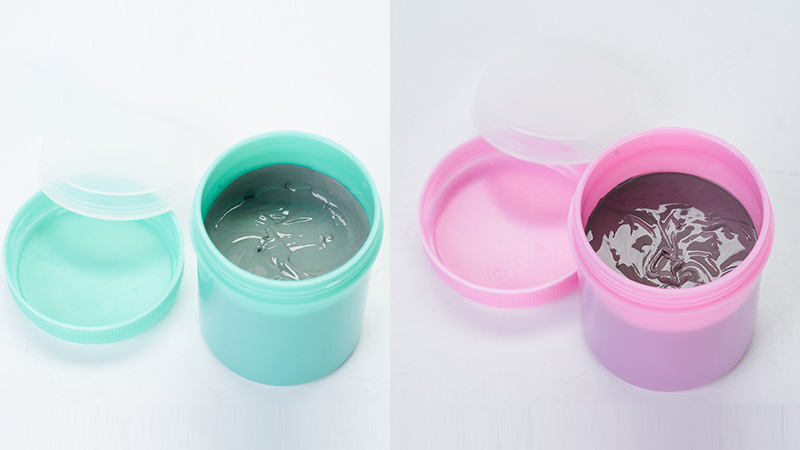
inSMTThe unused ones in the patchSolder pasteIt would be a waste to throw them away. Next time, anot
Published: 2026-05-15
For both leaded and lead-free productionFocusSex, Jia JinyuanSolder paste manufacturerIt has a relat
Published: 2026-05-12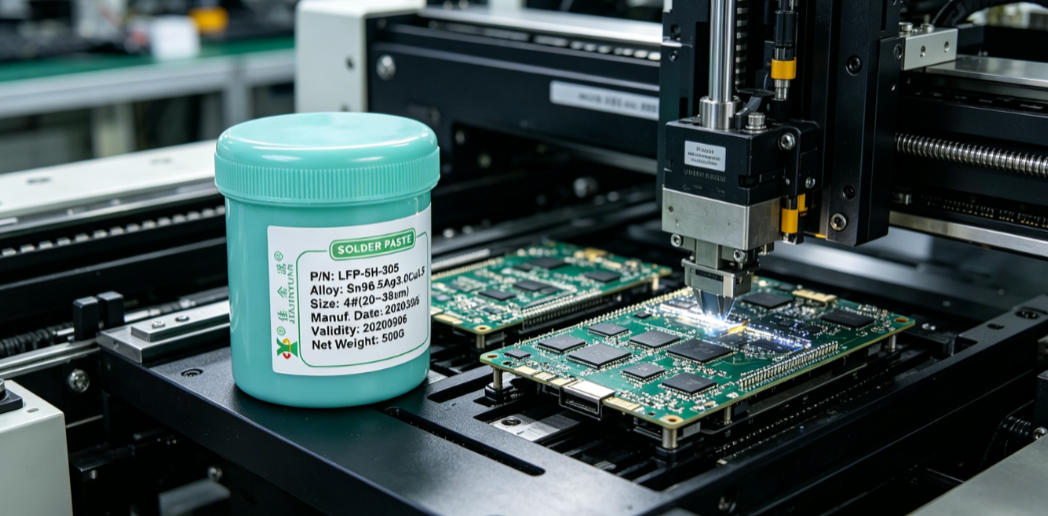
Lead-free solder paste and leaded solder paste have essential differences in composition, melting point, wettability, and reflow profile settings. The key to distinguishing them lies in the RoHS marking on the solder paste batch label, the color of flux residue, and the glossiness of solder joints. Since lead-free solder has a high melting point and high surface tension, it is necessary to increase the peak temperature and extend the time above the liquidus, while imposing higher requirements on stencil aperture design, squeegee pressure, and printing speed.
Published: 2024-01-23
Lead-containing and lead-free solder wires must not be mixed on the same production line. Due to the large difference in melting points, incompatible flux systems, and high risk of residue corrosion, mixing them will lead to cold solder joints, bridging, brittle solder joint cracking, and AOI misjudgment. The 217°C melting point of lead-free solder and the 183°C melting point of lead-containing solder wire create a thermal stress conflict, and their halogen contents and activation temperatures differ, which can easily cause batch soldering defects.
Published: 2021-11-12Lead-free solder paste and leaded solder paste have essential differences in melting point, soldering temperature, halogen content and applicable scenarios. Domestic solder paste brands such as Jia Jinyuan have covered the full range from zero-halogen high-temperature to ultra-low-temperature products. Their 0307/305 alloy powder T3-T5 specifications perform stably in QFN solder wetting rate, void control and laser welding adaptability, providing a reliable choice for production lines to replace leaded solder paste.
Published: 2009-01-17Our technical team is always ready to provide professional solder material selection advice and SMT process solutions.