SMT Solder Paste Manufacturers.

Focused on SMT soldering processes, a one-stop electronic soldering solutions provider.

Here you can find knowledge about Lead-Free Solder Wire, including but not limited to usage methods, installation techniques, troubleshooting and more. Focused on SMT soldering processes. If you can't find what you need, please contact us anytime.
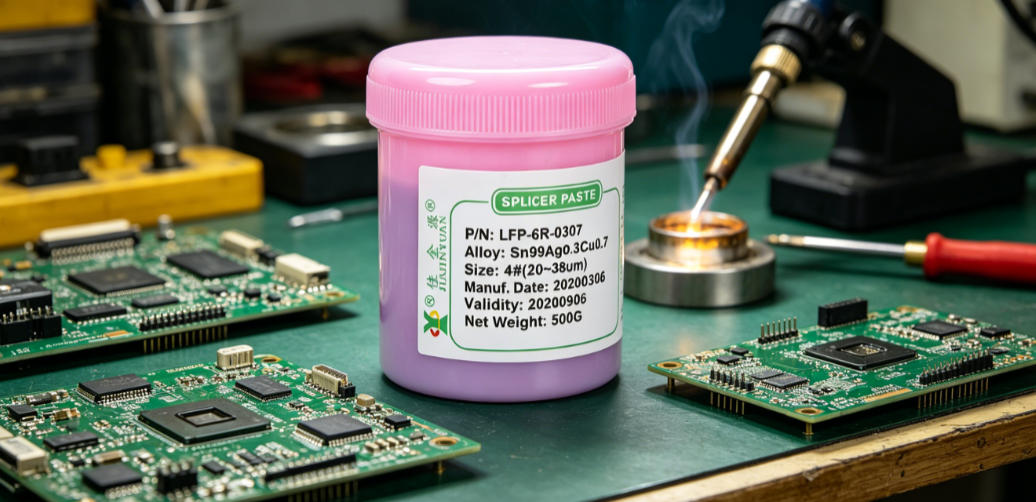
Lead-containing solder paste and lead-free solder paste each have their own advantages, and the selection should be based on process requirements and environmental protection regulations. Lead-containing solder paste offers stable soldering performance and is suitable for high-precision electronic products; lead-free solder paste complies with environmental regulations but is more sensitive to temperature control. In practical applications, a comprehensive evaluation should be conducted based on product characteristics, equipment conditions, and costs.
Published: 2026-08-28
For large-pitch conventional SMT production scenarios for LEDs, LFP-8MA-SC07 lead-free solder paste, with its high activity, low residue, and good solder climbing performance, is an ideal soldering material in the lighting industry and is suitable for conventional process requirements.
Published: 2026-08-28
How to select solder paste for SMT must be based on actual production line failures to reverse-engineer process adaptability. Lead-containing solder paste is easy to solder but restricted by RoHS; lead-free solder paste has a high reflow temperature, which easily causes BGA cold solder joints and PCB blistering; halogen-free solder paste, while solving halogen corrosion, sacrifices part of its wettability. The core of solder paste selection lies in matching equipment capabilities, component temperature resistance windows, and long-term reliability requirements. Especially for halogen-free solder paste applications in high-temperature and high-humidity environments, stencil aperture and reflow profile need to be adjusted simultaneously.
Published: 2026-08-27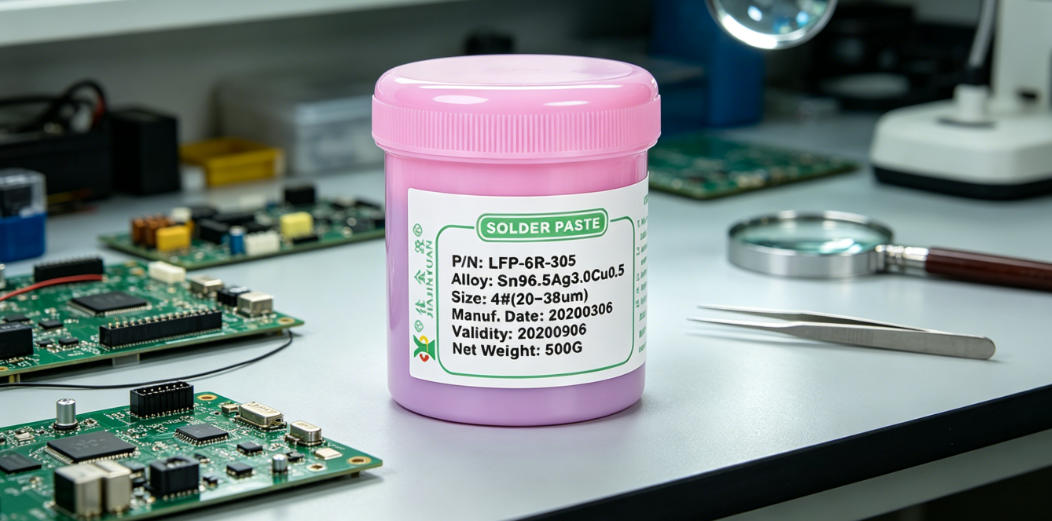
Aiming at typical defects such as solder joint blackening, cold solder joints, and stencil clogging caused by solder paste and solder bar switching during the lead-free to leaded transition in the SMT line changeover process, this paper, based on real production line cases, details rapid response actions including emergency line shutdown and cleaning, flux residue removal, and equipment pipeline passivation treatment, and proposes root-cause elimination measures such as solder paste zoning management, solder bar batch binding, and dynamic monitoring of reflow oven nitrogen purity, providing an immediately executable closed-loop solder paste and solder bar switching process for SMT line changeover.
Published: 2026-08-27
The reflow profile settings for SAC305 solder paste directly affect solder joint wettability, void rate, and component reliability. Based on 20 years of production line measurement experience, this paper analyzes the causes of key parameter mismatches in each stage of preheating, soaking, reflow, and cooling for SAC305 solder paste, focusing on common soldering defects. It also provides immediately actionable practical solutions such as temperature bandwidth adjustment, chain speed fine-tuning, and thermocouple measurement calibration, while highlighting the hidden impacts of stencil aperture design, ambient temperature and humidity, and nitrogen purity on reflow profile stability.
Published: 2026-08-27
Solder paste slump after printing directly affects component placement accuracy and reflow soldering quality. The main causes include low solder paste viscosity, improper stencil aperture design, excessive squeegee pressure, and uncontrolled ambient temperature and humidity. Typical manifestations include blurred edges, bridging, or height drop exceeding 15% within 30 seconds after printing. Systematic troubleshooting should be conducted in combination with practical parameters such as viscosity of 750–950 Pa·s, squeegee angle of 55°–62°, and release speed of 25–40 mm/s.
Published: 2026-08-27
The LFP-5RTS series halogen-free and lead-free high-temperature solder paste is suitable for high-temperature reflow soldering processes, and delivers excellent soldering stability and environmental performance.
Published: 2026-08-24
The LFP-5RNTT series halogen-free and lead-free high-temperature solder paste is renowned for its low residue, high reliability, and environmental compliance, making it a preferred soldering material in the electronics manufacturing industry.
Published: 2026-08-24
The expansion of 5G base station construction scale has driven the application demand for lead-free solders, bringing new growth to high-reliability welding materials.
Published: 2026-08-24
Jiajinyuan LFP-5RQ series halogen-free and lead-free high-temperature solder paste adopts a low-halogen formula, with transparent soldering residues, helping electronic manufacturing enterprises meet the environmental control requirements of RoHS and REACH.
Published: 2026-08-24Our technical team is always ready to provide professional solder material selection advice and SMT process solutions.