SMT Solder Paste Manufacturers.

Focused on SMT soldering processes, a one-stop electronic soldering solutions provider.

Here you can find knowledge about High-Temperature Solder, including but not limited to usage methods, installation techniques, troubleshooting and more. Focused on SMT soldering processes. If you can't find what you need, please contact us anytime.
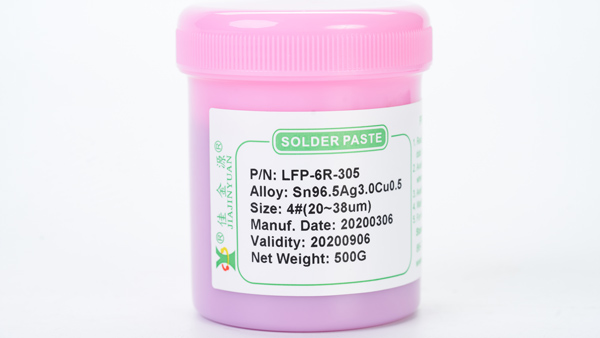
High-temperature solder paste andLow-temperature solder pasteWhat's the difference? Questions that s
Published: 2026-05-12Automotive electronic solder maintains the mechanical strength of solder joints within a wide temperature range of -40°C to 150°C, and shows no microcracks after random vibration tests at 20G acceleration and 10Hz–2kHz, meeting the dual requirements of temperature resistance and vibration resistance for automotive electronic solder in high-reliability scenarios such as ADAS controllers and BMS main control boards.
Published: 2024-06-29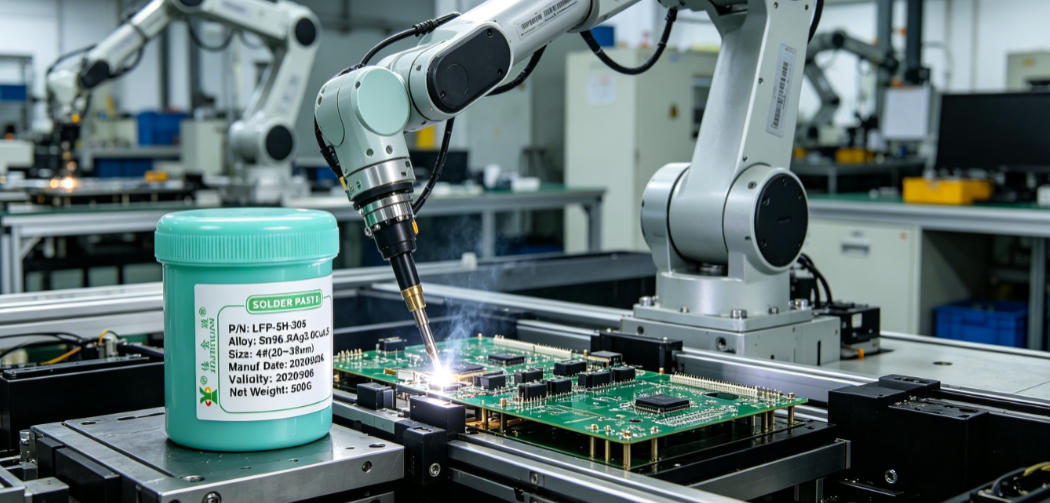
Jiajinyuan 5RLJ laser solder paste is optimized specifically for laser heating soldering scenarios. It adopts a synergistic design of rosin-based systems with multiple specifications of high-temperature alloy powders including 0307/105/305 and 00507BN, delivering stable performance with bright solder joints and no solder ball spattering within the 240–260℃ soldering window. Halogen
Published: 2020-02-19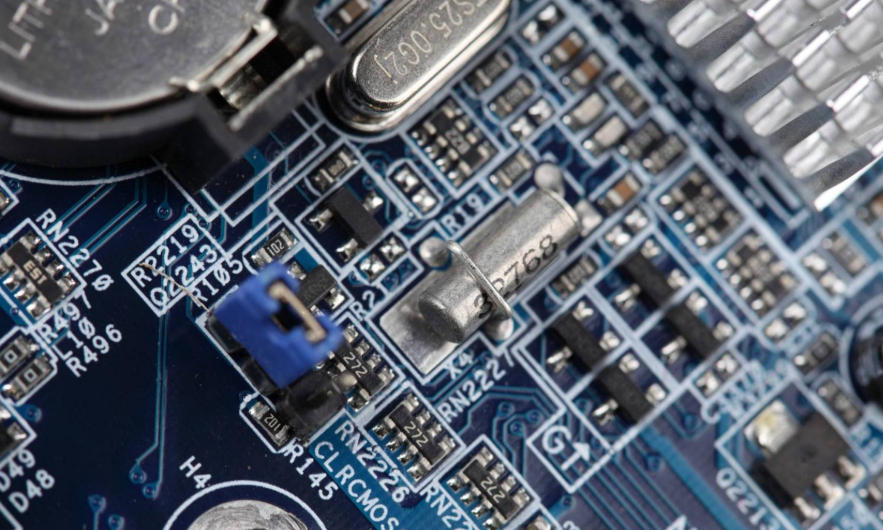
Excessive volatilization of solder paste during high-temperature soldering can lead to typical defects such as solder balls, cold solder joints, and bridging. This is especially likely to induce splattering and poor wetting in a nitrogen atmosphere or during reflow soldering with a high heating rate, directly affecting the SMT first-pass yield and long-term reliability.
Published: 2019-09-23Nitrogen reflow involves introducing high-purity nitrogen into the reflow oven to significantly reduce the oxygen content in the chamber to below 100 ppm, thereby inhibiting the oxidation reaction of metal components such as tin, silver, and copper in the solder paste at high temperatures, improving the brightness and wettability of solder joints, and reducing void rate and cold solder risks. It is a key process method for the stable mass production of Jia Jinyuan series reflow ovens in the soldering of fine-pitch devices such as QFN and BGA.
Published: 2013-04-16This paper focuses on the actual selection logic of high-temperature solder paste among domestic solder paste brands, combining 12 series of parameters verified by first-tier production lines such as Jia Jinyuan, covering QFN solder wetting rate, halogen content, alloy powder type, and the reflow soldering temperature window for solder paste. It particularly emphasizes the stability performance of 0307/305 alloys under the 240–260℃ reflow soldering process for solder paste.
Published: 2009-05-27To address production-line pain points such as prone solder joint failure, poor solder wetting, high void rate, and excessive halogen residue under high-temperature operating conditions, domestic temperature-resistant solder paste has achieved stable adaptation to reflow windows from 235°C to 260°C. The 8MQP/5RQ series achieves a solder wetting rate of over 95% on QFN/DFN devices, while the 8M9P/5RR series supports automotive lighting thermal management modules with 0 ppm halogen and an extremely low void rate. Multiple high-temperature solder paste models form a closed process loop with domestic stencils, jet dispensers, and nitrogen reflow ovens, truly resolving the bottlenecks that have hindered the deployment of domestic solder paste in high-reliability scenarios.
Published: 2009-01-29Our technical team is always ready to provide professional solder material selection advice and SMT process solutions.