


Generally speaking, during use we should set the appropriate temperature. I believe many technicians have discussed this issue. The typical temperature setting for lead-free solder strip soldering is 280 ±10 ℃; the setting is generally on the high side because manual Dip Soldering does not involve preheating. The main components of commonly used eco-friendly tin strips are 99.3% tin and 0.7% copper; they are solid, silvery white and odorless, with a melting point of 227 ℃ and a working temperature of 270 ℃-300 ℃. The solder joints are relatively bright and are used for soldering with higher requirements; they are widely applied in wave soldering machines and hand dip soldering pots. The peak temperature of eco-friendly tin strips is 270~300 ℃; for lead-containing Solder Bars, the specific figures depend on the lead content and the material of the components to be soldered. Now, let's hear about it from JJY Solder Paste Manufacturer:
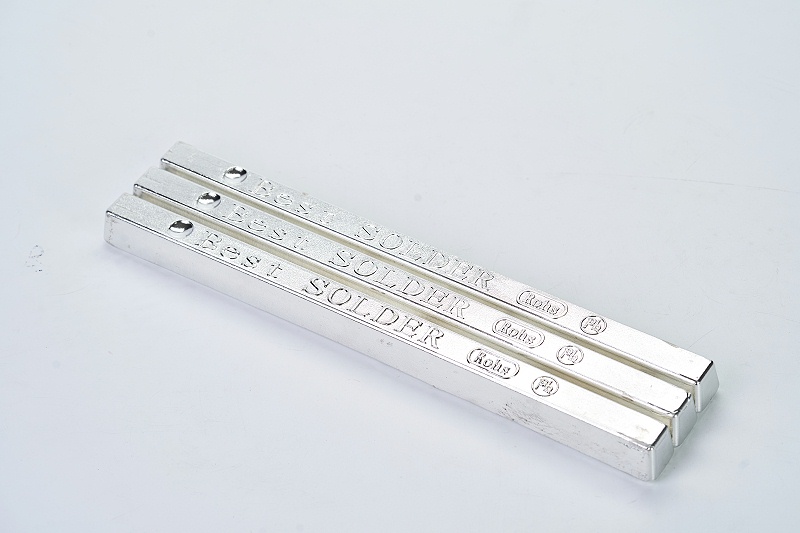
High-temperature tin strip :
——The liquidus temperature is higher than the melting point of tin-lead eutectic, 183 ℃, and can exceed 450 ℃. A tin bar that can maintain its working temperature without oxidation and can be soldered normally is called a high-temperature tin bar. High-temperature tin bars are made by adding specially formulated additives to tin-lead alloys, so that even above 450 ℃ they resist oxidation. The product is suitable for soldering processes with high working-temperature requirements, for example tinning the lead pins of transformers, etc. Our factory offers various alloy ratios for customers to choose from.
Low-temperature tin bar
——With a melting point lower than 183 ℃, the solder can serve different soldering processes and solder alloys with different melting points.
High oxidation resistance solder bar
——At soldering temperatures below 300 ℃, the surface of the molten solder is mirror-like, the wetting time is short, and the spread rate is greater than that of ordinary solder. The addition of anti-oxidation agents makes the solder joints bright, lustrous and beautiful, suitable for PCB wave soldering and hot-dip soldering. Our factory offers various alloy ratios for customers to choose from.
Anti-oxidation high-temperature solder rods
——At temperatures above 450 ℃, the solder surface can maintain a silvery-white mirror-like state for a long time, and the slag output is only 1/7 that of ordinary solder. It is suitable for wave soldering and hot-dip soldering processes, and is especially suitable for tinning self-Fluxing enameled wires during the manufacturing of various transformers. The low slag content not only reduces defective solder joints and saves cost, but also reduces the frequency of soldering equipment maintenance.
The above is an introduction for everyone on Lead-free tin bar. If you would like to know more about the various temperature conditions, feel free to discuss them with us.
Related Articles
- What are the characteristics of lead-free low-temperature tin wire? Jia Jinyuan is here to answer
- What should be noted when soldering with lead-free solder wire?
- What are the main problems existing in the soldering process of lead-free tin bars?
- SMT patch manufacturer: What are the methods to reduce the overall cost of solder paste?
- Can leaded solder paste and lead-free solder paste be used interchangeably?
- JJY Solder paste storage method and temperature treatment method before use
- [Case Analysis] Will using lead-free solder paste from morning till afternoon affect product quality?
- Can solder paste manufacturers replace halogen-free solder paste with lead-free one?


