


For Solder Wire Low-temperature tin wire, partners may still have many questions about its application. So today, Shenzhen JJY will explain to our friends what the common applications of solder wire are.
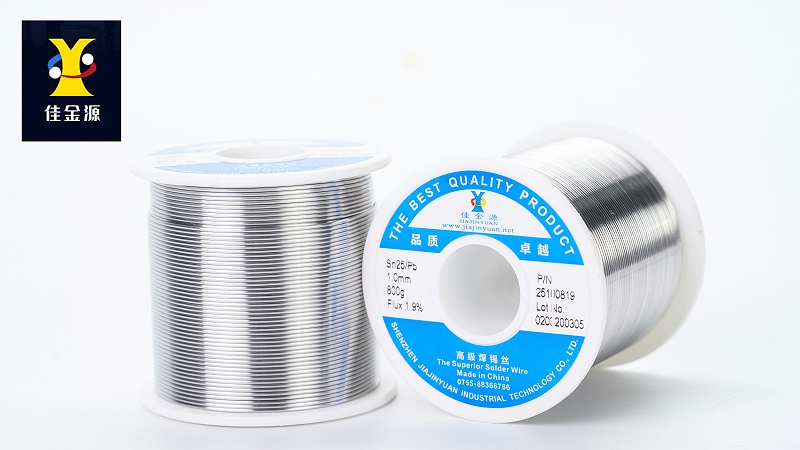
High-quality solder should be used, and the low-melting-point solder used for soldering electronic components should be selected as Solder wire.
The soldering iron should be placed on the soldering iron stand. Before use, tin should be applied to the tip. Then heat the soldering iron until it can just melt the solder. Apply Flux and evenly coat the tip with solder to ensure the tip surface is evenly covered with a layer of tin.
The soldering method is to polish the solder layer and the component pins clean with water sandpaper and apply flux. Continue to use the soldering iron tip to add a small amount of solder, touch the joint, and wait until all the solder on the joint melts and penetrates the wire end of the component. Then, gently lift the soldering iron tip along the pin of the electronic component to finish the joint.
Soldering should not last too long, otherwise it is relatively easy to damage the components. Sometimes, a clean pair of tweezers should be used to hold the pins and assist heat dissipation. The solder joints should be rounded and smooth, with a bright surface and no sharp points.
The amount of solder should be just right and not vary too much. Excess solder is useless and consumes more expensive tin, relatively slowing down the working speed. Worse, in high-density power circuits, too much tin is more likely to cause short-circuit faults.
After soldering, thoroughly clean the residual flux on the PCB circuit board with alcohol to prevent carbonized flux from endangering the normal operation of the power circuit.
Integrated circuit chips should be soldered last. The soldering iron should have a reliable grounding device, or the residual heat after power-off can be used for soldering. You can also solder a power socket first and then insert the integrated circuit chip into it.
Shenzhen JJY brand solder wire has gone through 12 years of R&D in Solder Paste, solder wire, low-temperature solder wire, lead-free solder paste, and There is lead solder paste. We are a manufacturer of solder paste and solder wire, offering solder rods, Leaded Solder Paste, and related products.
Related Articles
- What are the characteristics of lead-free low-temperature tin wire? Jia Jinyuan is here to answer
- What should be noted when soldering with lead-free solder wire?
- Can low-temperature tin wire be used when facing the problem of difficult welding of lamp heads?
- How to solve the problem of leakage when soldering low-temperature tin wire?
- How to test the quality of solder paste and solder paste? JJY Solder Paste Manufacturer
- The influence of low-temperature solder wire solder joint brightness and how to improve it?
- What are the differences between high-temperature solder paste and low-temperature solder paste? JJY is here to popularize knowledge for everyone
- What are the reasons for the large amount of smoke in low-temperature tin wire soldering?


