


Low-temperature tin wire is a type of Solder Wire. Solder wire is mainly composed of two components. One type is called Eutectic Soldering tin. What are the differences in composition between 63% tin and 37% lead solder wires? JJY is here to share them with you.
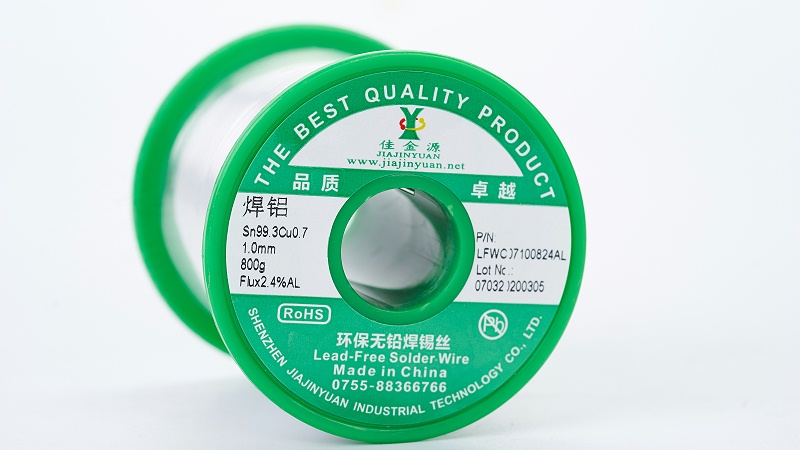
Solder wire has a melting point of 183℃. If the tin content exceeds 63%, its compressive strength gradually decreases as the melting temperature rises. Conversely, when the tin content is below 10%, the compressive strength during soldering is poor, and the joint quickly becomes brittle.
Eutectic solder remains in a good state below the wetting range of the Soldering Material. At the eutectic temperature, however, the solder changes directly from solid to liquid, without passing through a semi-liquid state.
When melting, the temperature of eutectic solder is slightly lower than that of non-eutectic solder, which reduces thermal damage to the components being soldered. In addition, because eutectic solder changes from liquid to solid very quickly, the occurrence of empty solder joints is greatly reduced.
In most cases, solder raw materials fluctuating around 227℃ will not show a significant difference in the melting point of the solder wire. Therefore, when using solder wire, you should first test the temperature that the components can withstand, and then choose a solder wire with an appropriate melting point or a low-temperature solder wire.
At present, commonly used solder wires can be roughly classified into two categories — Leaded solder wire and lead-free solder wire. They differ in main parameters such as melting point, as with low-temperature solder wire. If you want to learn more about low-temperature tin wire, Shenzhen JJY will guide you. Welcome to contact us.
Related Articles
- What are the characteristics of lead-free low-temperature tin wire? Jia Jinyuan is here to answer
- What should be noted when soldering with lead-free solder wire?
- Can low-temperature tin wire be used when facing the problem of difficult welding of lamp heads?
- How to solve the problem of leakage when soldering low-temperature tin wire?
- How to test the quality of solder paste and solder paste? JJY Solder Paste Manufacturer
- The influence of low-temperature solder wire solder joint brightness and how to improve it?
- What are the differences between high-temperature solder paste and low-temperature solder paste? JJY is here to popularize knowledge for everyone
- What are the reasons for the large amount of smoke in low-temperature tin wire soldering?


