
Focused on SMT soldering processes, a one-stop electronic soldering solutions provider.

Here you can find knowledge about SMT Solder, including but not limited to usage methods, installation techniques, troubleshooting and more. Focused on SMT soldering processes. If you can't find what you need, please contact us anytime.
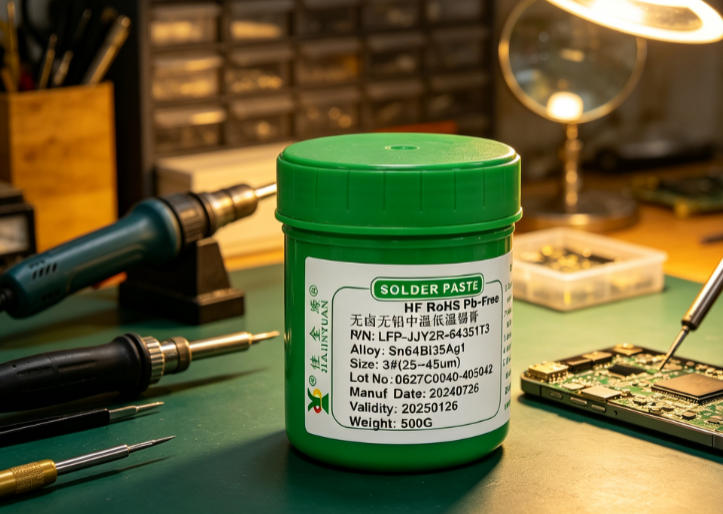
There are many types of SMT solder paste, which can be classified into different models according to their composition, application and process requirements. Selecting the appropriate solder paste can significantly improve soldering quality and production efficiency.
Published: 2026-08-28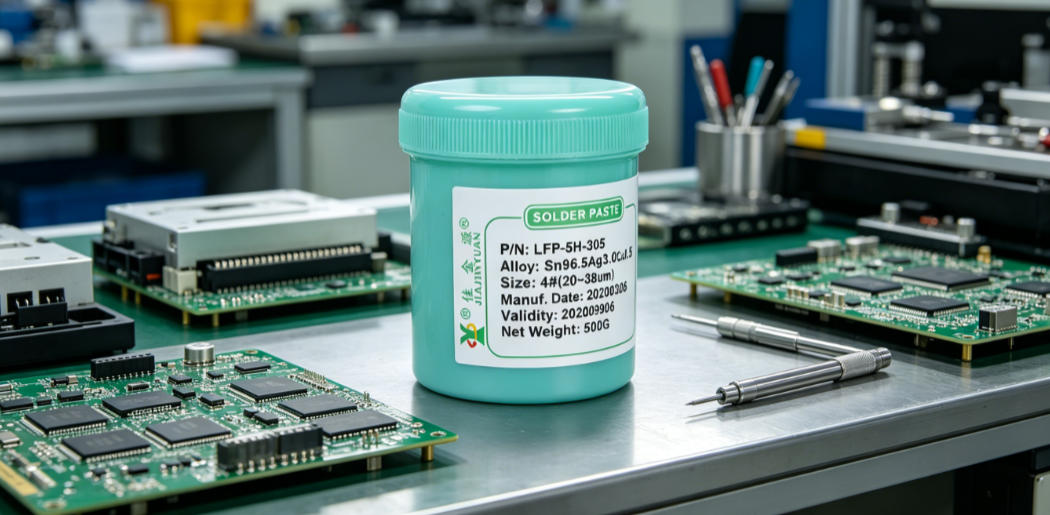
Sn63Pb37 solder paste still has irreplaceable process stability in through-hole SMT production lines. Its eutectic properties bring low melting point, narrow reflow window and excellent wettability. However, limited by RoHS compliance pressure and lead-free mixed line risks, practical applications must directly address high-frequency failures such as solder joint cracking, cold solder joints, insufficient wetting, and stencil clogging, which are particularly evident in 0201 component soldering and double-sided board rework scenarios.
Published: 2026-08-27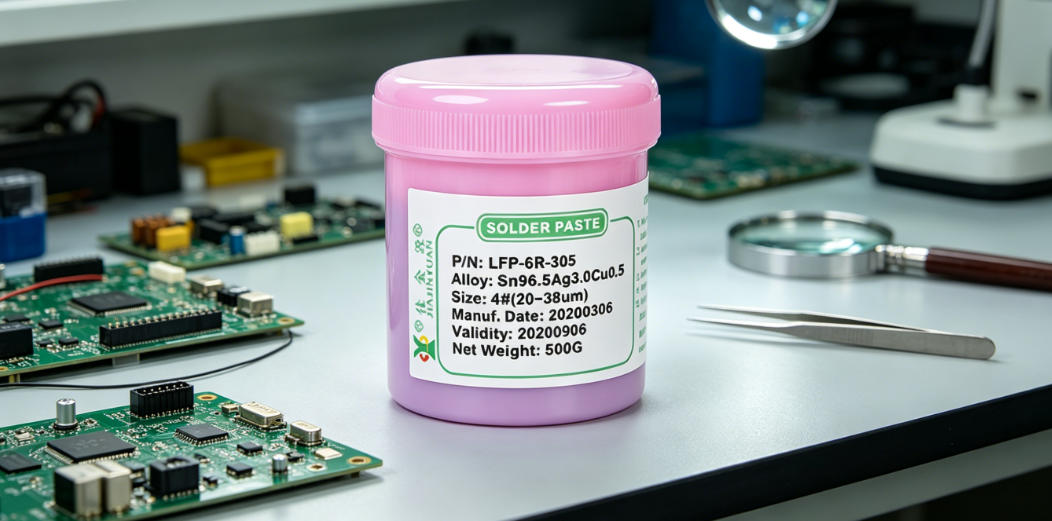
SMT soldering of industrial control boards is highly sensitive to the technical specifications of solder paste. Since industrial control boards generally feature large-area copper foils, multilayer thick boards, high-TG substrates, and fine-pitch components such as BGA/CSP, defects including printing slump, reflow voids, and poor wetting occur frequently. Viscosity, metal content, particle size distribution, flux activity, and residue insulation in the technical specifications of solder paste directly determine the first-pass yield and long-term reliability.
Published: 2026-08-27
The reliability of SMT solder joints is highly dependent on the compositional design of solder paste alloys. Common misconceptions, such as blindly selecting high-lead replacement materials or neglecting the ratio of trace silver and copper elements, can lead to cold soldering, whisker growth, and thermal fatigue cracking. This article directly addresses five real operational errors on the production line, ranging from alloy element segregation and mismatched reflow windows to the risks of batch mixing. It breaks down the root causes of hazards one by one and provides immediately actionable process correction measures.
Published: 2026-08-27
Solder paste slump is a post-printing deformation phenomenon in SMT soldering caused by uncontrolled solder paste rheology, which directly affects the risks of solder joint bridging and cold soldering. SMT determination requires comprehensive evaluation by combining the stencil aperture ratio, the height attenuation rate before reflow, and the edge slump angle under a microscope. The typical slump determination criteria are a height drop of more than 15% within 30 minutes after printing, continuous paste bridging between adjacent pads, and a slump angle of less than 45 degrees.
Published: 2026-08-27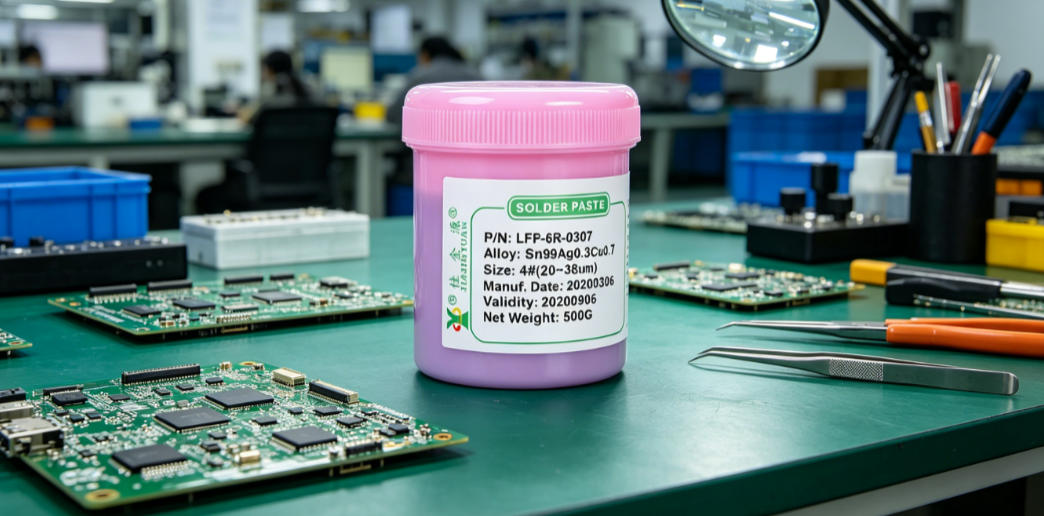
The viscosity and thixotropic index of solder paste directly affect SMT printing accuracy and solder joint yield. IPC-J-STD-005 specifies that the viscosity range of solder paste is 200–800 Pa·s (25℃), and the thixotropic index should be ≥0.75. When the measured value is below 0.65, it is easy to cause solder spikes, bridging and insufficient solder; when it is above 0.95, it will lead to poor demolding and edge collapse. The production line needs to conduct actual measurement and temperature calibration every 4 hours using a Brookfield LVDV-II+ with matching cone-and-plate rotors to avoid data drift caused by an ambient temperature difference exceeding ±2℃.
Published: 2026-08-27
Poor solder paste wettability during SMT soldering on thick gold PCBs commonly manifests as solder joint voids, insufficient solder climb, or local dewetting. The root cause is excessive gold layer thickness leading to nickel layer passivation and excessive consumption of flux activity. Evaluation requires comprehensive judgment by combining wetting angle measurement, microscopic observation of solder joint morphology, and IMC growth state after reflow. The matching between thick gold PCBs and solder paste wettability is a key process control point to ensure first-pass yield.
Published: 2026-08-27
To address the frequent solder bridging and solder spike defects of large-size QFP devices in the SMT process, this paper starts from solder paste selection, and combines printing accuracy, reflow thermal response and metal powder distribution characteristics to elaborate on special solder pastes with high thixotropy, narrow particle size distribution (D50=18.5μm) and 90.2% metal content, such as
Published: 2026-08-27
Welding of FPC flexible boards is highly sensitive to solder paste printing accuracy and mounting pressure. Based on a review of real production line failures, this paper horizontally compares the occurrence rates of bridging, tombstoning, and cold soldering under different solder paste viscosities, metal contents, thixotropic properties, and various mounting pressure ranges (0.15N~0.6N) in typical scenarios such as fine-pitch ICs, double-sided pads, and high-density blind/buried via FPCs. It is clarified that for solder paste printing, models with 4# powder, 88.5% metal content, viscosity of 220Pa·s, and thixotropic index >4.2 should be prioritized, while mounting pressure must be dynamically set according to pad size, and must not be uniformly set to 0.3N.
Published: 2026-08-27
Although no-clean solder paste eliminates the cleaning process in SMT soldering, post-soldering residues can easily cause poor ICT probe contact, false judgments in flying probe testing, and missed detections in functional testing. Based on production line measured data, this paper proposes 6 actionable cost-reduction measures covering solder paste selection, stencil design, reflow parameters, and test fixture maintenance, which can reduce annual test misjudgment working hours by 1200 hours and reduce false rework costs by 84,000 yuan per plant.
Published: 2026-08-27Our technical team is always ready to provide professional solder material selection advice and SMT process solutions.