SMT Solder Paste Manufacturers.

Focused on SMT soldering processes, a one-stop electronic soldering solutions provider.

Here you can find knowledge about SMT Solder, including but not limited to usage methods, installation techniques, troubleshooting and more. Focused on SMT soldering processes. If you can't find what you need, please contact us anytime.

There are significant differences between SMT nitrogen soldering and air soldering in terms of solder paste wettability, void rate, solder joint finish, and flux residue performance in actual production lines. Nitrogen soldering can reduce the void rate of BGA solder joints from 15%~25% in air soldering to 3%~8%, with particularly prominent advantages on OSP copper surfaces, fine-pitch QFNs, and high-reliability military boards, but the cost of nitrogen consumption and equipment compatibility must be weighed.
Published: 2026-08-27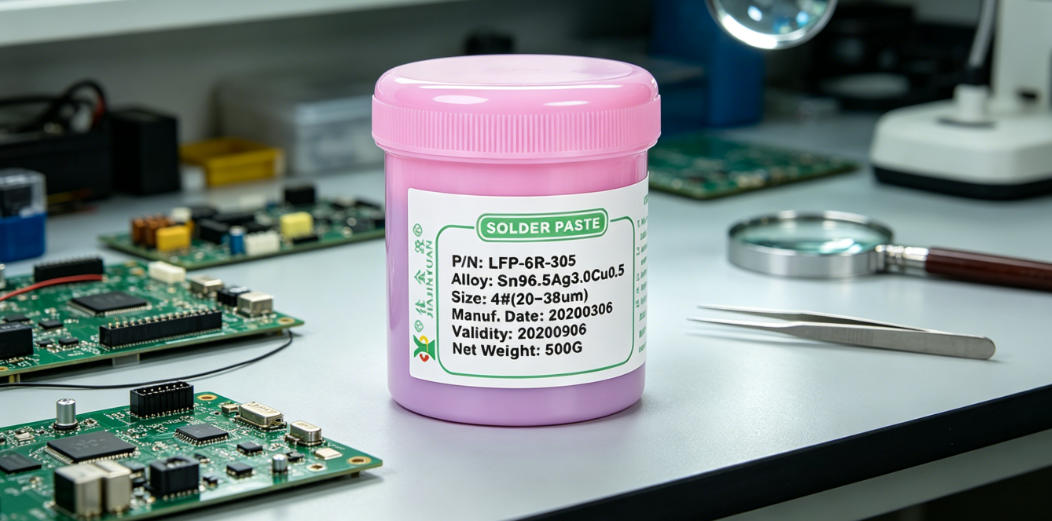
High-temperature solder paste and medium-temperature solder paste have distinctly different thermal stress responses, component compatibility, and rework difficulty in SMT production lines due to their melting point differences. High-temperature solder paste is suitable for high-reliability automotive electronics and high-power modules, while medium-temperature solder paste is mostly used in consumer motherboards containing heat-sensitive components such as BGA and MLCC. Incorrect selection will directly cause batch failures such as solder joint voiding, tombstoning, or PCB delamination.
Published: 2026-08-27
The selection of no-clean solder paste and water-washable solder paste in SMT production lines directly determines yield, cost, and delivery rhythm. No-clean solder paste, with advantages such as residue ion content <0.5μg/cm2, eliminating the cleaning process to save 2.3 hours of production capacity per shift, and no need for water-based cleaning equipment investment after reflow, is suitable for high-density fast-turnaround production lines. While water-washable solder paste requires supporting spray cleaning machines and DI water systems, its rosin-based activity is stronger, improving the wetting force on OSP boards and oxidized pads by more than 40%, making it more suitable for high-reliability scenarios such as military industry and automotive electronics.
Published: 2026-08-27
SMT soldering of industrial control boards is highly sensitive to the technical specifications of solder paste. Since industrial control boards generally feature large-area copper foils, multilayer thick boards, high-TG substrates, and fine-pitch components such as BGA/CSP, defects including printing slump, reflow voids, and poor wetting occur frequently. Viscosity, metal content, particle size distribution, flux activity, and residue insulation in the technical specifications of solder paste directly determine the first-pass yield and long-term reliability.
Published: 2026-08-27
The particle size of tin powder directly affects the release performance of solder paste printing, solder joint fullness, and bridging risk. Excessively fine powder is prone to oxidation and screen clogging, while excessively coarse powder leads to printing skipping and cold soldering. In actual production lines, the solder paste printing process needs to be collaboratively optimized by combining stencil aperture dimensions, squeegee parameters, and reflow profiles.
Published: 2026-08-27
The reliability of SMT solder joints is highly dependent on the compositional design of solder paste alloys. Common misconceptions, such as blindly selecting high-lead replacement materials or neglecting the ratio of trace silver and copper elements, can lead to cold soldering, whisker growth, and thermal fatigue cracking. This article directly addresses five real operational errors on the production line, ranging from alloy element segregation and mismatched reflow windows to the risks of batch mixing. It breaks down the root causes of hazards one by one and provides immediately actionable process correction measures.
Published: 2026-08-27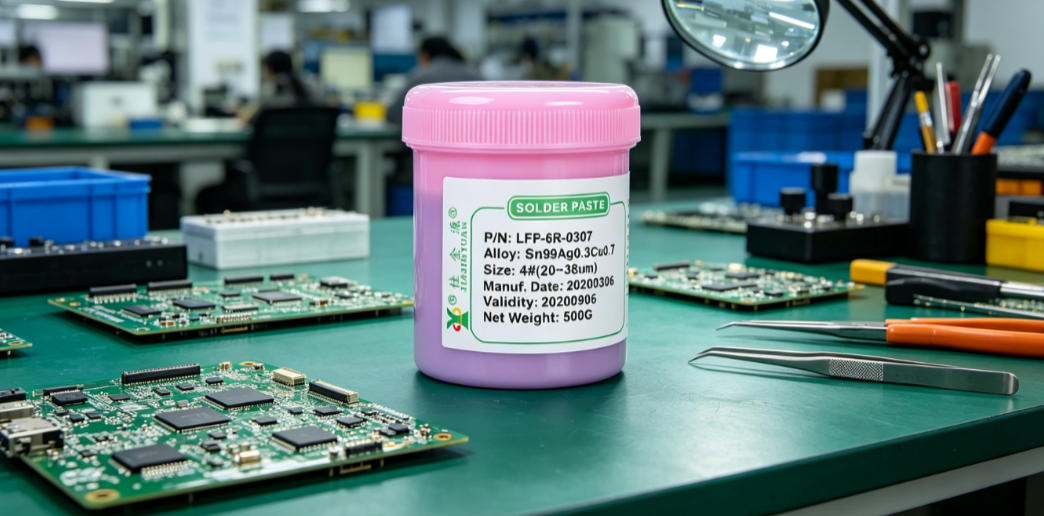
Excessive halogen content in solder paste can cause PCB corrosion, ionic contamination, and CAF failure. Halogen-free SMT production lines require strict control across the entire process chain, from solder paste selection, incoming material inspection, printing parameters, and reflow profile to cleaning processes, with particular attention to the consistency of halogen testing methods, flux residue monitoring, and collaborative verification with suppliers.
Published: 2026-08-27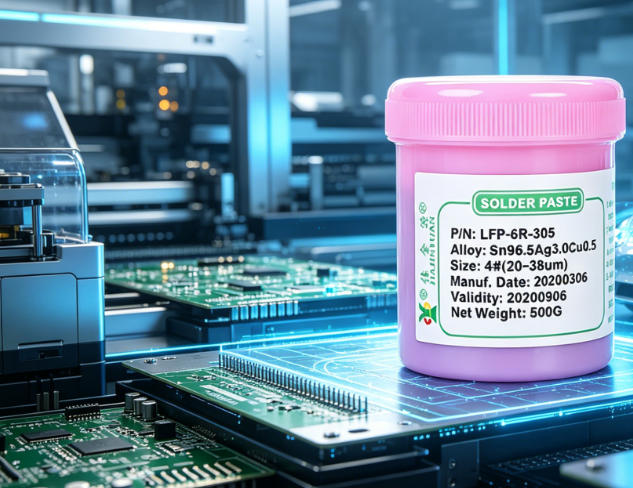
Solder paste slump is a post-printing deformation phenomenon in SMT soldering caused by uncontrolled solder paste rheology, which directly affects the risks of solder joint bridging and cold soldering. SMT determination requires comprehensive evaluation by combining the stencil aperture ratio, the height attenuation rate before reflow, and the edge slump angle under a microscope. The typical slump determination criteria are a height drop of more than 15% within 30 minutes after printing, continuous paste bridging between adjacent pads, and a slump angle of less than 45 degrees.
Published: 2026-08-27
The viscosity and thixotropic index of solder paste directly affect SMT printing accuracy and solder joint yield. IPC-J-STD-005 specifies that the viscosity range of solder paste is 200–800 Pa·s (25℃), and the thixotropic index should be ≥0.75. When the measured value is below 0.65, it is easy to cause solder spikes, bridging and insufficient solder; when it is above 0.95, it will lead to poor demolding and edge collapse. The production line needs to conduct actual measurement and temperature calibration every 4 hours using a Brookfield LVDV-II+ with matching cone-and-plate rotors to avoid data drift caused by an ambient temperature difference exceeding ±2℃.
Published: 2026-08-27
How to select solder paste for SMT must be based on actual production line failures to reverse-engineer process adaptability. Lead-containing solder paste is easy to solder but restricted by RoHS; lead-free solder paste has a high reflow temperature, which easily causes BGA cold solder joints and PCB blistering; halogen-free solder paste, while solving halogen corrosion, sacrifices part of its wettability. The core of solder paste selection lies in matching equipment capabilities, component temperature resistance windows, and long-term reliability requirements. Especially for halogen-free solder paste applications in high-temperature and high-humidity environments, stencil aperture and reflow profile need to be adjusted simultaneously.
Published: 2026-08-27Our technical team is always ready to provide professional solder material selection advice and SMT process solutions.