SMT Solder Paste Manufacturers.

Focused on SMT soldering processes, a one-stop electronic soldering solutions provider.

Here you can find knowledge about Soldering Auxiliary Materials, including but not limited to usage methods, installation techniques, troubleshooting and more. Focused on SMT soldering processes. If you can't find what you need, please contact us anytime.

The SMT solder paste operation process covers five major stages: thawing, stirring, printing, component placement, and reflow soldering. The core of cost reduction across the entire process lies in reducing solder paste waste, extending stencil life, lowering the rework rate, and optimizing equipment energy consumption. Based on real production line data, this paper proposes 8 actionable measures covering four dimensions: personnel operation, parameter setting, auxiliary material management, and equipment maintenance.
Published: 2026-08-27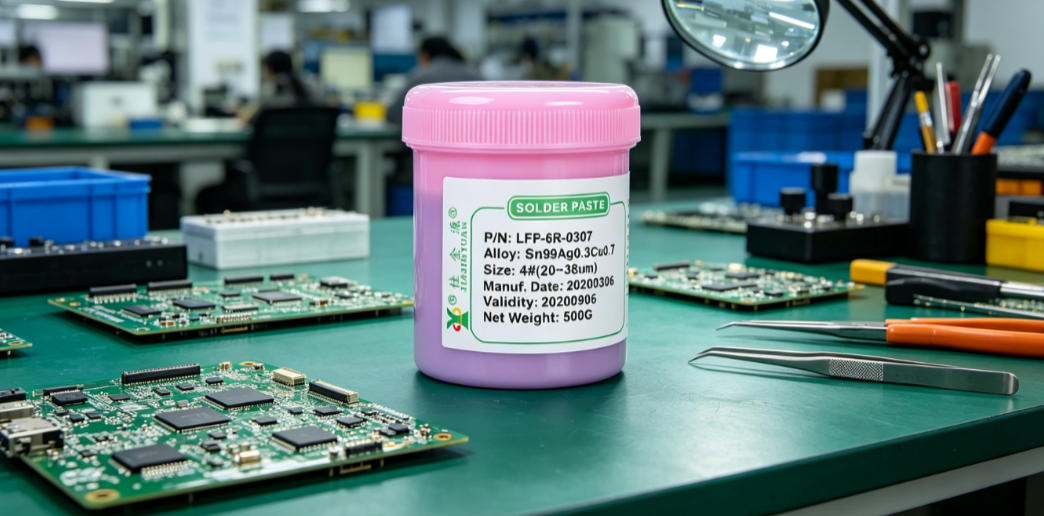
PCB pad plating directly affects solder paste wettability. Different plating types exhibit significant differences in interfacial reaction rate, intermetallic compound formation, and oxidation tendency during the reflow phase, leading to frequent defects such as cold solder joints, tombstoning, and poor solder wetting. Based on real production line failure cases, this article directly addresses the practical performance differences of mainstream plating types including ENIG, OSP, immersion silver, and HASL across solder paste printing, component placement, and reflow stages.
Published: 2026-08-27
Multiple reflow soldering cycles significantly weaken solder joint reliability, caused by the superposition of irreversible changes such as repeated growth of the intermetallic compound layer, IMC embrittlement, solder grain coarsening, and increased void rate. In production lines, scenarios such as BGA rework, mixed double-sided board assembly, and stacked board assembly often trigger secondary or even tertiary reflow, so risks must be controlled through coordinated optimization of temperature profiles, solder paste selection, and pad design.
Published: 2026-08-27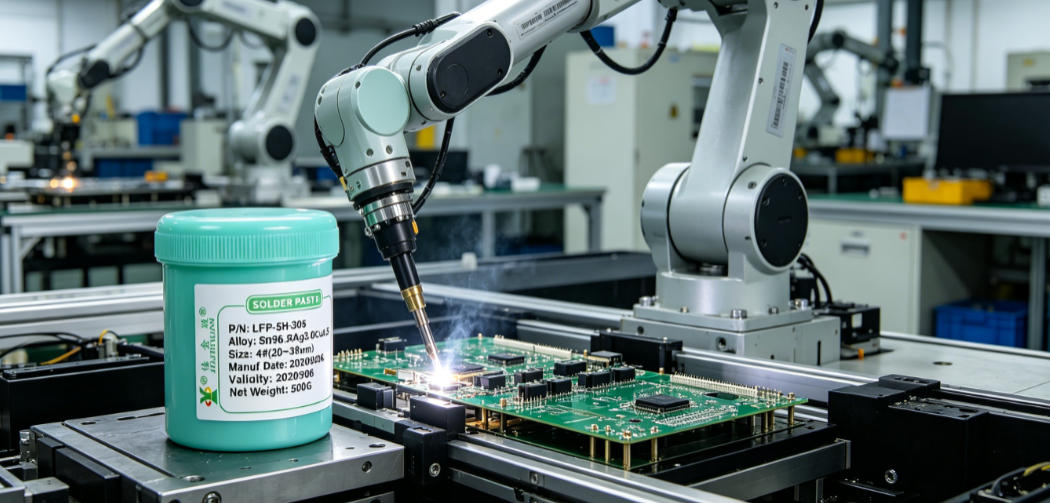
Flux spatter from solder wire causing PCB component damage is a common persistent issue in SMT rework and hand soldering, rooted in differences in flux activity, volatilization rate, melt viscosity, and solder wire structure. Based on production line measurements, this paper compares the spatter tendency, residual corrosivity, and operational tolerance window of three types of solder wire flux—rosin-based, no-clean, and water-soluble—in typical scenarios such as 0402 chip resistor rework, QFN32 thermistor device touch-up soldering, and high-power LED pad reinforcement. It explicitly recommends rosin-based solder wire for high-density fine-pitch rework, restricts water-soluble type exclusively to copper-free bare aluminum substrates, and identifies no-clean type as having the best overall performance in conventional through-hole and double-sided board soldering.
Published: 2026-08-27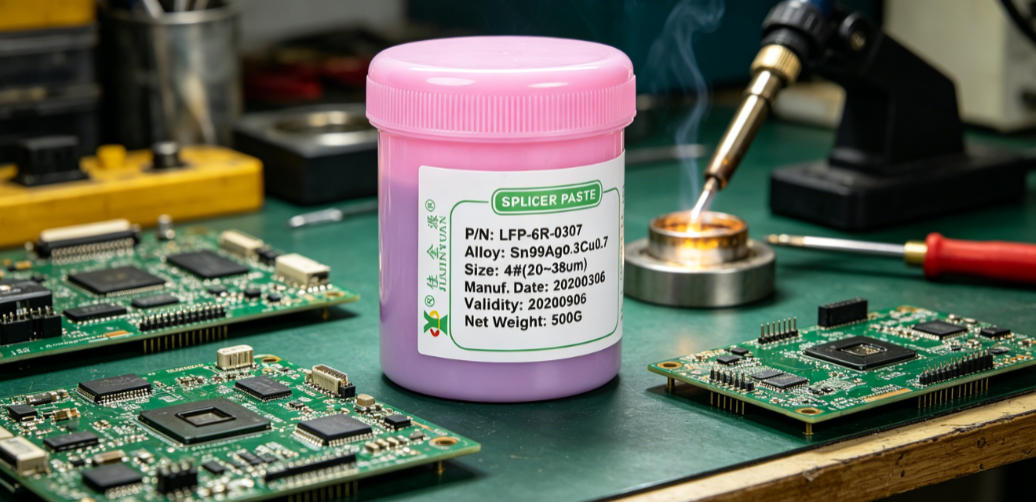
In the actual operation of SMT production lines, even when using solder paste from the same batch, defects such as cold solder joints, solder bridges, or tombstoning still occur frequently. The root cause lies in the coupled influence of multiple variables including printing accuracy, reflow profile, stencil tension, and ambient temperature and humidity. Based on 20 years of frontline commissioning experience, this article directly addresses the five practical root causes of solder paste soldering variations, covering key parameters such as squeegee pressure of 3.5~4.2kg, stencil aperture area ratio ≥0.66, and reflow peak temperature of 235±2℃, and provides immediately actionable calibration paths.
Published: 2026-08-27
Excessive floating dross in the solder bar melting pool directly affects wave soldering yield and equipment service life. This paper conducts a horizontal comparison of the dross performance of three mainstream solder bar types—high-activity solder bars, low-dross solder bars, and phosphorus-containing solder bars—across five dimensions: real production line failure frequency, solder dross generation rate, flux compatibility, maintenance man-hours, and long-term costs. It explicitly states that low-dross solder bars should be prioritized for small and medium-volume mixed-assembly PCB scenarios, while phosphorus-containing solder bars must be paired with an upgraded wave soldering oxidation suppression system for continuous production of high-copper-content PCBs.
Published: 2026-08-27
In SMT production of mixed panel assemblies, the splicing of PCBs with different sizes, thicknesses, and heat capacities makes it difficult to uniformly adapt the reflow profile. The mismatch between the activity window of solder paste and the actual temperature rise rhythm can easily cause defects such as cold solder joints, tombstoning, and cold soldering. This article directly addresses the real pain points of the production line, and provides an immediately executable collaborative solution for the reflow profile of mixed panel assemblies around four dimensions: solder paste selection, fine-tuning of furnace temperature zones, compensation of stencil apertures, and auxiliary heat equalization with carriers.
Published: 2026-08-27
Uneven thickness in SMT printing is one of the most frequent solder paste printing defects on production lines, directly causing soldering defects such as insufficient solder, solder bridging, and tombstoning. The root cause often lies in the combined effect of stencil tension attenuation, squeegee wear, and uneven PCB support. It is necessary to quickly locate deviation points by combining real-time SPI data, and then achieve a thorough solution through stencil life management, closed-loop calibration of squeegee pressure, and optimization of fixture structure.
Published: 2026-08-27
Excessive soldering iron temperature will accelerate the oxidation of solder wire, cause peeling of pad copper foil, thermal damage to components, and frequent cold solder joints and false solder joints. According to Clause 8.2.3 of IPC-J-STD-001H, the recommended temperature range for manual soldering iron welding is 300℃~380℃, and exceeding 400℃ constitutes a process failure risk. In actual production lines, more than 75% of solder joint wetting defects are directly related to temperature out-of-control.
Published: 2026-08-27
Excessive post-solder residues from halogen-free solder paste is a common pain point in SMT production lines, as it is difficult to clean and prone to causing excessive ionic contamination or false ICT test results. Selecting a matching water-based cleaning agent and optimizing cleaning process parameters can control surface ionic residue within 0.28μg/cm2 NaCl equivalent, significantly improving the yield and long-term reliability of high-density PCBA.
Published: 2026-08-27Our technical team is always ready to provide professional solder material selection advice and SMT process solutions.