SMT Solder Paste Manufacturers.

Focused on SMT soldering processes, a one-stop electronic soldering solutions provider.

Here you can find knowledge about Solder Bar, including but not limited to usage methods, installation techniques, troubleshooting and more. Focused on SMT soldering processes. If you can't find what you need, please contact us anytime.
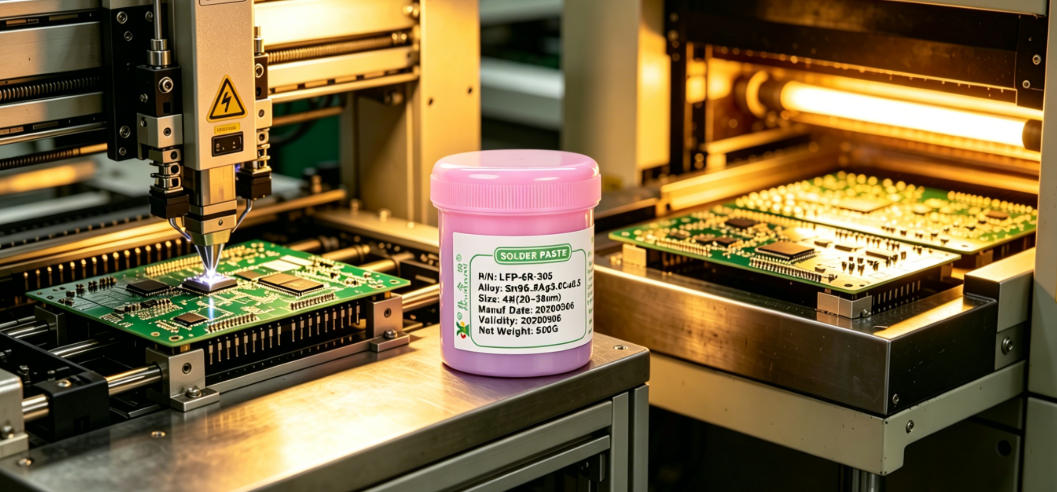
The standard control specification for solder paste printing thickness is typically 120±20μm. This value must be dynamically adjusted based on stencil aperture dimensions, squeegee pressure and speed, and the rheological properties of the solder paste. In actual production lines, over 80% of cold solder joint and solder bridge defects can be traced back to out-of-tolerance printing thickness deviations.
Published: 2012-12-05An overly small solder paste stencil aperture will result in insufficient solder paste deposition during printing, which in turn causes defects such as cold solder joints and tombstoning. Based on real production line cases, this paper proposes immediately actionable countermeasures from three aspects: verification of stencil design parameters, matching of squeegee pressure and speed, and adaptation to solder paste rheological properties. It emphasizes stabilizing the solder paste volume by adjusting printing parameters and selecting the appropriate solder paste without replacing the stencil.
Published: 2012-11-22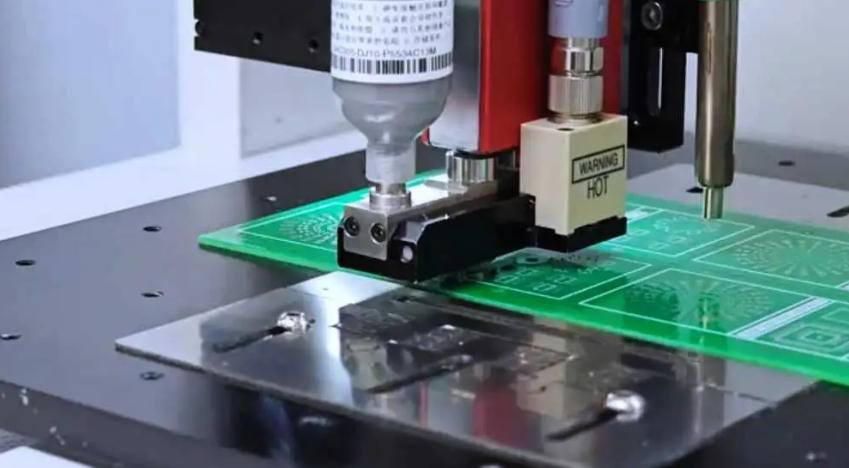
The purity of solder bars directly affects the quality of wave soldering joints. 99.99% purity solder bars can significantly reduce the rate of solder joint voids and poor wetting, while solder bars containing lead or excessive impurities are prone to forming solder balls, sharp protrusions, and bridging defects at the edges of PCB pads. Production line measurements show that for every 0.005% excess in the total amount of impurities such as copper, iron, and arsenic in the solder bars, the rate of cold solder joints increases by 12% to 18%.
Published: 2012-11-17Ball mounting process yield control should focus on solder paste printing consistency, stencil tension stability, and reflow profile matching. By monitoring squeegee pressure fluctuations in real time, optimizing the vacuum suction parameters of the ball mounting machine, and calibrating visual positioning offsets, the incidence of cold solder joints and solder ball misalignment can be significantly reduced. On Jiajinyuan's production line, the measured defect rate per batch of ball mounting was reduced from 0.87% to 0.23%. The key lies in coupling all stages of the ball mounting process into a closed-loop feedback system.
Published: 2012-11-16In dip soldering, the oxidation resistance of tin bars directly affects the amount of tin dross generated. By optimizing the tin-copper-nickel ternary alloy ratio and adding trace rare earth elements, Jiajinyuan tin bars reduce the oxide film growth rate by 40% at a conventional dip soldering temperature of 255℃~265℃. The measured tin dross loss per shift drops from 1.8kg to 0.95kg, significantly reducing the frequency of manual dross skimming and the tin bar replenishment interval.
Published: 2012-10-07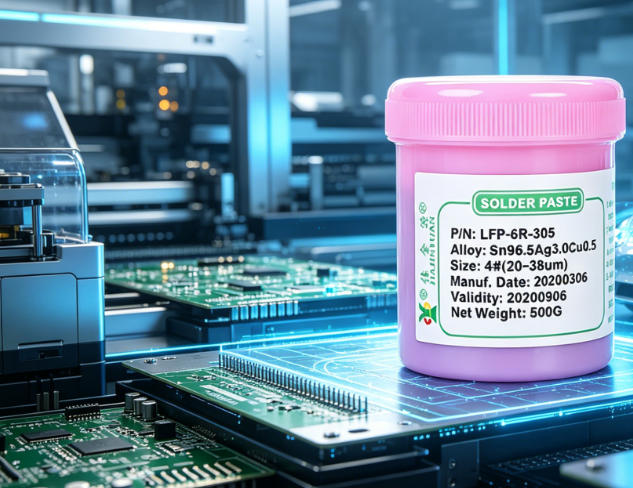
The particle size of SMT solder powder directly affects solder paste printing accuracy and solder joint reliability. The core difference between Type 3 powder and Type 4 powder lies in their different D50 median diameter values: the former is approximately 25±5μm, while the latter is approximately 20±4μm. Finer particle sizes are more prone to oxidation and more difficult to print, requiring matching stencil aperture and squeegee parameters.
Published: 2012-09-01In SMT printing, the matching of squeegee pressure and speed directly affects solder paste transfer rate. Excessive pressure easily causes solder spikes and stencil deformation, while insufficient pressure leads to insufficient solder and edge collapse. Combined with actual production line data of Jiajinyuan squeegees, controlling the pressure at 4.5±0.3kg and setting the speed to 45±3mm/s can significantly reduce the defect rate.
Published: 2012-08-17Solder paste printing offset defects directly affect the SMT first-pass yield. The root causes often stem from uneven stencil tension, worn PCB positioning pins, and calibration deviations in the printing machine's vision system. Selecting solder paste with high thixotropy and low slump rate can significantly improve the edge definition of printed solder paste and solder paste positioning accuracy. Combined with dynamic matching of squeegee pressure and speed, the offset can be quickly reduced without replacing equipment.
Published: 2012-08-07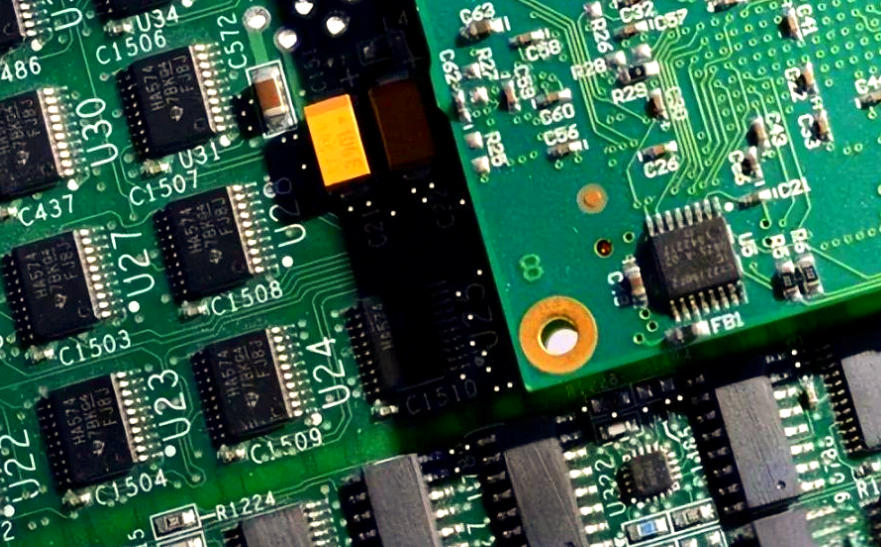
When soldering nickel sheets with solder wire, low-temperature active solder wire containing 0.3%~3% silver must be selected. Ordinary lead-free solder wire is prone to cold solder joints due to poor wettability and excessively thick interfacial intermetallic compound layers. In actual production lines, SN63PB37 or SAC305 is commonly used with rosin-core flux to achieve reliable connections.
Published: 2012-07-31Poor wetting of oxidized old pads during rework soldering is a high-frequency production line failure. Jia Jinyuan JY-808 high-activity flux can effectively reduce the CuO layer and lower surface tension. Combined with precise temperature-controlled soldering tip operation in a 350°C nitrogen environment, it increases the spread rate of solder paste on oxidized copper pads from less than 40% to over 92%, significantly shortening the rework cycle and reducing missed detection of cold solder joints.
Published: 2012-07-22Our technical team is always ready to provide professional solder material selection advice and SMT process solutions.