SMT Solder Paste Manufacturers.

Focused on SMT soldering processes, a one-stop electronic soldering solutions provider.

Here you can find knowledge about SMT Solder, including but not limited to usage methods, installation techniques, troubleshooting and more. Focused on SMT soldering processes. If you can't find what you need, please contact us anytime.

The SMT solder paste operation process covers five major stages: thawing, stirring, printing, component placement, and reflow soldering. The core of cost reduction across the entire process lies in reducing solder paste waste, extending stencil life, lowering the rework rate, and optimizing equipment energy consumption. Based on real production line data, this paper proposes 8 actionable measures covering four dimensions: personnel operation, parameter setting, auxiliary material management, and equipment maintenance.
Published: 2026-08-27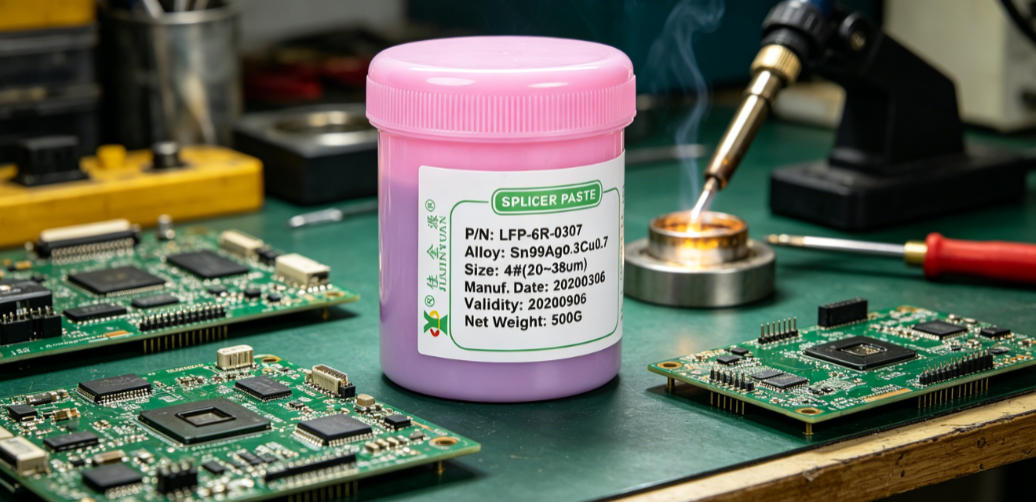
In the actual operation of SMT production lines, even when using solder paste from the same batch, defects such as cold solder joints, solder bridges, or tombstoning still occur frequently. The root cause lies in the coupled influence of multiple variables including printing accuracy, reflow profile, stencil tension, and ambient temperature and humidity. Based on 20 years of frontline commissioning experience, this article directly addresses the five practical root causes of solder paste soldering variations, covering key parameters such as squeegee pressure of 3.5~4.2kg, stencil aperture area ratio ≥0.66, and reflow peak temperature of 235±2℃, and provides immediately actionable calibration paths.
Published: 2026-08-27
Frequent open solder joint defects on 0201 components often stem from a mismatch between the rheological properties of solder paste and the aperture accuracy of SMT stencils. Based on measured data from mass production lines, this paper points out that selecting no-clean solder paste with a thixotropic index ≥0.75 and particle size D50 ≤18μm can increase solder joint tensile strength by 32%. When paired with a laser-etched SMT stencil with an aperture area ratio ≥0.65, the open solder joint rate drops from 4800ppm to 620ppm.
Published: 2026-08-27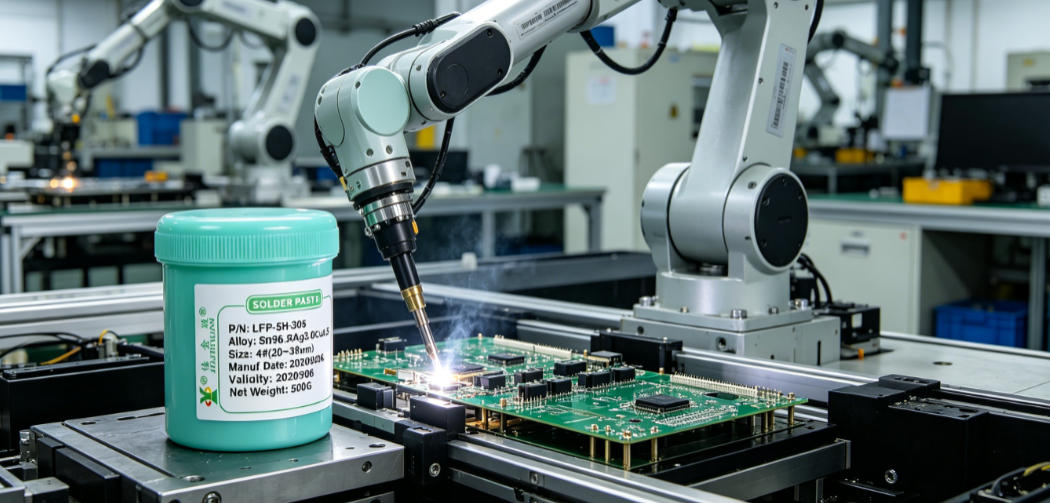
In SMT production of mixed panel assemblies, the splicing of PCBs with different sizes, thicknesses, and heat capacities makes it difficult to uniformly adapt the reflow profile. The mismatch between the activity window of solder paste and the actual temperature rise rhythm can easily cause defects such as cold solder joints, tombstoning, and cold soldering. This article directly addresses the real pain points of the production line, and provides an immediately executable collaborative solution for the reflow profile of mixed panel assemblies around four dimensions: solder paste selection, fine-tuning of furnace temperature zones, compensation of stencil apertures, and auxiliary heat equalization with carriers.
Published: 2026-08-27
Uneven thickness in SMT printing is one of the most frequent solder paste printing defects on production lines, directly causing soldering defects such as insufficient solder, solder bridging, and tombstoning. The root cause often lies in the combined effect of stencil tension attenuation, squeegee wear, and uneven PCB support. It is necessary to quickly locate deviation points by combining real-time SPI data, and then achieve a thorough solution through stencil life management, closed-loop calibration of squeegee pressure, and optimization of fixture structure.
Published: 2026-08-27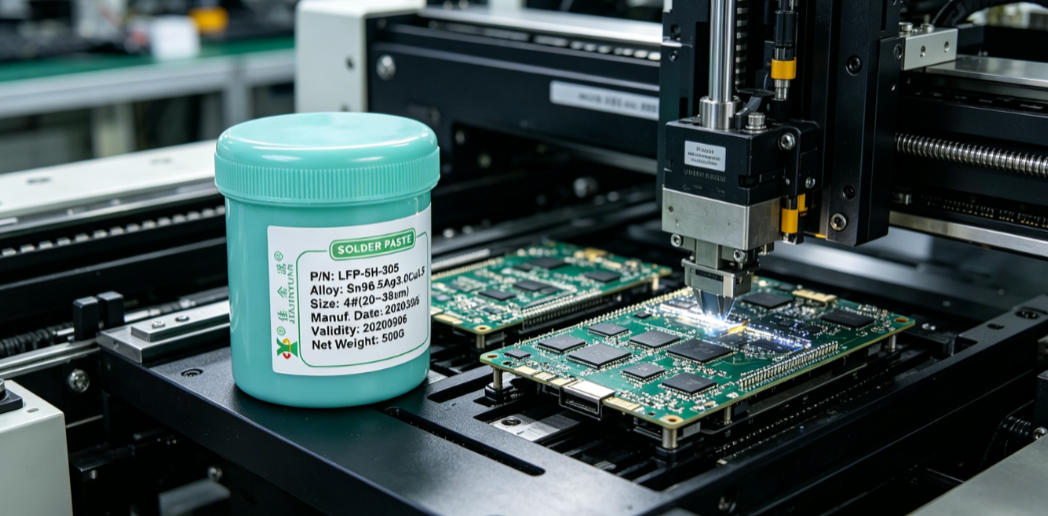
Excessive BGA voiding rate is a high-frequency cost leakage point in SMT production lines. Based on measured data from mass production lines, this paper proposes six actionable SMT process optimization measures covering key links such as solder paste selection, stencil aperture design, printing parameters, reflow profile, and nitrogen purity control. Each measure is annotated with applicable scenarios, quantified benefits, and implementation risks. The combined strategy of stencil aperture optimization and dynamic nitrogen purity monitoring is recommended as a priority, with an estimated annual cost reduction of 186,000 yuan per line.
Published: 2026-08-27
Improper storage of solder paste will lead to reduced activity of SMT solder paste, segregation of metal content, and imbalance in solvent volatilization. Continuing to use it for soldering on the production line can easily cause defects such as cold solder joints, tombstoning, solder balls, and bridging, and in severe cases, lead to functional failure of the entire batch of PCBA. Based on 20 years of practical experience in SMT production lines, this article directly addresses the typical risk points of the disconnect between solder paste storage and usage.
Published: 2026-08-27
Insufficient solder paste warm-up time directly causes typical defects in SMT production such as solder balls, cold solder joints, and solder bridges. The root cause is that the viscosity of low-temperature solder paste increases abnormally at low temperatures, leading to poor printing release and reduced flux activity. It is necessary to strictly implement the three-step control of 4-hour room-temperature standing + shaking before opening + viscosity measurement after warm-up, to ensure that the solder paste is fully warmed up before being put into SMT production.
Published: 2026-08-27
The size, shape, and wall roughness of SMT stencil apertures directly affect the paste filling, release, and pad coverage during solder paste printing. Improper design can lead to typical defects such as solder bridging, insufficient solder, and misalignment. Based on real production line failure cases, this paper reveals five high-frequency misconceptions, including improper aperture ratio, excessive inverse trapezoid, and unprocessed edge burrs, along with their root-cause solutions.
Published: 2026-08-27
Oxidation of PCB solder pads severely impairs the wettability of SMT soldering and the formation of intermetallic compounds. Even using high-activity solder paste and optimizing the reflow profile cannot compensate for the lack of interfacial bonding strength. The solderability of copper pad surfaces must be restored through source control, chemical activation, and coordinated process parameters.
Published: 2026-08-27Our technical team is always ready to provide professional solder material selection advice and SMT process solutions.