SMT Solder Paste Manufacturers.

Focused on SMT soldering processes, a one-stop electronic soldering solutions provider.

Here you can find knowledge about SAC305 Solder Bar, including but not limited to usage methods, installation techniques, troubleshooting and more. Focused on SMT soldering processes. If you can't find what you need, please contact us anytime.
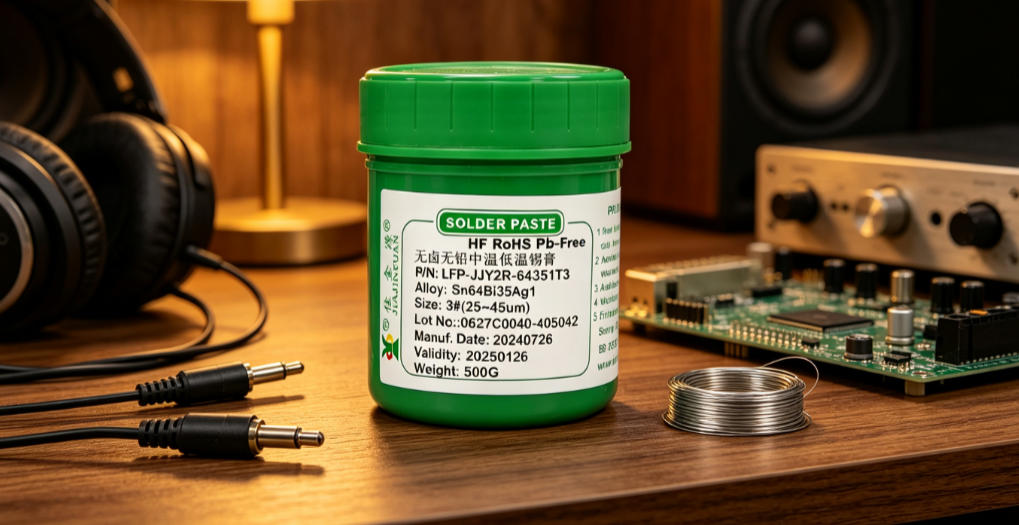
305 solder paste and 0307 solder paste each have their own advantages in SMT processes. 305 solder paste is suitable for high-density fine-pitch components, while 0307 solder paste is suitable for large-sized components or scenarios with high requirements for fluidity. The selection should be based on specific soldering requirements and equipment conditions.
Published: 2026-08-28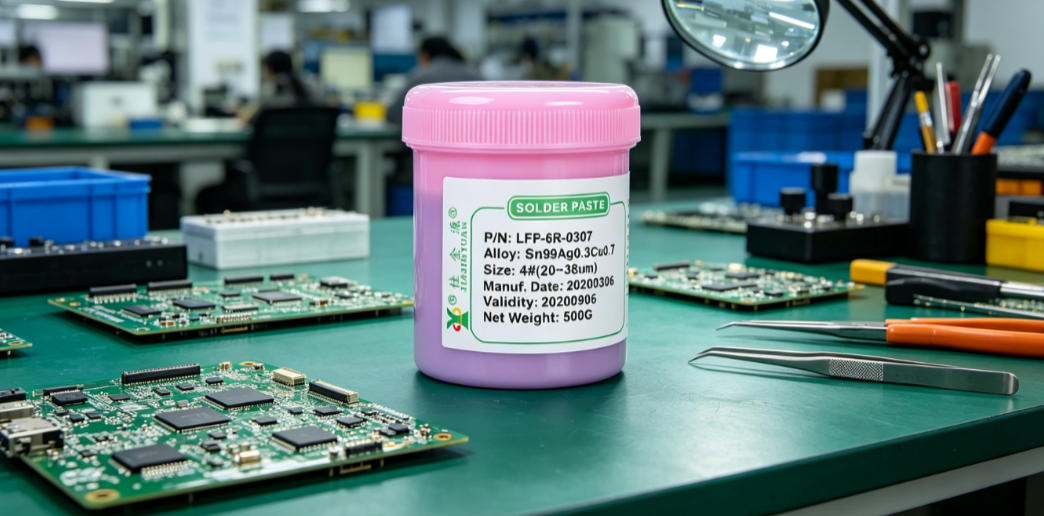
The SAC305 and Sn99.3Cu0.7 solder paste alloys exhibit significant differences in actual SMT production lines. SAC305 has better wettability and thermal fatigue resistance, while Sn99.3Cu0.7 offers lower cost and a narrower melting range window due to its silver-free composition. For both alloys, dynamic trade-offs must be made in terms of printability, reflow void rate, solder joint strength, and long-term reliability, taking into account specific component types, board thickness, and reflow oven temperature zone configuration.
Published: 2026-08-27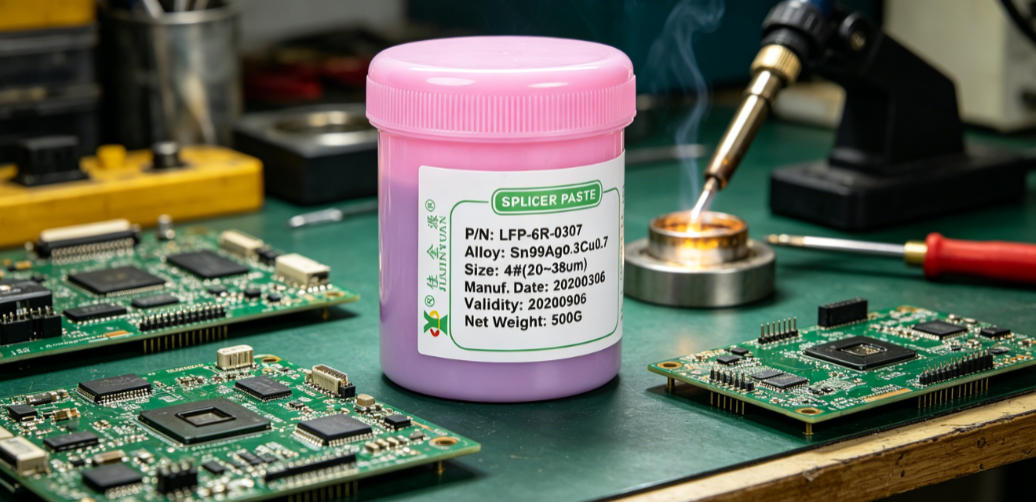
The reflow profile settings for SAC305 solder paste directly affect solder joint wettability, void rate, and component reliability. Based on 20 years of production line measurement experience, this paper analyzes the causes of key parameter mismatches in each stage of preheating, soaking, reflow, and cooling for SAC305 solder paste, focusing on common soldering defects. It also provides immediately actionable practical solutions such as temperature bandwidth adjustment, chain speed fine-tuning, and thermocouple measurement calibration, while highlighting the hidden impacts of stencil aperture design, ambient temperature and humidity, and nitrogen purity on reflow profile stability.
Published: 2026-08-27
SAC305 solder paste is prone to SMT solder ball defects in the SMT process. The main causes involve multi-dimensional coupling factors such as mismatched flux volatilization gradient, aggravated metal powder oxidation, narrow reflow profile window, and redundant stencil aperture design. Synchronous intervention is required from four aspects: solder paste storage, printing parameters, coordinated adjustment of reflow temperature zones, and stencil maintenance, to stably suppress the formation of SMT solder balls.
Published: 2026-08-27
Silver-containing solder wire and SAC305 solder paste can achieve stable soldering on actual SMT production lines, but the reflow temperature profile and flux activity must be strictly matched; otherwise, problems such as poor wetting, increased void rate, and abnormal thickening of the IMC layer are likely to occur, with particularly sensitive performance on QFN and 0201 components. This combination has been verified as feasible in Jia Jinyuan's 20-year mass production cases, provided that the silver content of the solder wire is controlled at 2.0% to 3.2%, the metal content of the solder paste is maintained at 88.5% ± 0.3%, and the reflow peak temperature is locked at 235°C ± 2°C.
Published: 2022-09-15As the mainstream choice for solder in energy storage modules, SAC305 is widely used in solder paste printing and manual soldering for power battery modules, BMS boards, and liquid cooling system control boards due to its excellent thermal fatigue resistance and moderate melting point (217℃). Among these applications, the solder paste demonstrates particularly stable performance in soldering 0.3mm fine-pitch IGBT driver chips.
Published: 2019-07-19Based on measured production line data, this paper compares the differences among SAC305 solder paste, SAC0307 solder paste, and low-temperature tin-bismuth solder paste in terms of printability, reflow performance, and solder joint reliability. It highlights the wetting advantages of SAC solder paste in the high-temperature zone and the irreplaceability of tin-bismuth solder paste in soldering temperature-sensitive components, providing reproducible criteria for process selection.
Published: 2010-01-22SAC305 solder paste is the mainstream lead-free solder paste. Its melting point of 217°C and soldering window of 235–255°C are compatible with most reflow processes. Domestic solder paste brands such as Jiajinyuan LFP-JJY5RQ-305, LFP-JJY5RR-305 and LFP-JJY5RNTT-305 stand out in halogen control, wetting ability and void rate, balancing high activity and low residue, and have become a reliable alternative for QFN/DFN packaging, automotive electronics and other scenarios.
Published: 2009-03-22Our technical team is always ready to provide professional solder material selection advice and SMT process solutions.