SMT Solder Paste Manufacturers.

Focused on SMT soldering processes, a one-stop electronic soldering solutions provider.

Here you can find knowledge about Halogen-Free Solder Paste, including but not limited to usage methods, installation techniques, troubleshooting and more. Focused on SMT soldering processes. If you can't find what you need, please contact us anytime.

To address the challenge of void rate control in automotive lamp welding, the LFP?5RR?305 halogen-free REACH solder paste is an ideal choice thanks to its extremely low void rate and high reliability. It is suitable for precision welding in high-heat scenarios, effectively improving product yield and stability.
Published: 2026-08-28
Domestic halogen-free solder paste LFP?5RQ?0307 achieves nearly 100% solder wetting in QFN packages, with its high activity and alloy powder characteristics being the key factors. Optimizing printing parameters and reflow profile can further improve soldering quality.
Published: 2026-08-28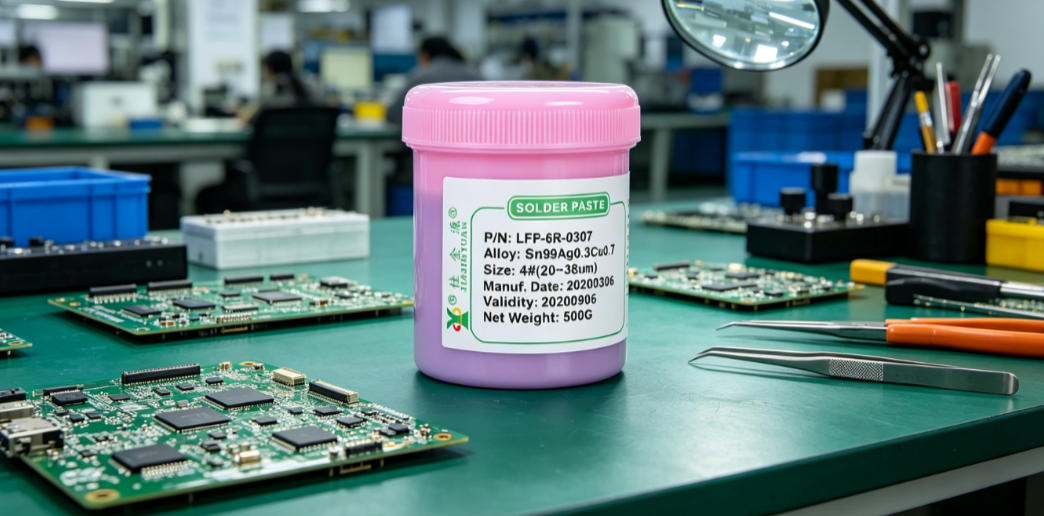
Excessive halogen content in solder paste can cause PCB corrosion, ionic contamination, and CAF failure. Halogen-free SMT production lines require strict control across the entire process chain, from solder paste selection, incoming material inspection, printing parameters, and reflow profile to cleaning processes, with particular attention to the consistency of halogen testing methods, flux residue monitoring, and collaborative verification with suppliers.
Published: 2026-08-27
How to select solder paste for SMT must be based on actual production line failures to reverse-engineer process adaptability. Lead-containing solder paste is easy to solder but restricted by RoHS; lead-free solder paste has a high reflow temperature, which easily causes BGA cold solder joints and PCB blistering; halogen-free solder paste, while solving halogen corrosion, sacrifices part of its wettability. The core of solder paste selection lies in matching equipment capabilities, component temperature resistance windows, and long-term reliability requirements. Especially for halogen-free solder paste applications in high-temperature and high-humidity environments, stencil aperture and reflow profile need to be adjusted simultaneously.
Published: 2026-08-27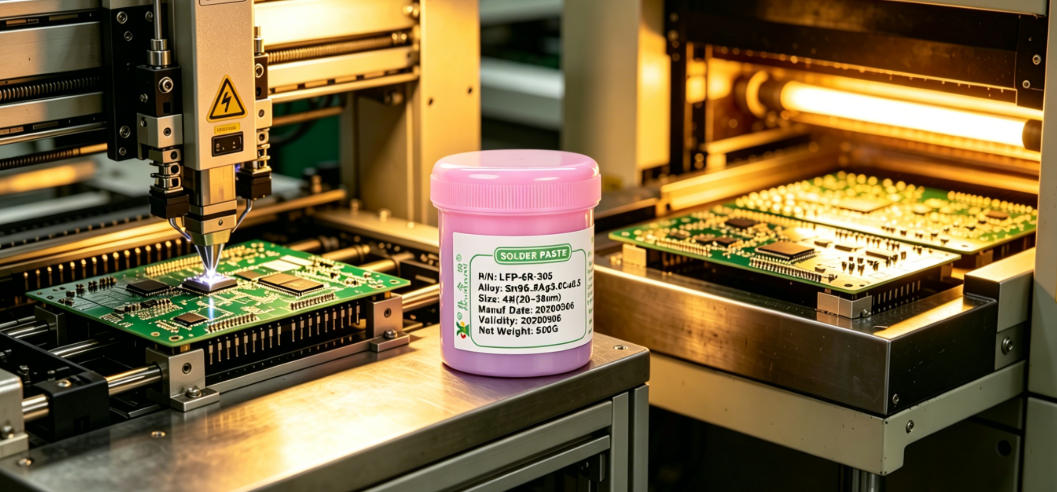
Reflow profile adjustment during SMT soldering with halogen-free solder paste is a core factor affecting solder joint reliability and defect rates. Based on 20 years of practical production line experience, this paper directly addresses common high-frequency issues such as solder balls, tombstoning, and poor wetting. Focusing on four key variables—heating rate, soaking time, peak temperature, and cooling rate—it provides immediately actionable parameter fine-tuning solutions and error-prevention guidelines.
Published: 2026-08-27
Excessive post-solder residues from halogen-free solder paste is a common pain point in SMT production lines, as it is difficult to clean and prone to causing excessive ionic contamination or false ICT test results. Selecting a matching water-based cleaning agent and optimizing cleaning process parameters can control surface ionic residue within 0.28μg/cm2 NaCl equivalent, significantly improving the yield and long-term reliability of high-density PCBA.
Published: 2026-08-27
The LFP-5RTS series halogen-free and lead-free high-temperature solder paste is suitable for high-temperature reflow soldering processes, and delivers excellent soldering stability and environmental performance.
Published: 2026-08-24
The LFP-5RNTT series halogen-free and lead-free high-temperature solder paste is renowned for its low residue, high reliability, and environmental compliance, making it a preferred soldering material in the electronics manufacturing industry.
Published: 2026-08-24
Jiajinyuan LFP-5RQ series halogen-free and lead-free high-temperature solder paste adopts a low-halogen formula, with transparent soldering residues, helping electronic manufacturing enterprises meet the environmental control requirements of RoHS and REACH.
Published: 2026-08-24
The application penetration rate of halogen-free solder paste in electronic manufacturing continues to increase, making it the preferred soldering material for high-reliability electronic products.
Published: 2026-08-24Our technical team is always ready to provide professional solder material selection advice and SMT process solutions.