
Focused on SMT soldering processes, a one-stop electronic soldering solutions provider.

Here you can find knowledge about Solder Bar, including but not limited to usage methods, installation techniques, troubleshooting and more. Focused on SMT soldering processes. If you can't find what you need, please contact us anytime.

This article defines the essential raw material purity standards for solder bar alloy production, emphasizing how trace impurities like copper, iron, zinc, and arsenic directly compromise mechanical strength, wettability, and long-term reliability of solder joints; it specifies maximum allowable limits for each contaminant based on IPC-J-STD-006 and JIS Z3282, explains why high-purity tin, silver, and copper feedstocks are non-negotiable for consistent alloy homogeneity, and highlights how even ppm-level deviations in raw material composition trigger visible dross formation, voiding, or intermetallic brittleness during reflow.
Published: 2026-11-11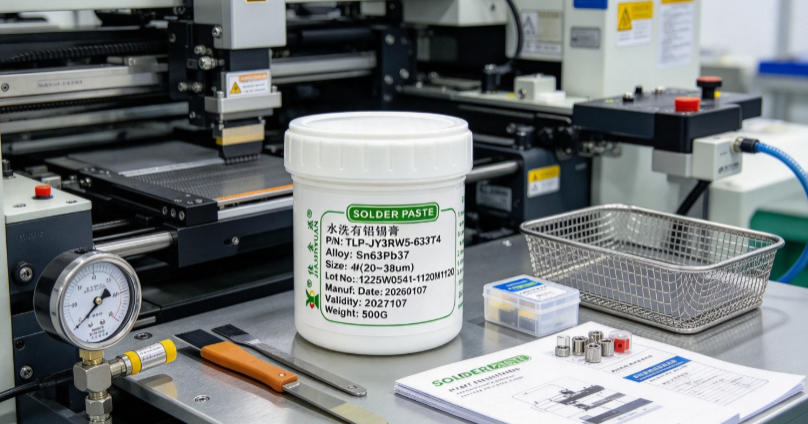
This portfolio details the functional distinctions, material compositions, and application-specific trade-offs among Solder Paste, Solder Wire, and Solder Bar across modern electronics manufacturing; it clarifies how particle size distribution in Solder Paste governs stencil printing fidelity, why flux-core geometry and diameter tolerance in Solder Wire dictate hand-soldering repeatability, and how alloy homogeneity and surface oxide control in Solder Bar enable stable wave soldering bath performance, all while emphasizing real-world process constraints like refrigerated storage for paste, wire feed consistency under tension, and bar stacking density during melting.
Published: 2026-11-10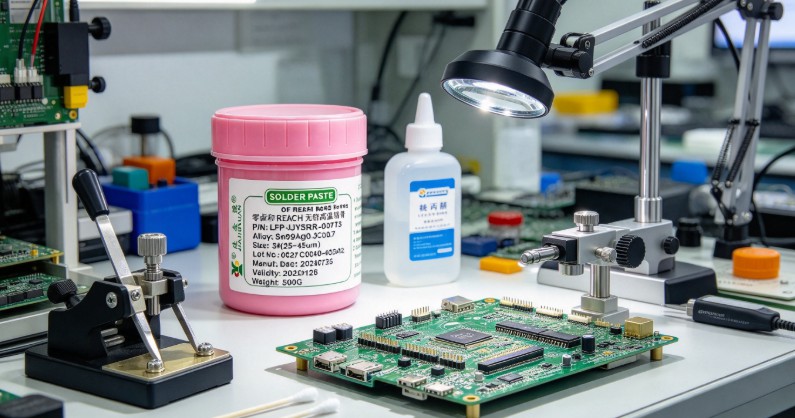
Solder Bar production quality monitoring ensures consistent metallurgical composition, dimensional accuracy, and surface integrity across batches by integrating real-time spectral analysis, automated caliper measurement, and visual defect screening into the continuous casting line, where deviations in alloy ratio above ±0.15% or thickness variation beyond ±0.3 mm immediately trigger process recalibration, enabling SMT engineers to maintain solder joint reliability without downstream rework.
Published: 2026-11-10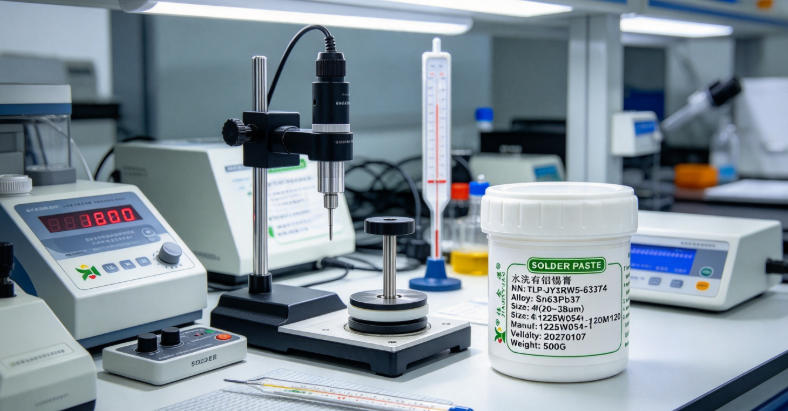
Understanding the oxide slag generation rule of solder bar is essential for minimizing material waste, maintaining consistent solder joint quality, and optimizing wave soldering efficiency; this article explains how temperature, dwell time, surface agitation, alloy composition, and environmental humidity collectively govern oxide layer formation and slag separation during solder bar melting and reuse.
Published: 2026-11-09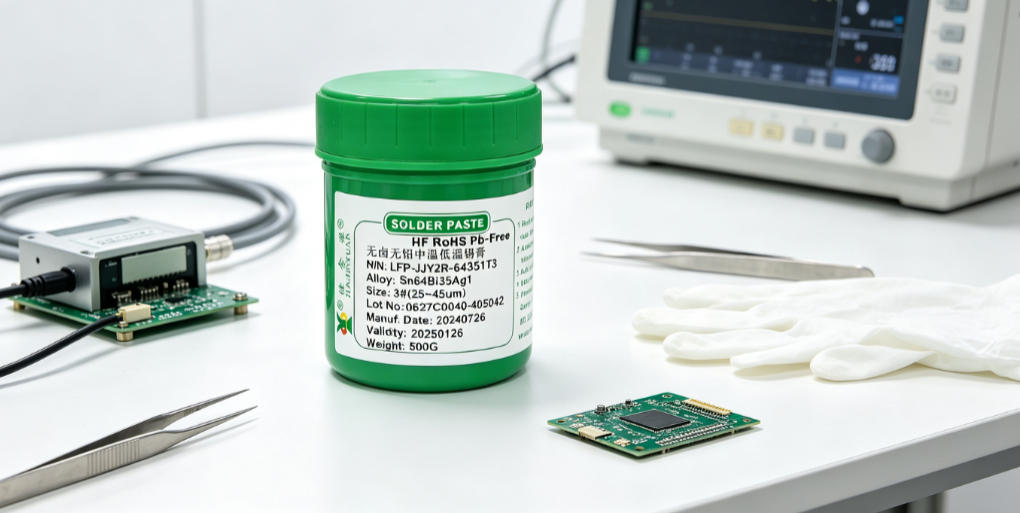
This article examines how material composition, thermal history, and interfacial metallurgy govern the Joint Strength of Solder Bar in reflow-soldered assemblies, emphasizing practical correlations between alloy selection, cooling rate, IMC layer thickness, and measured shear strength values, while clarifying why Sn63Pb37 remains a benchmark for consistent Joint Strength despite lead-free alternatives gaining traction in high-reliability applications.
Published: 2026-11-08
Repeated melting of Solder Bar degrades microstructural homogeneity, accelerates intermetallic compound growth at grain boundaries, and increases oxide inclusion density, all of which directly impair wetting performance, tensile strength, and long-term joint reliability in SMT assembly; Multi Times Melting introduces cumulative thermal stress that cannot be reversed by standard re-casting protocols, making traceability and controlled reuse essential for high-reliability electronics manufacturing.
Published: 2026-11-07
This specification defines precise, actionable protocols for Solder Bar Storage and Management to prevent oxidation, contamination, and alloy segregation while ensuring consistent solderability and process stability across SMT lines, emphasizing environmental control, material traceability, container integrity, and first-in-first-out discipline throughout the supply chain.
Published: 2026-11-07
Sn90Sb10 Solder Bar delivers exceptional thermal stability and mechanical strength for high-reliability soldering applications, particularly where elevated service temperatures and resistance to creep deformation are critical; its eutectic-like behavior near 240°C, combined with low liquidus spread and minimal intermetallic growth, makes it a preferred choice for power electronics, automotive under-hood assemblies, and aerospace modules requiring long-term joint integrity without silver content.
Published: 2026-11-06
The Solder Bar Raw Material Verification Process ensures consistent alloy composition, purity, and physical integrity before production use, directly impacting solder joint reliability, wetting behavior, and defect rates in SMT assembly; this rigorous procedure includes supplier documentation review, visual inspection, dimensional measurement, density testing, differential scanning calorimetry for melting point verification, and spectrographic analysis to confirm elemental compliance with IPC-J-STD-006 and ASTM B32 standards.
Published: 2026-11-05
This article details the practical methodology for adjusting the Bright Solder Bar Formula to achieve consistent surface luster, optimal flow behavior, and reliable intermetallic formation without compromising mechanical strength or thermal stability, emphasizing real-time feedback from wave soldering trials, precise alloy composition control, and flux system compatibility with high-tin lead-free systems.
Published: 2026-11-04Our technical team is always ready to provide professional solder material selection advice and SMT process solutions.