
Focused on SMT soldering processes, a one-stop electronic soldering solutions provider.

Here you can find knowledge about SMT Solder Paste, including but not limited to usage methods, installation techniques, troubleshooting and more. Focused on SMT soldering processes. If you can't find what you need, please contact us anytime.
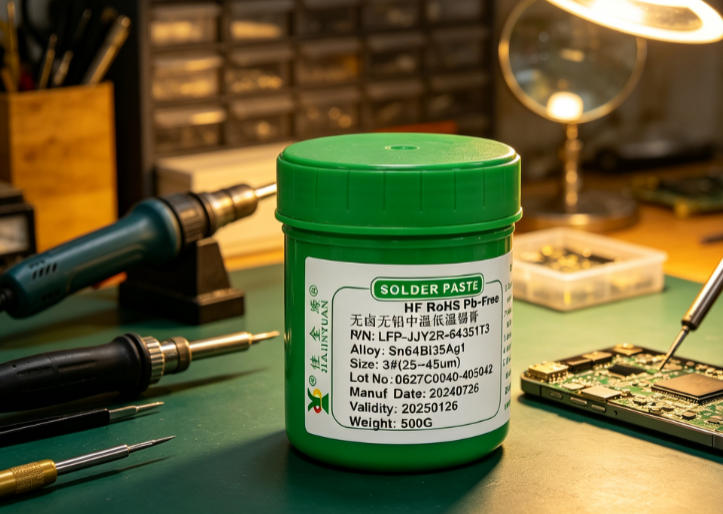
There are many types of SMT solder paste, which can be classified into different models according to their composition, application and process requirements. Selecting the appropriate solder paste can significantly improve soldering quality and production efficiency.
Published: 2026-08-28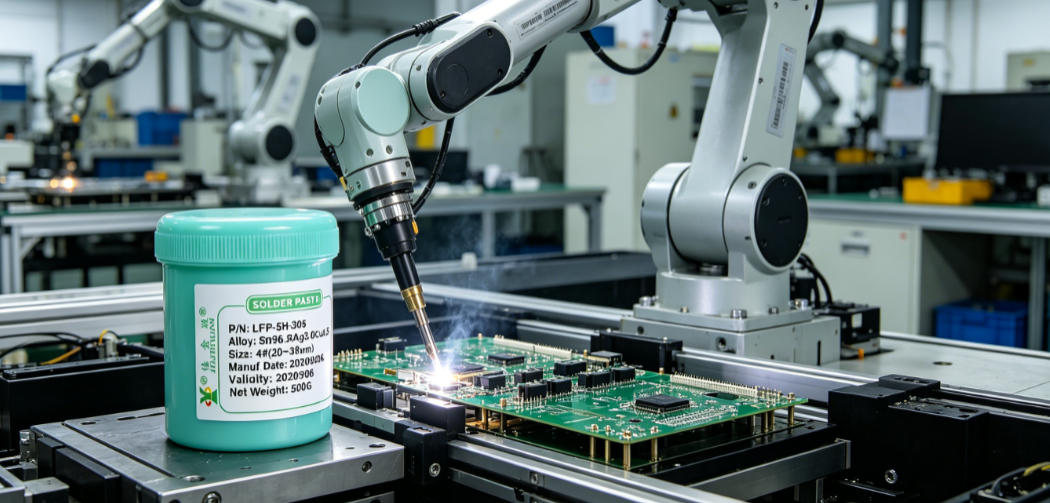
SMT for automotive industrial control boards has extremely high requirements for soldering reliability; even minor deviations in solder paste control can trigger batch defects such as cold solder joints, solder bridges, and tombstoning. This article directly addresses real-world misconceptions on the production line, covering five high-incidence issues: temperature control failure during solder paste storage, insufficient reflow time, mismatched squeegee pressure, mismatch between stencil aperture design and solder paste particle size, and excessive dwell time after printing. Each point is derived from measured failure cases, emphasizing that solder paste control in industrial control board SMT must run through the entire process from material requisition to component placement.
Published: 2026-08-27
The SMT solder paste cleaning process must be precisely matched to the solder paste type. Although no-clean solder paste is nominally described as requiring no cleaning, the risk of ionic residue still needs to be evaluated in high-reliability scenarios. Water-washable solder paste, by contrast, must be paired with a complete cleaning process such as deionized water spraying, ultrasonic cleaning, or brushing. The two types differ fundamentally in cleaning equipment selection, water quality control, and residue inspection.
Published: 2026-08-27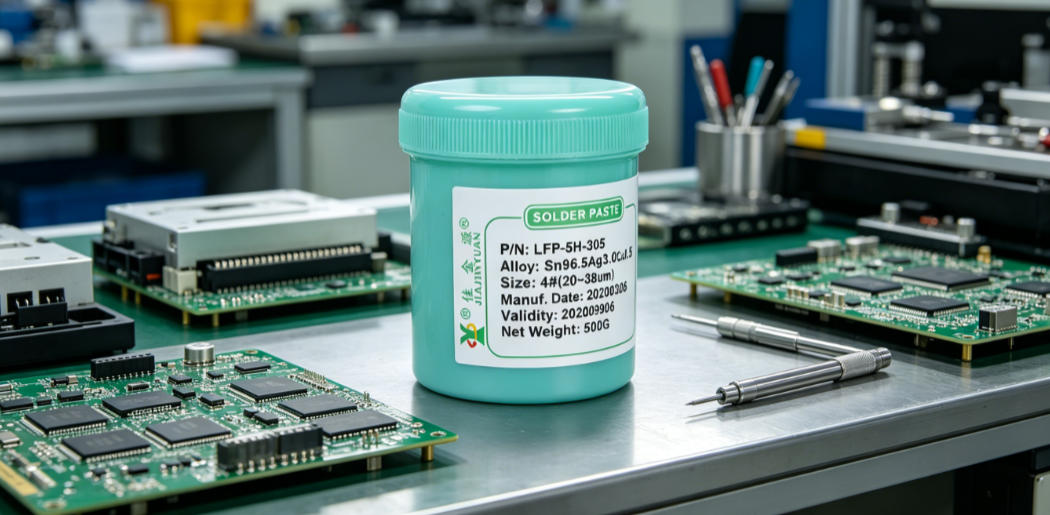
The SMT solder paste operation process covers five major stages: thawing, stirring, printing, component placement, and reflow soldering. The core of cost reduction across the entire process lies in reducing solder paste waste, extending stencil life, lowering the rework rate, and optimizing equipment energy consumption. Based on real production line data, this paper proposes 8 actionable measures covering four dimensions: personnel operation, parameter setting, auxiliary material management, and equipment maintenance.
Published: 2026-08-27
Improper storage of solder paste will lead to reduced activity of SMT solder paste, segregation of metal content, and imbalance in solvent volatilization. Continuing to use it for soldering on the production line can easily cause defects such as cold solder joints, tombstoning, solder balls, and bridging, and in severe cases, lead to functional failure of the entire batch of PCBA. Based on 20 years of practical experience in SMT production lines, this article directly addresses the typical risk points of the disconnect between solder paste storage and usage.
Published: 2026-08-27
The BGA cold solder joint issue cannot be simply attributed to SMT solder paste; a systematic investigation is required into hard parameters such as reflow profile peak temperature (235±2℃), heating rate (1.2~1.8℃/s), soak time (60~90s), as well as solder paste metal content (88.5~89.2%), viscosity (750~850 Pa·s), and particle size D50 (20~25μm). Switching solder paste is only effective when verification confirms insufficient flux activity or excessive metal powder oxidation.
Published: 2026-08-27
The post-soldering corrosion risk of SMT solder paste is highly dependent on the chemical composition of the solder paste flux. Different systems, such as rosin-based, water-soluble, and no-clean, exhibit significant differences in ionic residue, halogen content, and activation temperature. The probability of post-soldering corrosion increases notably when the chloride ion concentration exceeds 0.5μg/cm2, the softening point of rosin resin is below 120℃, or the pKa value of organic acids is less than 4.2.
Published: 2026-08-27Reflow soldering is a key step in the SMT placement process to achieve metallurgical bonding of component pads. Solder paste goes through four stages in the reflow oven: preheating, soaking, reflow, and cooling, to complete melting and wetting. Its temperature profile setting, furnace temperature uniformity, and solder paste activity directly affect solder joint strength and void rate.
Published: 2025-07-04
The Jiajinyuan technical team provides on-site resident services at the customer's SMT production line, conducting full-process diagnosis and process optimization for typical soldering defects such as solder bridging and tombstoning. Relying on precise selection and parameter matching of various halogen-free and lead-free high-temperature solder pastes including 8MQP/5RQ and 8MNTTP/5RNTT, combined with 030
Published: 2020-07-16SMT stencils are core consumables in the SMT solder paste printing process. Their aperture size, thickness, surface treatment, and tension state jointly determine the stability of solder paste transfer volume. Jiajinyuan SMT stencils, through laser cutting precision control and electropolishing process optimization, achieve a solder paste transfer rate of over 92% at a thickness of 0.12mm, effectively suppressing common high-frequency production line defects such as insufficient solder, solder bridging, and edge burrs.
Published: 2017-04-18Our technical team is always ready to provide professional solder material selection advice and SMT process solutions.