
Focused on SMT soldering processes, a one-stop electronic soldering solutions provider.

Here you can find knowledge about No-Clean Solder Paste, including but not limited to usage methods, installation techniques, troubleshooting and more. Focused on SMT soldering processes. If you can't find what you need, please contact us anytime.
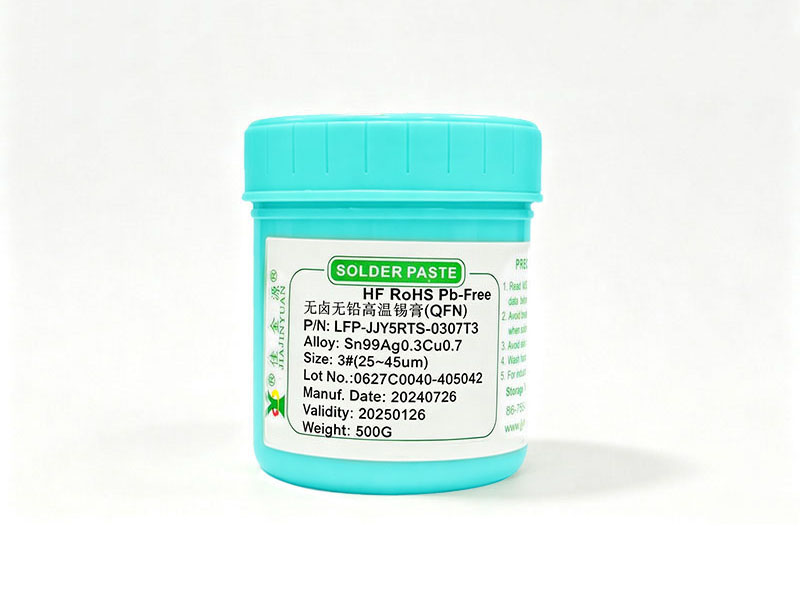
LFP?5RTS?0307 translucent residual solder paste demonstrates stable performance in medium solder fillet formation mass production for QFN/DFN packages, offers good process adaptability, and its no-clean feature significantly reduces post-processing costs, making it suitable for high-density electronic manufacturing scenarios.
Published: 2026-08-28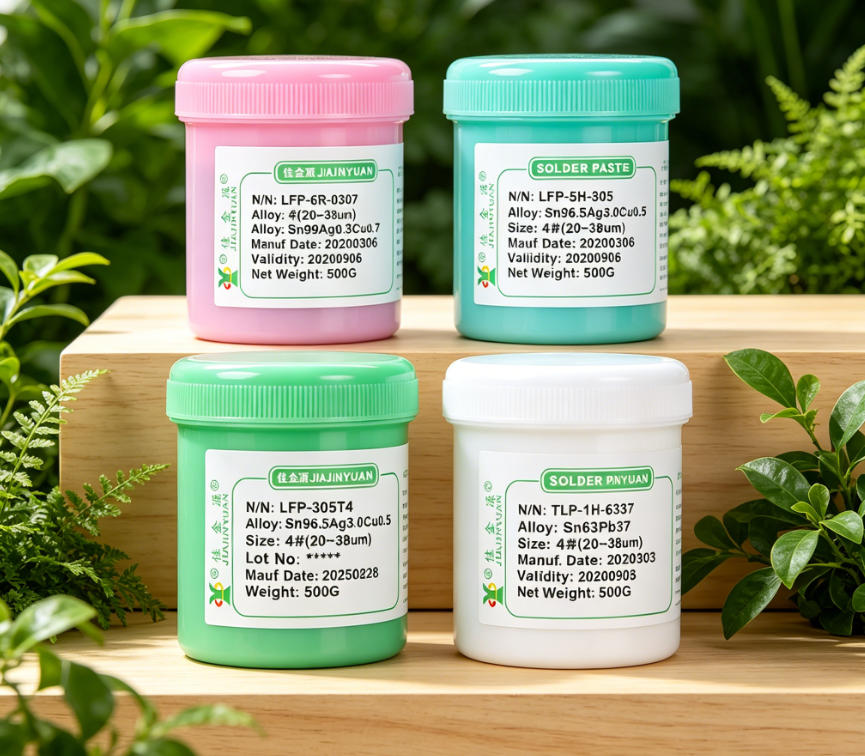
The selection of no-clean solder paste and water-washable solder paste in SMT production lines directly determines yield, cost, and delivery rhythm. No-clean solder paste, with advantages such as residue ion content <0.5μg/cm2, eliminating the cleaning process to save 2.3 hours of production capacity per shift, and no need for water-based cleaning equipment investment after reflow, is suitable for high-density fast-turnaround production lines. While water-washable solder paste requires supporting spray cleaning machines and DI water systems, its rosin-based activity is stronger, improving the wetting force on OSP boards and oxidized pads by more than 40%, making it more suitable for high-reliability scenarios such as military industry and automotive electronics.
Published: 2026-08-27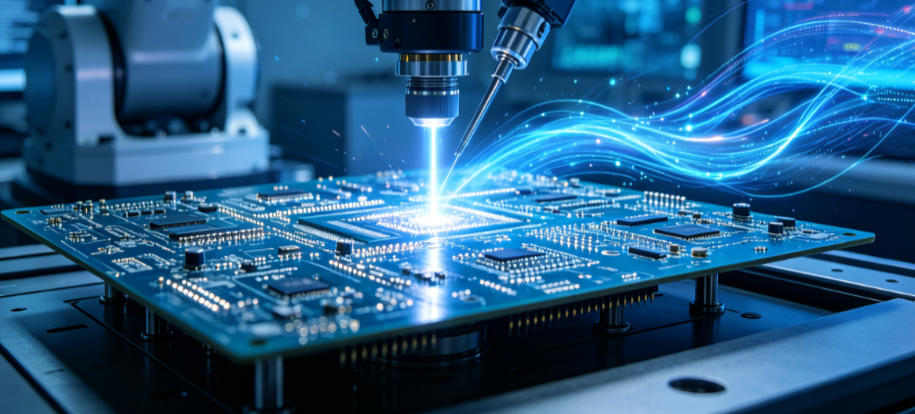
Although no-clean solder paste eliminates the cleaning process in SMT soldering, post-soldering residues can easily cause poor ICT probe contact, false judgments in flying probe testing, and missed detections in functional testing. Based on production line measured data, this paper proposes 6 actionable cost-reduction measures covering solder paste selection, stencil design, reflow parameters, and test fixture maintenance, which can reduce annual test misjudgment working hours by 1200 hours and reduce false rework costs by 84,000 yuan per plant.
Published: 2026-08-27
The SMT solder paste cleaning process must be precisely matched to the solder paste type. Although no-clean solder paste is nominally described as requiring no cleaning, the risk of ionic residue still needs to be evaluated in high-reliability scenarios. Water-washable solder paste, by contrast, must be paired with a complete cleaning process such as deionized water spraying, ultrasonic cleaning, or brushing. The two types differ fundamentally in cleaning equipment selection, water quality control, and residue inspection.
Published: 2026-08-27Excessive ion contamination from solder paste soldering directly affects PCBA reliability. It is necessary to control it from the source of solder paste selection, giving priority to low-residue, high-purity no-clean solder paste, and cooperating with standardized solder paste testing procedures to ensure that key indicators such as chloride ions and sodium ions meet the requirements of IPC-J-STD-004B Class L0.
Published: 2023-12-17
Jiajinyuan has launched a high-stability no-clean solder paste, specifically designed for 01005 micro components. By optimizing the alloy powder particle size distribution (T4/T5), rosin-based flux system, and rheological property control, it significantly improves printing anti-slump performance while maintaining halogen-free and lead-free high-temperature characteristics, meeting the high solder climbing rate requirements for QFN/DFN.
Published: 2022-12-14If excessive flux remains after solder paste reflow soldering, especially between high-density PCBs or fine-pitch components, ionic contamination can easily form, leading to reduced insulation resistance, excessive leakage current, or even short-circuit failures. Although no-clean solder paste is nominally specified as not requiring cleaning, the active components of its flux residue, when coupled with moisture on the board surface, can still significantly degrade surface insulation performance.
Published: 2021-08-28
Whether flux paste must be cleaned after SMT soldering depends on the chemical activity and ion content of the flux residue, as well as the requirements of subsequent assembly processes. No-clean flux paste is not completely residue-free; rather, its flux residue becomes inert and low-corrosive after reflow. However, high-density BGA or aerospace-grade products still require cleaning to mitigate the risk of long-term electrochemical migration.
Published: 2019-12-31Based on real cases from SMT production lines, this paper details the verification methods for the insulation performance of the no-clean solder paste process, covering three core solder paste testing methods: ionic contamination testing, surface insulation resistance (SIR) testing, and post-reflow ICT open-circuit retesting. It emphasizes the direct impact of no-clean solder paste residues on the risk of leakage between micro-pitch solder joints under BGA packages.
Published: 2018-07-14Addressing the practical selection pain points of SMT production lines, this section breaks down the solder paste selection logic from three dimensions: printability, reflow performance, and cleaning compatibility. It clarifies that water-washable solder paste must match the spray pressure and solvent concentration of the cleaning machine, while no-clean solder paste must pass the ionic contamination test and its residues must not corrode gold fingers. The performance differences of different solder pastes under stencil aperture, squeegee angle, and ambient temperature and humidity directly determine the first-pass yield.
Published: 2017-10-15Our technical team is always ready to provide professional solder material selection advice and SMT process solutions.