
Focused on SMT soldering processes, a one-stop electronic soldering solutions provider.

Here you can find knowledge about Flux, including but not limited to usage methods, installation techniques, troubleshooting and more. Focused on SMT soldering processes. If you can't find what you need, please contact us anytime.

This article details the formulation and optimization of non-corrosive flux for solder paste, emphasizing compatibility with sensitive electronics, residue safety, and long-term reliability; it explains how modern flux chemistries eliminate halide-based activators while maintaining wetting performance, addresses storage stability and print fidelity under varying humidity conditions, and highlights real-world validation through IPC-J-STD-004B classification testing, surface insulation resistance measurement, and copper coupon corrosion trials, all critical for high-reliability SMT assembly in automotive and medical devices where solder paste, non-corrosive behavior, and flux purity are non-negotiable.
Published: 2026-11-10
Selecting the right active flux for solder paste is critical to achieving reliable solder joints, minimizing voiding, and ensuring compatibility with modern component finishes like ENIG, OSP, and immersion silver; this guidance emphasizes real-world trade-offs between activity level, residue behavior, thermal stability, and cleaning requirements while aligning flux chemistry with specific reflow profiles, pad geometries, and stencil apertures used in high-density SMT assembly.
Published: 2026-11-09This document covers a single‑core solder wire with Sn63/Pb37 alloy, 1.0 mm diameter and 2 % flux co
Published: 2026-11-09
Solder wire flux residue poses a serious long-term corrosion risk to printed circuit board assemblies, especially in humid or thermally cycled environments, where unremoved rosin or halide-based activators can form conductive electrolytes that attack copper traces, component leads, and solder joints, leading to dendritic growth, leakage current, and premature field failure; understanding flux chemistry, post-solder cleaning efficacy, and IPC-compliant inspection criteria is essential for mitigating corrosion across high-reliability electronics manufacturing.
Published: 2026-11-06
This article compares Synthetic Flux and Rosin Flux in Solder Wire for SMT and hand-soldering applications, highlighting differences in activation strength, residue behavior, thermal stability, cleaning requirements, and compatibility with sensitive components, while emphasizing real-world trade-offs engineers face when selecting flux types for reliability-critical assemblies.
Published: 2026-11-03
Achieving optimal flux activity balance in solder paste is essential for reliable SMT assembly, as excessive activity causes corrosion and residue-related reliability issues, while insufficient activity leads to poor wetting, solder balling, and weak intermetallic formation; this balance depends on the precise formulation of organic acids, halide-free activators, and thermal decomposition kinetics, all calibrated against specific alloy systems, reflow profiles, and pad metallization such as OSP, ENIG, or immersion silver.
Published: 2026-10-30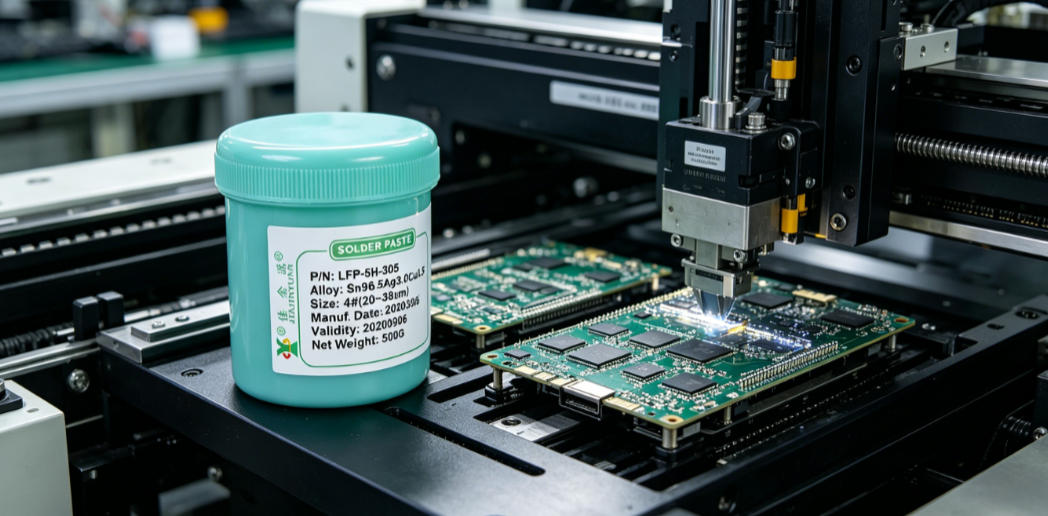
Solder paste is a core material in the SMT process, and its performance directly affects soldering quality. In actual production, the viscosity, particle size, and flux composition of solder paste are the key factors for selection. Different application scenarios require matching specific models to ensure solder joint strength and reliability.
Published: 2026-08-28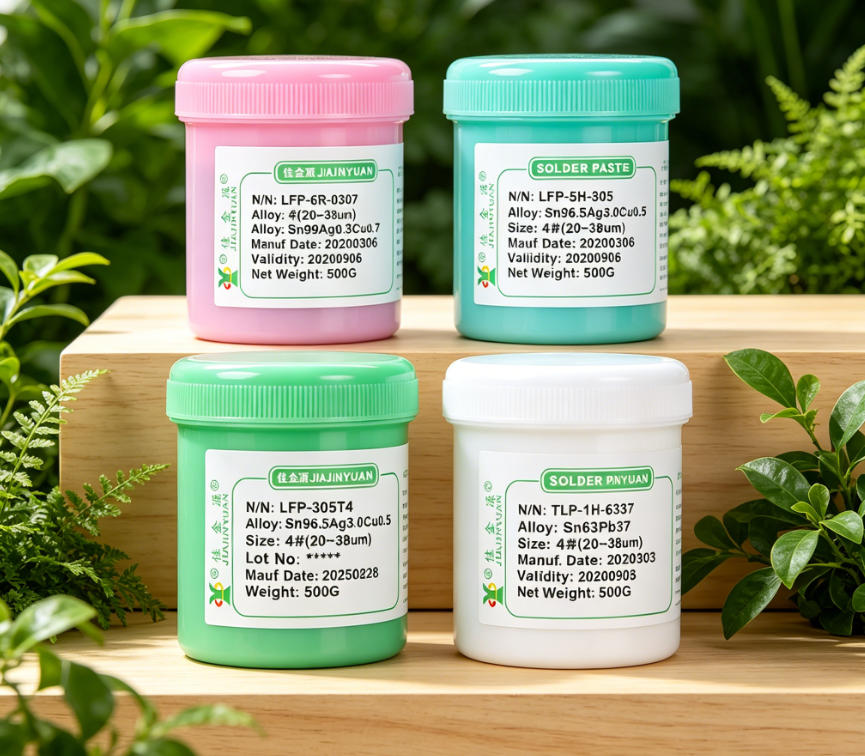
Solder paste is an indispensable soldering material in the SMT process, and whether tin powder and soldering flux can be used to make solder paste has become a focus of attention in the industry. By analyzing the composition and production principle of solder paste, this paper clarifies the limitations of tin powder and soldering flux in practical applications, and provides professional guidance for related operations.
Published: 2026-08-28
The flux content of solder wire directly affects the wetting performance of solder joints: excessively high flux content easily causes blackened residues and PCB corrosion, while excessively low flux content leads to poor wetting and frequent cold solder joints. Based on real failure cases from SMT production lines, this paper analyzes the wetting failure mechanism caused by abnormal flux content, and provides both emergency remediation measures and long-term root-cause solutions.
Published: 2026-08-27
The classification of solder wire flux types must strictly align with the activity grades, halogen content, and residue cleanability requirements for rosin-based, no-clean, and water-soluble fluxes specified in the IPC J-STD-004B standard. Although water-soluble fluxes offer the advantages of high activity and easy cleaning, they carry a risk of chloride ion residue exceeding the 2.5μg/cm2 limit. If the production line fails to implement the deionized water rinsing process specified in IEC 61189-2, it will easily lead to PCBA corrosion failure.
Published: 2026-08-27Our technical team is always ready to provide professional solder material selection advice and SMT process solutions.