SMT Solder Paste Manufacturers.

Focused on SMT soldering processes, a one-stop electronic soldering solutions provider.

Here you can find knowledge about Solder Wire Wholesale, including but not limited to usage methods, installation techniques, troubleshooting and more. Focused on SMT soldering processes. If you can't find what you need, please contact us anytime.
To address the frequently occurring issues of solder paste tombstoning, cold solder joints, and poor wetting on OSP gold-plated pads in SMT production lines, and drawing on 20 years of on-site commissioning experience, this paper provides immediately actionable countermeasures from four aspects: solder paste selection compatibility, stencil aperture design redundancy, reflow profile activity window control, and collaborative management of PCB pad surface conditions, directly targeting the root causes of uneven solder paste wetting and cold solder joint defects.
Published: 2023-05-12Solder dross is continuously generated during continuous wave soldering, and its production volume is directly affected by solder pot temperature, conveyor speed, flux activity, and PCB design. Production line data from Jia Jinyuan shows that every 0.5 kg/h increase in dross increment raises the material cost per board by 0.32 yuan. Therefore, dross volume control is not an auxiliary step, but the true cost control center of the wave soldering process.
Published: 2023-05-03The R&D of solder ODM focuses on the welding pain points of thick copper boards and high-frequency boards. By adjusting the activity of the rosin system, the sphericity and particle size distribution of metal powder, as well as the viscosity and thixotropy of the carrier, it improves the melting and spreading ability without sacrificing printing accuracy, and solves production-line-level problems such as insufficient wetting caused by fast heat dissipation of thick copper and residual ion migration caused by sensitivity to dielectric loss of high-frequency boards.
Published: 2023-05-01
On April 23, 2023, two Polish customers traveled a long distance to our company for an on-site visit and inspection. These two customers have been in contact with our foreign trade sales staff for quite some time. They made a special trip to fly over from Poland this time, firstly to inspect the factory conditions, and secondly to gain a deeper understanding of our products. At the foreign
Published: 2023-04-23The solder for energy storage modules maintains solder joint integrity under 125°C high-temperature cycling and 20G vibration stress. The Jiajinyuan JN-808 series solder improves grain boundary strength through microalloying design, and with an optimized reflow profile, the IMC layer thickness is stably controlled within the range of 3.2–4.5 μm. Measured shear force attenuation after 5000 thermal cycles is less than 8%, effectively solving the cold solder joint and cracking problems caused by thermal expansion and contraction and mechanical vibration during long-term operation of energy storage systems.
Published: 2023-04-20The tin dipping process forms a uniform tin layer on the surfaces of wire terminals and electronic component pins, significantly improving oxidation resistance and solderability, and preventing common production line defects such as cold solder joints and weak soldering. Jia Jinyuan tin dipping equipment completes a single dipping within 0.8 seconds, with the tin layer thickness stably controlled at 8-12μm, suitable for various substrates including silver-plated, copper-plated, and bare copper.
Published: 2023-03-27The setting of the constant-temperature segment during the liquid phase time in the solder paste reflow profile directly affects the wettability and void rate of solder joints. In actual production lines, adjustments must be made comprehensively based on the solder paste manufacturer's recommended values, PCB heat capacity distribution, and oven temperature stability. The typical liquid phase time should be controlled between 60 and 90 seconds: too short a time can easily lead to cold solder joints, while too long a time will accelerate the growth of intermetallic compounds and cause component tombstoning or pad peeling.
Published: 2023-03-25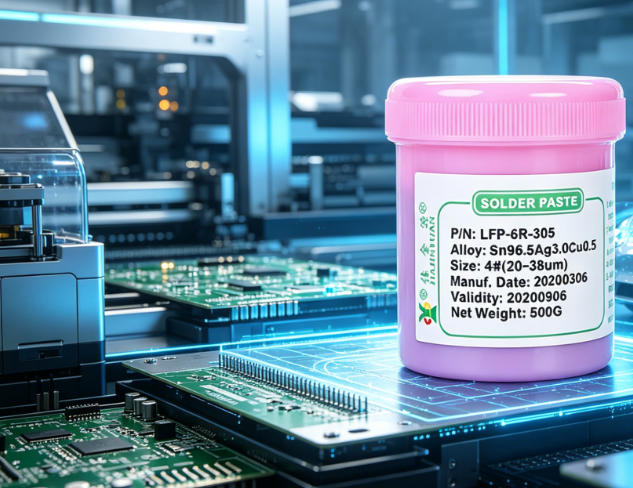
Solder paste printing forming spikes is a high-frequency fault on SMT production lines. The root causes are concentrated in three aspects: mismatch of solder paste rheological properties, unreasonable stencil aperture design, and unbalanced coordination between squeegee parameters and printing speed. The solution requires simultaneous adjustment of solder paste viscosity grade, optimization of squeegee pressure and angle combination, and calibration of stencil support tension and PCB positioning accuracy.
Published: 2023-03-12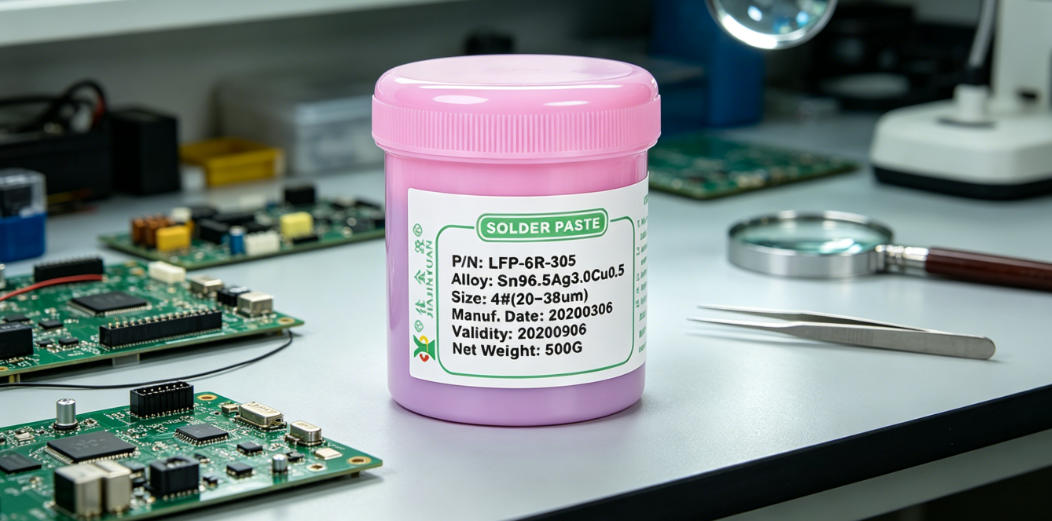
Solder paste mixing is a key process in the SMT production line that directly affects printing yield. Insufficient solder paste mixing will lead to abnormal viscosity, metal particle settlement, and flux stratification, which in turn cause typical defects such as missing printing, insufficient solder, and solder balls. In actual production lines, more than 65% of first-article defects are directly related to out-of-control solder paste mixing parameters.
Published: 2023-01-31Circuit board soldering faces multiple challenges of high reliability, fine pitch, and heat-sensitive components in the medical, communication, and new energy sectors. Based on practical production line experience, this paper focuses on key processes such as solder paste selection, stencil aperture design, reflow profile optimization, and BGA rework, emphasizing solder joint wettability, void rate control, and cold solder joint identification methods. All parameters are derived from measured data from Jia Jinyuan production lines, without theoretical deduction.
Published: 2023-01-22Our technical team is always ready to provide professional solder material selection advice and SMT process solutions.