SMT Solder Paste Manufacturers.

Focused on SMT soldering processes, a one-stop electronic soldering solutions provider.

Here you can find knowledge about Solder Joint Strength, including but not limited to usage methods, installation techniques, troubleshooting and more. Focused on SMT soldering processes. If you can't find what you need, please contact us anytime.
X-Ray inspection can penetrate BGA packages to directly observe solder ball morphology, void distribution, and bridging defects, making it an irreplaceable method for verifying the internal quality of reballing soldering after rework. Especially after reballing operations are completed on JJY rework stations, X-Ray inspection must be performed to confirm whether solder ball coplanarity, offset, and void rate comply with IPC-A-610 Class 2 standards.
Published: 2010-02-27The solder used for industrial control motherboards can maintain the structural integrity of solder joints under high and low temperature cycling environments ranging from -40°C to 85°C. This relies on the optimization of Jia Jinyuan's solder alloy ratio, precise matching of reflow profiles, and coordinated control of PCB copper thickness and pad design, to avoid microcrack propagation caused by thermal stress accumulation.
Published: 2010-02-18Cold soldering is one of the most hidden and stubborn soldering defects in SMT production lines. It is often induced by a combination of non-compliant reflow temperature profiles and excessive PCB heat capacity, resulting in insufficient melting of solder paste, poor wetting of solder joints, and insufficient thrust. In Jiajinyuan cold soldering cases, 83% stem from a reflow zone peak temperature below 217℃ and a heating ramp rate lower than 1.5℃/s.
Published: 2010-02-04
Severe oxidation of solder bars directly leads to solder joint spikes, cold solder joints, and increased solder dross. Intervention must be carried out simultaneously from four aspects: storage environment, solder melting temperature, flux ratio, and squeegee maintenance. Among them, controlling the solder pot temperature at 250±5℃, using special flux containing antioxidant components, and keeping solder bars dry and sealed during storage are the three most effective practical measures to reduce solder oxidation.
Published: 2010-01-30Based on measured production line data, this paper compares the differences among SAC305 solder paste, SAC0307 solder paste, and low-temperature tin-bismuth solder paste in terms of printability, reflow performance, and solder joint reliability. It highlights the wetting advantages of SAC solder paste in the high-temperature zone and the irreplaceability of tin-bismuth solder paste in soldering temperature-sensitive components, providing reproducible criteria for process selection.
Published: 2010-01-22High-frequency PCB soldering is a core step in 5G high-frequency PCB SMT soldering, which directly determines signal integrity and transmission stability in the millimeter-wave frequency band. Jiajinyuan has verified on substrates including FR4, Rogers, and Taconic that the solder paste filling rate of 0.15mm micro-via pads is >92%, and the post-reflow coplanarity is ≤18μm. By optimizing squeegee pressure and trapezoidal compensation for stencil apertures, the high-frequency PCB soldering yield is stably maintained above 99.3%.
Published: 2010-01-11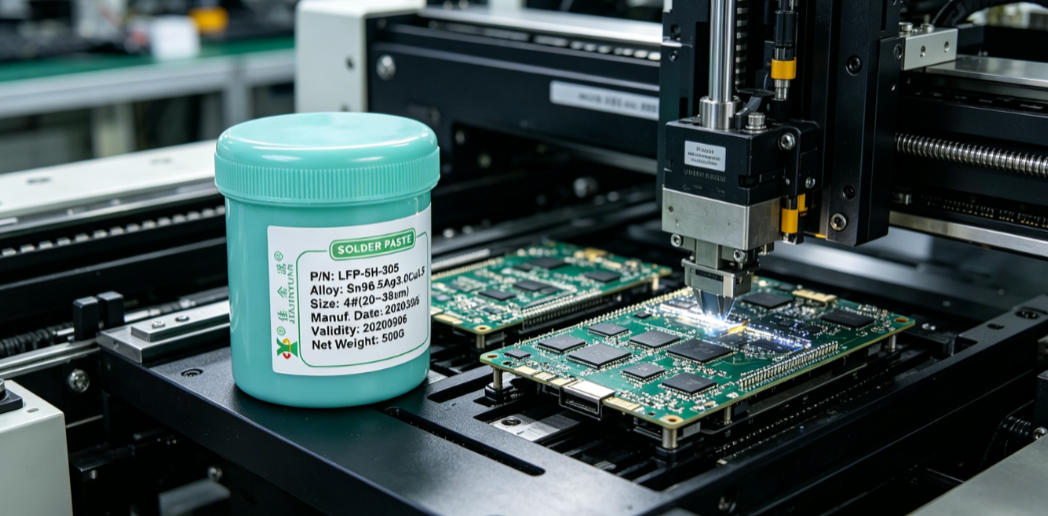
Solder paste caking is a high-frequency failure on SMT production lines. The main causes include uncontrolled storage temperature and humidity, repeated freeze-thaw cycles, excessive exposure after opening, and uneven stirring. Caked solder paste has undergone metal particle agglomeration and flux phase separation, and its rheological properties cannot be restored even after re-stirring. Forced use will lead to defects such as missing printing, insufficient solder, and bridging, and it must be scrapped.
Published: 2009-12-27Solder beads are one of the most stubborn typical defects in SMT reflow soldering; if production line sampling only relies on AOI, the missed judgment rate is high. Jiajinyuan added a manual microscope sampling station after reflow soldering and before ICT, combined with the linked analysis of three key factors: solder paste printing thickness, stencil aperture ratio, and nitrogen purity, to intercept the risk of mass solder bead outflow in advance within the range of 100 pieces.
Published: 2009-12-21Cold solder joint is a fatal defect common to wave soldering and SMT reflow soldering, with causes spanning multiple stages such as solder paste printing misalignment, oven temperature profile mismatch, PCB pad oxidation, insufficient flux activity, and conveyor speed fluctuations. Jia Jinyuan production line data shows that over 65% of soldering defects caused by cold solder joints stem from insufficient preheating and deteriorated interfacial wetting when nitrogen purity is below 99.99%.
Published: 2009-11-12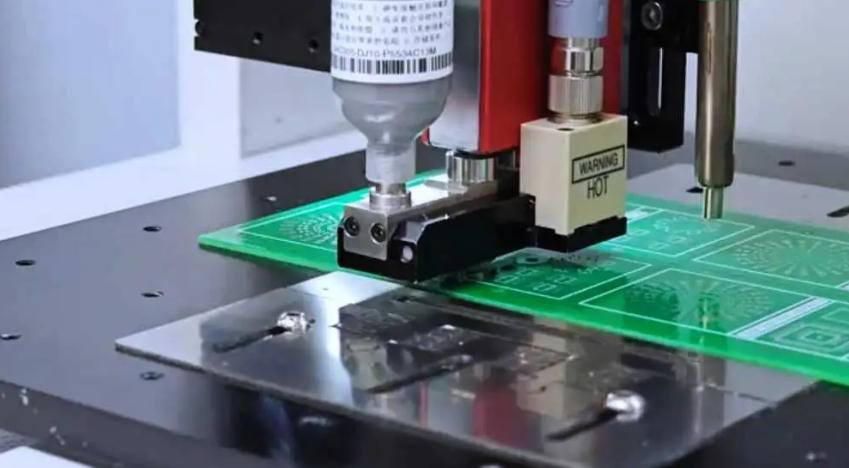
The tensile strength and elongation of solder wire directly determine the stability and workability of soldering performance. Insufficient tensile strength easily causes wire breakage and jamming during automatic wire feeding, while inadequate elongation leads to difficulties in dragging solder during manual soldering and solder joint spikes. The two jointly affect SMT pre-tinning, wave soldering bridging control, and rework yield.
Published: 2009-10-09Our technical team is always ready to provide professional solder material selection advice and SMT process solutions.