SMT Solder Paste Manufacturers.

Focused on SMT soldering processes, a one-stop electronic soldering solutions provider.

Here you can find knowledge about Solder Joint Strength, including but not limited to usage methods, installation techniques, troubleshooting and more. Focused on SMT soldering processes. If you can't find what you need, please contact us anytime.
To address the issues of large fluctuations in solder paste deposition volume and frequent cold solder joints and solder bridges during high-density PCB solder paste printing, this paper proposes a solder paste volume control method based on measured production line data, with stencil aperture optimization, dynamic calibration of squeegee pressure, and temperature control of solder paste viscosity as its core components. It focuses on solving the challenge of solder paste deposition consistency for 0.4mm pitch QFN and 0201 components, significantly reducing the proportion of abnormal batches where the SPI first-pass yield is below 92%.
Published: 2022-08-17Tombstoning causes spike-like protrusions at the edges of solder paste deposits. During placement, component pins are easily pushed off position or pressed into the stacked solder paste area. During reflow, the fluidity of molten solder paste increases, sharply raising the risk of bridging. The Jiajinyuan G-8800 series solder paste is most prone to exposing this defect under conditions of a 35μm stencil and a 45° squeegee angle.
Published: 2022-08-06
If solder paste is improperly selected or incompletely cleaned during PCB soldering, residual halide ions and moisture will act together to trigger electrochemical migration, leading to corrosion of copper circuits on the PCB, reduced insulation resistance, and severely compromised long-term reliability, with the failure risk rising significantly especially in high-temperature and high-humidity environments.
Published: 2022-07-23Due to the large heat capacity and high thermal conductivity of copper, thick copper board soldering suffers from delayed temperature rise and easily low peak temperature during reflow soldering. The soaking zone must be extended to 150–180 seconds to ensure sufficient melting and wetting of the solder paste; otherwise, defects such as cold solder joints, dry joints, and dull solder joints occur frequently. Actual measurements on Jia Jinyuan's production line show that when the soaking zone is less than 140 seconds, the void rate of BGA solder joints increases by 37%.
Published: 2022-07-20Unreasonable reflow soldering temperature curve settings will significantly aggravate typical defects such as voids and solder balls. Excessively fast preheating ramp-up causes the flux to boil violently and splatter, forming solder balls. Insufficient soaking or low peak temperature leads to poor solder wetting and hinders gas escape, inducing voids. Actual measurements on Jiajinyuan production lines show that when the ramp rate exceeds 3℃/s or the reflow time is less than 60 seconds, the BGA void rate generally rises above 15%.
Published: 2022-06-27Using expired solder paste directly causes batch defects on SMT production lines, such as cold solder joints, increased solder beads, and printing misalignment. Viscosity degradation and reduced flux activity of expired solder paste are the root causes. Strictly implementing solder paste control processes can avoid more than 90% of mounting defects, with particular attention to key nodes such as refrigerated storage, warm-up time, post-opening usage time limit, and batch traceability.
Published: 2022-05-28PCB pad treatment is a key step in SMT production lines to ensure first-pass yield and line yield. For common issues such as pad oxidation, fingerprint contamination, and flux residue, targeted pre-treatment must be completed before solder paste printing; otherwise, defects such as cold solder joints, tombstoning, and solder bridging are highly likely to occur. Production line verification by Jiajinyuan shows that standardized PCB pad treatment can reduce the soldering defect rate of OSP boards from 3200 ppm to below 450 ppm.
Published: 2022-05-11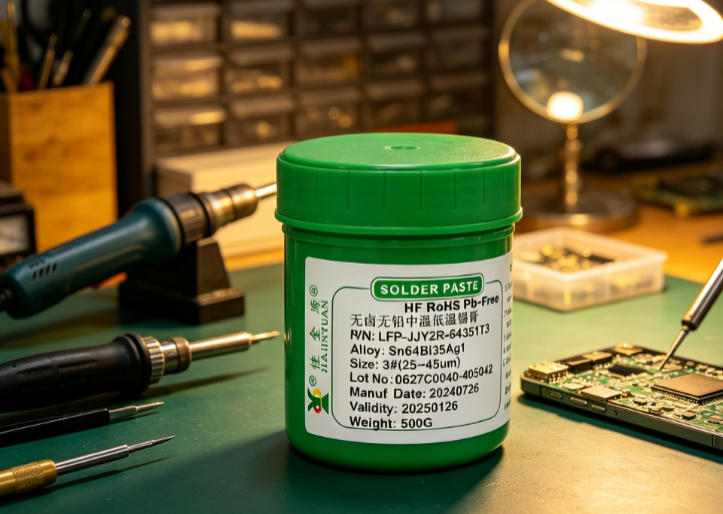
Whether expired solder paste can still be put into production depends on the actual storage conditions, compliance with temperature recovery procedures, and process verification results throughout the printing and reflow soldering process, rather than being simply determined based on the solder paste expiration label. In production lines, improper low-temperature cold storage often leads to sudden changes in solder paste viscosity, flux stratification, or oxidation of metal particles, which in turn causes batch defects such as insufficient solder, solder bridges, and cold solder joints.
Published: 2022-05-06Based on recent production line feedback regarding excessive solder paste print thickness and frequent bridging issues, Duoxi has re-evaluated the stencil aperture ratio, reducing the aperture area ratio in conventional 0402 component areas from 85% to 78%, while synchronously lowering squeegee pressure and print speed, resulting in a 12% overall reduction in solder paste deposition volume, effectively improving post-reflow tombstoning rate and solder joint void rate.
Published: 2022-04-16Leveraging its solder ODM R&D capabilities, Jia Jinyuan has developed a customized solder system featuring a low void rate (≤3%), a reflow peak temperature ≤220°C, and an extended oxidation resistance lifespan of over 72 hours, addressing pain points such as excessive void rate in BGA packaging, low-temperature soldering requirements for temperature-sensitive devices, and printing defects caused by solder paste oxidation on production lines. This system has been batch-validated on the production lines of multiple automotive electronics and medical equipment customers.
Published: 2022-03-17Our technical team is always ready to provide professional solder material selection advice and SMT process solutions.