SMT Solder Paste Manufacturers.

Focused on SMT soldering processes, a one-stop electronic soldering solutions provider.

Here you can find knowledge about Solder Bar Wholesale, including but not limited to usage methods, installation techniques, troubleshooting and more. Focused on SMT soldering processes. If you can't find what you need, please contact us anytime.
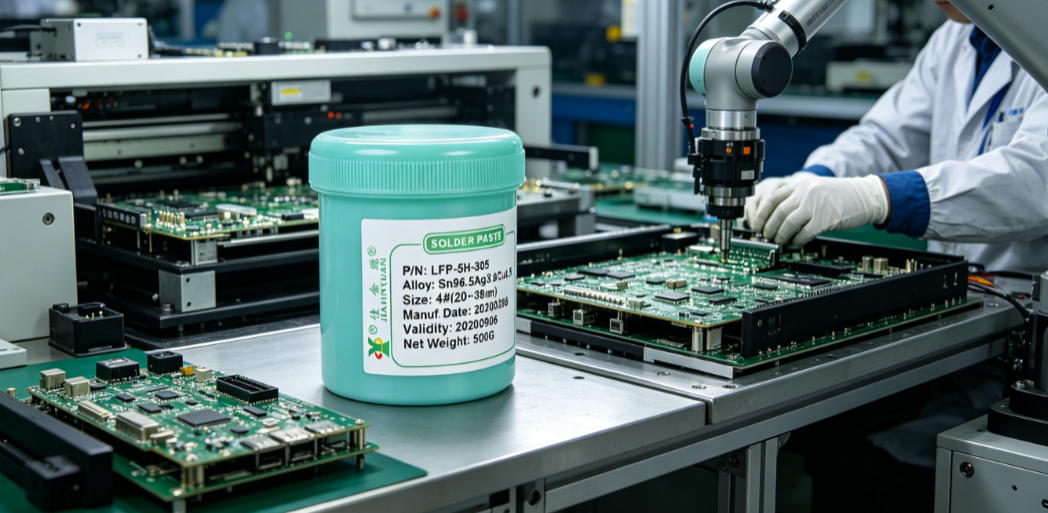
To address the frequent solder bridging and solder spike defects of large-size QFP devices in the SMT process, this paper starts from solder paste selection, and combines printing accuracy, reflow thermal response and metal powder distribution characteristics to elaborate on special solder pastes with high thixotropy, narrow particle size distribution (D50=18.5μm) and 90.2% metal content, such as
Published: 2026-08-27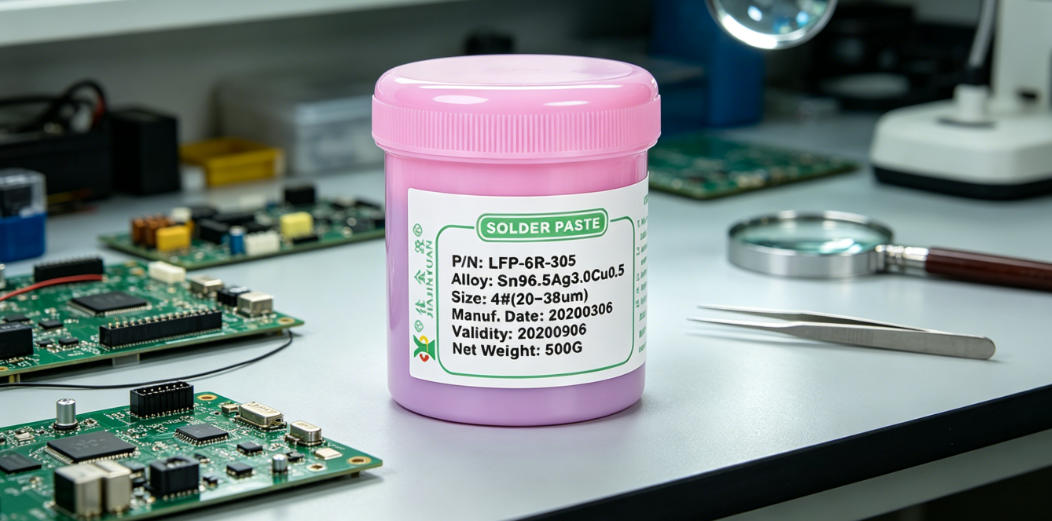
Aiming at typical defects such as solder joint blackening, cold solder joints, and stencil clogging caused by solder paste and solder bar switching during the lead-free to leaded transition in the SMT line changeover process, this paper, based on real production line cases, details rapid response actions including emergency line shutdown and cleaning, flux residue removal, and equipment pipeline passivation treatment, and proposes root-cause elimination measures such as solder paste zoning management, solder bar batch binding, and dynamic monitoring of reflow oven nitrogen purity, providing an immediately executable closed-loop solder paste and solder bar switching process for SMT line changeover.
Published: 2026-08-27
Welding of FPC flexible boards is highly sensitive to solder paste printing accuracy and mounting pressure. Based on a review of real production line failures, this paper horizontally compares the occurrence rates of bridging, tombstoning, and cold soldering under different solder paste viscosities, metal contents, thixotropic properties, and various mounting pressure ranges (0.15N~0.6N) in typical scenarios such as fine-pitch ICs, double-sided pads, and high-density blind/buried via FPCs. It is clarified that for solder paste printing, models with 4# powder, 88.5% metal content, viscosity of 220Pa·s, and thixotropic index >4.2 should be prioritized, while mounting pressure must be dynamically set according to pad size, and must not be uniformly set to 0.3N.
Published: 2026-08-27
Although no-clean solder paste eliminates the cleaning process in SMT soldering, post-soldering residues can easily cause poor ICT probe contact, false judgments in flying probe testing, and missed detections in functional testing. Based on production line measured data, this paper proposes 6 actionable cost-reduction measures covering solder paste selection, stencil design, reflow parameters, and test fixture maintenance, which can reduce annual test misjudgment working hours by 1200 hours and reduce false rework costs by 84,000 yuan per plant.
Published: 2026-08-27
Improper temperature setting of the wave soldering pot is one of the main causes of cold solder joints, bridging, and poor wetting. There are significant differences in melting point and activity among different solder bar alloys. The wave soldering pot temperature must be accurately set according to the actual type of solder bar alloy used; otherwise, it can easily cause batch soldering defects.
Published: 2026-08-27
Addressing the widespread issue of excessive solder paste voids in high-thermal-dissipation PCBs during SMT reflow soldering, this paper draws on 20 years of practical production line experience to systematically outline 6 types of high-frequency failure phenomena. These cover real-world causes including heat sink design defects, mismatched stencil apertures, improper solder paste selection, uncontrolled printing parameters, imbalanced reflow profiles, and fluctuating nitrogen purity. For each cause, immediately actionable calibration steps and routine preventive measures are provided, directly targeting the core process bottlenecks for SMT void improvement in high-thermal-dissipation PCBs.
Published: 2026-08-27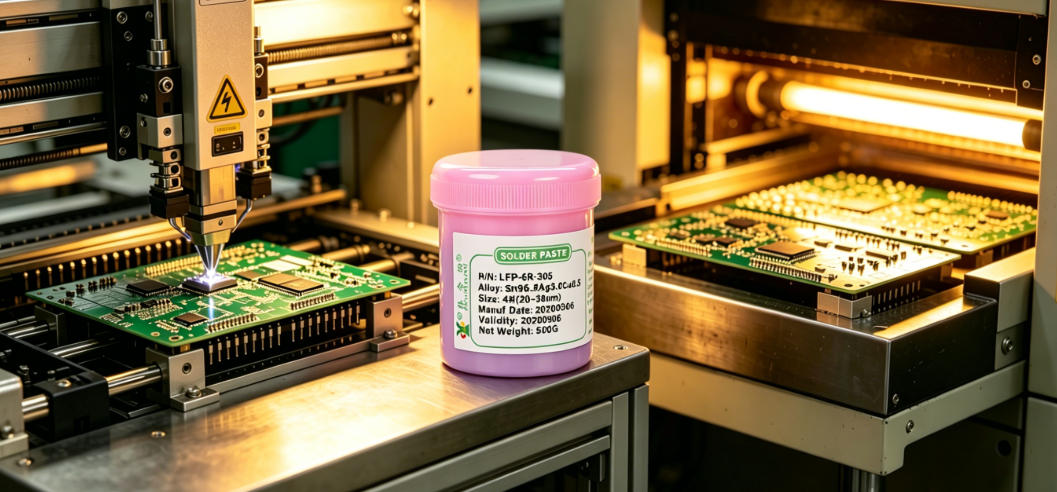
Solder paste warehouse management in SMT workshops is shifting from static temperature control to dynamic lifecycle tracking. Trends such as linked environmental temperature and humidity alarms, automatic timing of open-container duration, and batch-level modeling of thermal cycling-induced degradation are driving the upgrade of warehouse systems. Refined control of solder paste warehouse management has become the primary frontline defense to reduce soldering defects such as cold solder joints, tombstoning, and solder balls.
Published: 2026-08-27
In BGA rework, the amount of solder paste used and hot air temperature control directly determine solder joint reliability. The IPC-7711/21C standard explicitly requires that the deviation of solder paste volume must not exceed ±15%, and the reflow peak temperature must be controlled within the range of 235℃±5℃. Excessive temperature easily causes PCB delamination and chip cracking, while excessive solder paste leads to bridging and excessive void rate. In front-line practical operations, parameters need to be dynamically adjusted in combination with stencil thickness, chip solder ball diameter, and PCB copper foil density.
Published: 2026-08-27
In the mixed assembly board SMT process, the combined use of solder paste and manual solder wire can easily cause hidden defects such as cold solder joints, bridging, and thermal damage. Based on 20 years of practical production line experience, this article directly addresses five high-frequency pitfalls in the mixed use of solder paste and solder wire: improper stencil aperture design, conflicting reflow temperature windows, mismatched manual repair soldering timing, misjudgment of flux compatibility, and uncontrolled thermal stress superposition. Each pitfall includes its symptoms, hazards, root causes, and countermeasures, avoiding the substitution of theory for on-site judgment.
Published: 2026-08-27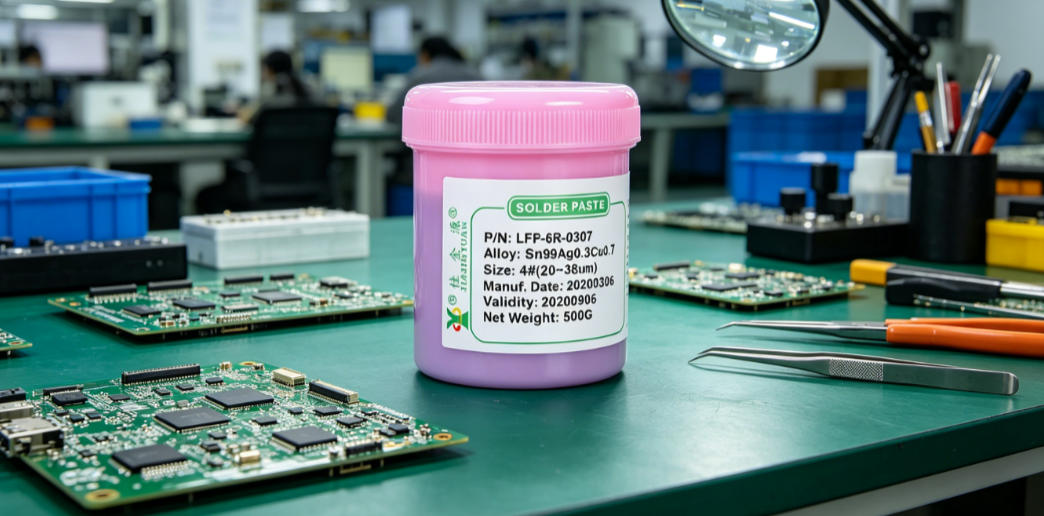
In high-current terminal welding, improper solder wire selection and uncontrolled soldering iron temperature commonly cause cold solder joints, dry solder joints, or thermal damage to terminal base materials. This article directly addresses real-world misconceptions on production lines, covering six major pitfalls including flux residue corrosion, mismatched wire diameters with solder wire specifications, and temperature settings that ignore heat capacity differences. It emphasizes that terminal welding must reverse-engineer solder wire activity grade and diameter based on current-carrying capacity, and dynamically adjust soldering iron temperature according to terminal material thickness.
Published: 2026-08-27Our technical team is always ready to provide professional solder material selection advice and SMT process solutions.