SMT Solder Paste Manufacturers.

Focused on SMT soldering processes, a one-stop electronic soldering solutions provider.

Here you can find knowledge about Reflow Solder Paste, including but not limited to usage methods, installation techniques, troubleshooting and more. Focused on SMT soldering processes. If you can't find what you need, please contact us anytime.
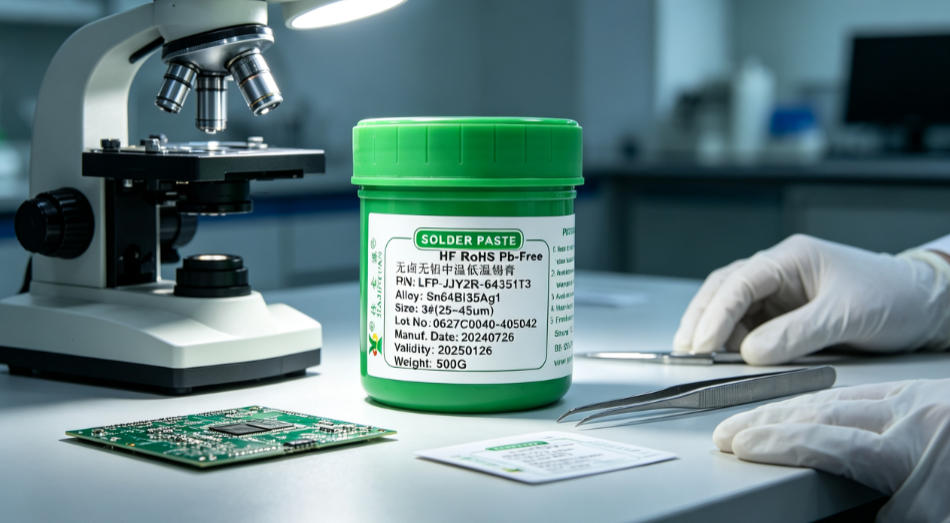
During the reflow soldering process, high-temperature solder paste exhibits poor solder wetting issues, which are closely related to the temperature profile settings, flux activity, and substrate cleanliness. It is necessary to optimize process parameters and strengthen process control to improve soldering quality.
Published: 2026-08-28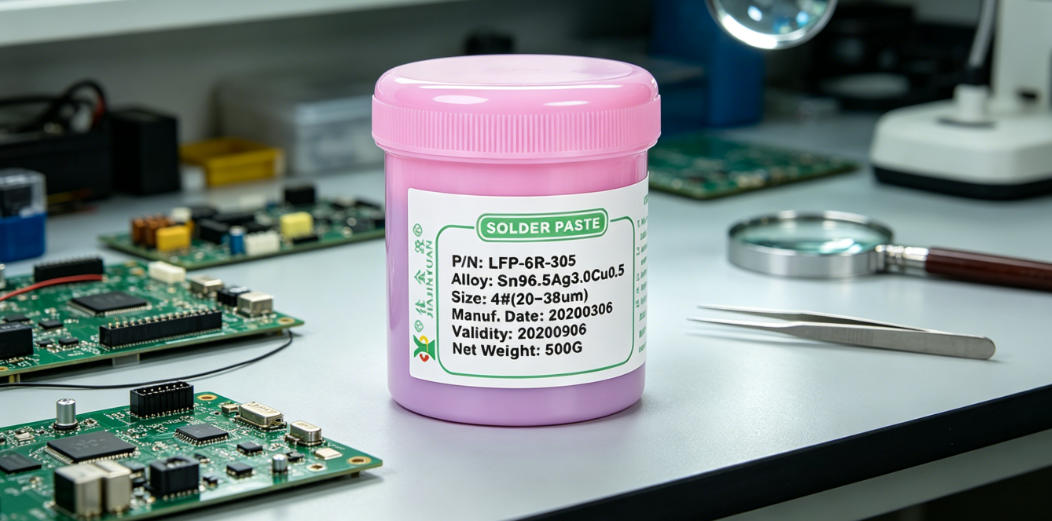
The temperature setting for solder paste reflow soldering directly affects soldering quality. Different solder paste types require matching appropriate temperature profiles to ensure solder joint reliability and production efficiency. The reference temperature range should be adjusted in combination with specific process requirements and equipment characteristics.
Published: 2026-08-28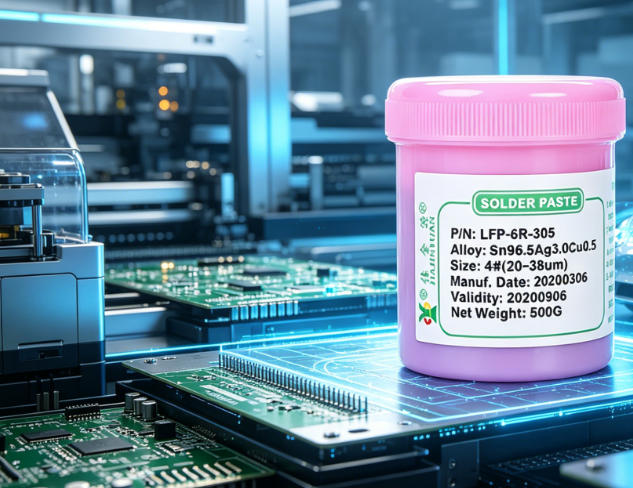
Both solder paste die attach and solder preform die attach require reflow soldering in the SMT process, but there are significant differences between the two in specific applications. Solder paste die attach involves printing solder paste, placing components, and then achieving soldering through reflow soldering, while solder preform die attach directly uses preformed solder sheets for placement, which also requires reflow soldering to complete the connection. The core keywords solder paste die attach and reflow soldering run through the entire process flow.
Published: 2026-08-28
Addressing the widespread issue of excessive solder paste voids in high-thermal-dissipation PCBs during SMT reflow soldering, this paper draws on 20 years of practical production line experience to systematically outline 6 types of high-frequency failure phenomena. These cover real-world causes including heat sink design defects, mismatched stencil apertures, improper solder paste selection, uncontrolled printing parameters, imbalanced reflow profiles, and fluctuating nitrogen purity. For each cause, immediately actionable calibration steps and routine preventive measures are provided, directly targeting the core process bottlenecks for SMT void improvement in high-thermal-dissipation PCBs.
Published: 2026-08-27
SMT soldering of thick copper boards is prone to cold solder joints and insufficient soldering due to their large heat capacity and delayed temperature rise. Solder paste activity matching and precise control of the reflow temperature profile are required to ensure solder joint reliability. The ramp-up rate in the preheating zone must be controlled between 0.5℃/s and 1.5℃/s, and the peak temperature must meet the component class limits specified in IPC-J-STD-020D. Otherwise, batch failures such as solder balls, tombstoning, and PCB delamination will occur.
Published: 2026-08-27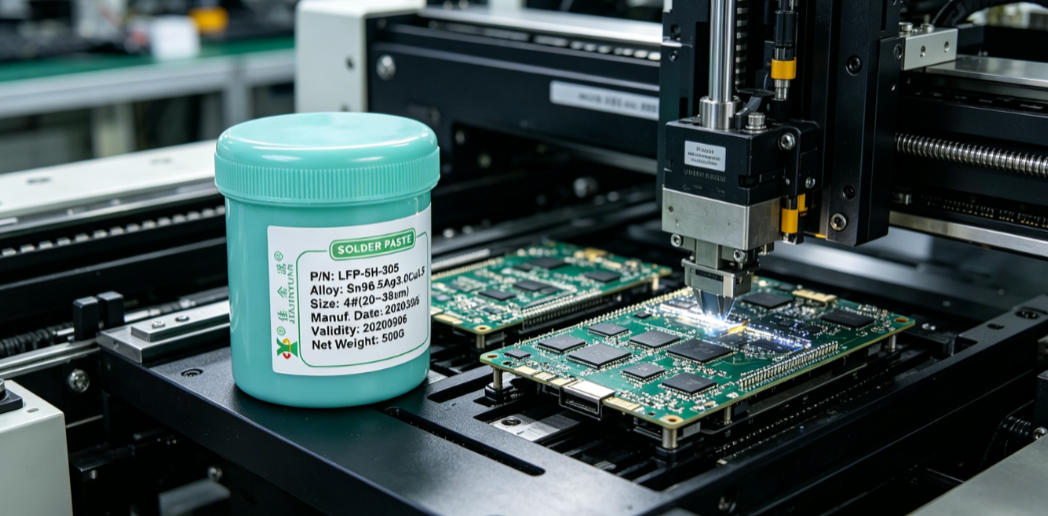
In the double-sided mounting process, the solder paste soldering reliability of the second reflow pass is highly dependent on printing accuracy, reflow profile matching, and component heat capacity coordination. Based on measured data from mass production lines, this paper explicitly specifies key parameters including a stencil thickness of 0.12mm, a squeegee pressure of 2.8kg, and a reflow peak temperature of 235℃±2℃, and points out that the risk of re-melting of already soldered components on the A side during the B-side reflow pass is concentrated on resistors and capacitors below 0603 and the bottom pads of QFN packages.
Published: 2026-08-27
Reflow profile adjustment during SMT soldering with halogen-free solder paste is a core factor affecting solder joint reliability and defect rates. Based on 20 years of practical production line experience, this paper directly addresses common high-frequency issues such as solder balls, tombstoning, and poor wetting. Focusing on four key variables—heating rate, soaking time, peak temperature, and cooling rate—it provides immediately actionable parameter fine-tuning solutions and error-prevention guidelines.
Published: 2026-08-27
Sn63Pb37 leaded solder paste remains irreplaceable in high-reliability fields such as automotive electronics and industrial control due to its eutectic properties and compatibility with mature processes. Its reflow process parameters are evolving toward narrower windows, higher consistency, and stronger equipment coordination. The driving factors include the domestic reflow soldering temperature control accuracy being improved to ±1.5℃, the Tg value of PCB boards generally rising above 150℃, and the proportion of 0201 and smaller package devices exceeding 38%. Practitioners need to simultaneously upgrade the calibration frequency of reflow profilers, refine the compensation rules for stencil apertures, and establish a batch-specific mapping table between solder paste viscosity and printing speed.
Published: 2026-08-27
Through-hole reflow soldering is shifting from an experimental process to mass production applications, with stencil design and solder paste selection becoming key bottlenecks that determine first-pass yield. The industry is currently facing common issues such as poor coplanarity of through-hole component pins, insufficient solder paste filling, and high void rates after reflow, while practical solutions including high-viscosity solder paste, stepped stencils, and double-sided printing are being rapidly implemented.
Published: 2026-08-27
Nitrogen reflow soldering significantly reduces void rate and improves solder joint wettability and reliability by precisely controlling the dew point inside the oven and the oxygen content of the solder paste. It is especially suitable for mass production soldering of high-density fine-pitch devices such as 01005, QFN, and BGA. Measured data shows that under conditions of -40℃ dew point and 100ppm oxygen content, the void rate of BGA solder joints can be stably controlled within 5%.
Published: 2026-08-27Our technical team is always ready to provide professional solder material selection advice and SMT process solutions.