SMT Solder Paste Manufacturers.

Focused on SMT soldering processes, a one-stop electronic soldering solutions provider.

Here you can find knowledge about Soldering Material, including but not limited to usage methods, installation techniques, troubleshooting and more. Focused on SMT soldering processes. If you can't find what you need, please contact us anytime.

01005 components are gaining rapid adoption in high-density PCB assembly, and solder paste printing precision has become a yield bottleneck. The industry is addressing this challenge through stencil aperture optimization, closed-loop control of squeegee pressure, and hierarchical management of solder paste rheological properties, while production lines need to simultaneously upgrade AOI recognition algorithms and operators' microscope re-inspection capabilities.
Published: 2026-08-27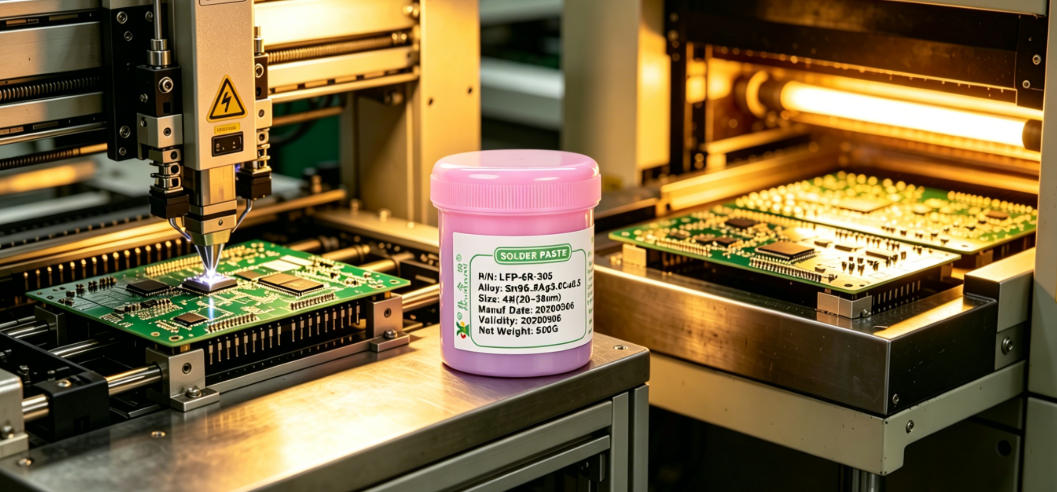
Reflow profile adjustment during SMT soldering with halogen-free solder paste is a core factor affecting solder joint reliability and defect rates. Based on 20 years of practical production line experience, this paper directly addresses common high-frequency issues such as solder balls, tombstoning, and poor wetting. Focusing on four key variables—heating rate, soaking time, peak temperature, and cooling rate—it provides immediately actionable parameter fine-tuning solutions and error-prevention guidelines.
Published: 2026-08-27
The sharp surge in dross generation during wave soldering solder bar replacement has become a high-frequency pain point on production lines. The industry is shifting from experience-based judgment to data-driven solder pot management, systematically reducing dross by optimizing the solder bar addition rhythm, controlling molten oxygen content, and upgrading the dross scraping frequency logic. This not only reduces material loss rates and downtime frequency, but also forces enterprises to restructure the daily maintenance SOP for soldering pots, with frontline process engineers required to master the synergistic relationship between the trend of solder viscosity changes and the critical point of flux carbonization.
Published: 2026-08-27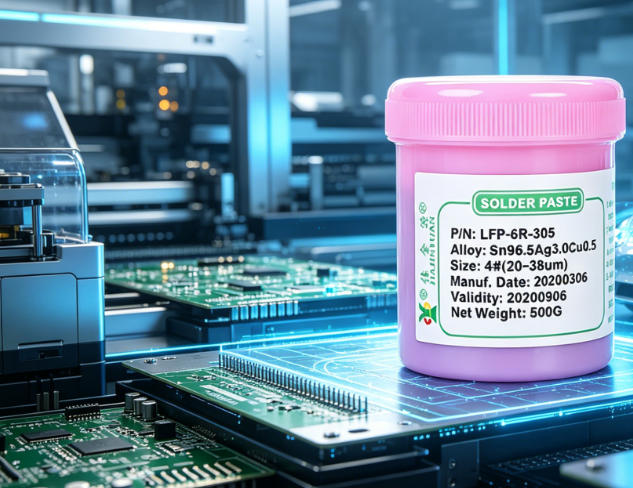
Through-hole reflow soldering is shifting from an experimental process to mass production applications, with stencil design and solder paste selection becoming key bottlenecks that determine first-pass yield. The industry is currently facing common issues such as poor coplanarity of through-hole component pins, insufficient solder paste filling, and high void rates after reflow, while practical solutions including high-viscosity solder paste, stepped stencils, and double-sided printing are being rapidly implemented.
Published: 2026-08-27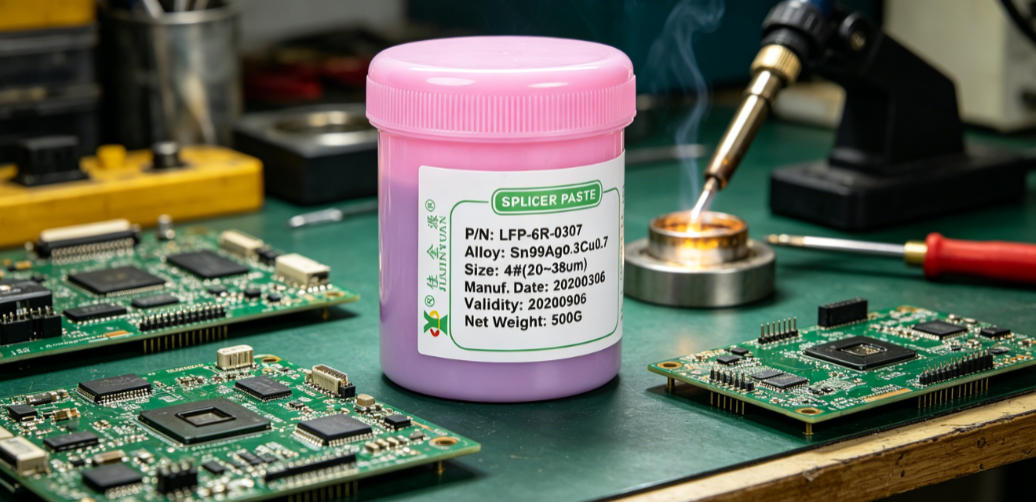
Abnormal solder paste viscosity during SMT soldering of fine-pitch chips can lead to typical defects such as solder bridging, insufficient solder, and misalignment. Based on real production line fault scenarios, this paper analyzes the causal chain between solder paste viscosity fluctuations and mismatched stencil printing parameters, and provides emergency and fundamental solutions including fine-tuning of squeegee pressure, environmental temperature and humidity control, and standardization of solder paste warm-up and stirring.
Published: 2026-08-27
In BGA reballing and soldering, the amount of solder paste used and the temperature process directly affect solder ball formation rate and solder joint reliability. Based on 20 years of production line experience, this article systematically outlines 12 key control points, covering solder paste selection, stencil aperture design, printing parameter matching, reflow profile zone setting, and common defect attribution. All recommendations are verified through real mass production.
Published: 2026-08-27
Nitrogen reflow soldering significantly reduces void rate and improves solder joint wettability and reliability by precisely controlling the dew point inside the oven and the oxygen content of the solder paste. It is especially suitable for mass production soldering of high-density fine-pitch devices such as 01005, QFN, and BGA. Measured data shows that under conditions of -40℃ dew point and 100ppm oxygen content, the void rate of BGA solder joints can be stably controlled within 5%.
Published: 2026-08-27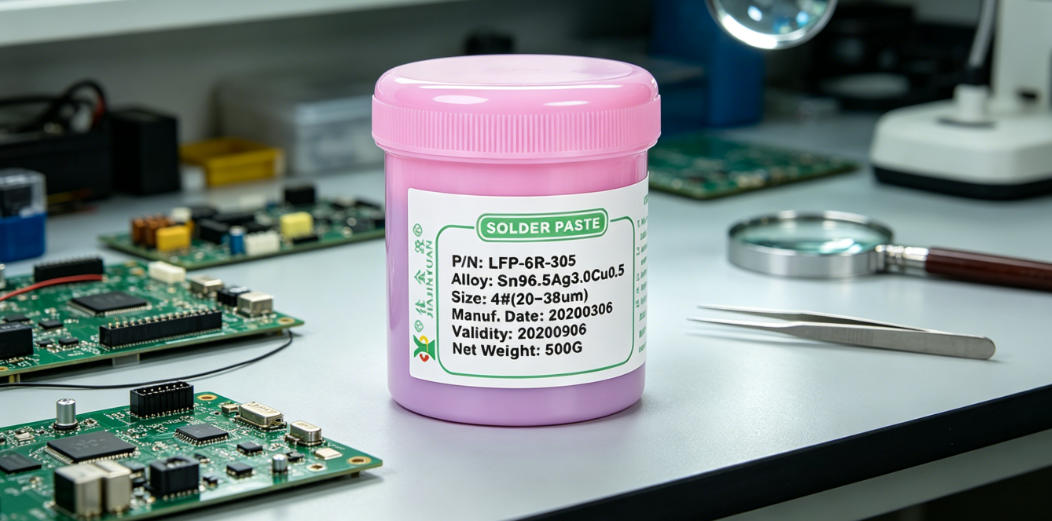
The soldering quality of QFN is highly dependent on the coordinated control of SMT stencil aperture design and reflow process parameters. IPC-7525B explicitly requires that the pad aperture area ratio be no less than 0.66, and the optimal range in actual production lines is 0.72~0.78. A ratio below 0.62 will cause the cold solder joint rate to rise sharply by more than 12%. If the reflow peak temperature deviates from the 260℃±5℃ range specified in JEDEC J-STD-020, the void rate of QFN bottom solder joints may exceed the Level 3 limit of 25% stipulated in IPC-A-610E.
Published: 2026-08-27
The selection of wave soldering bars requires comprehensive consideration of core parameters such as melting point, oxidation resistance, and copper corrosion rate. The typical Sn63/Pb37 solder bar has a melting point of 183°C, while that of Sn99.3/Cu0.7 is 227°C. The key to solder dross treatment lies in controlling the thickness of the liquid surface oxide film and the angle of the scraper. It is recommended to set the inclination angle of the scraper between 5° and 8°, and cooperate with mechanical scraping every 4 hours and nitrogen protection.
Published: 2026-08-27
Manual SMT rework soldering must precisely match solder wire diameter, soldering iron power, and actual soldering temperature; otherwise, cold solder joints, pad peeling, or thermal damage to components are highly likely to occur. Based on high-frequency production line fault cases, this paper compares the differences in temperature response curves, wetting speed, and solder joint morphology between 0.3mm and 0.5mm solder wires in typical scenarios such as QFN16, 0402 resistors, and shield can three-point grounding. It clearly points out that 0.3mm solder wire paired with a 35W soldering iron at 280℃ is more suitable for precision component rework soldering, while 0.5mm solder wire requires a soldering iron of 50W or above set at 320℃ to ensure the heat conduction efficiency of large pads.
Published: 2026-08-27Our technical team is always ready to provide professional solder material selection advice and SMT process solutions.