SMT Solder Paste Manufacturers.

Focused on SMT soldering processes, a one-stop electronic soldering solutions provider.

Here you can find knowledge about Solder Procurement, including but not limited to usage methods, installation techniques, troubleshooting and more. Focused on SMT soldering processes. If you can't find what you need, please contact us anytime.
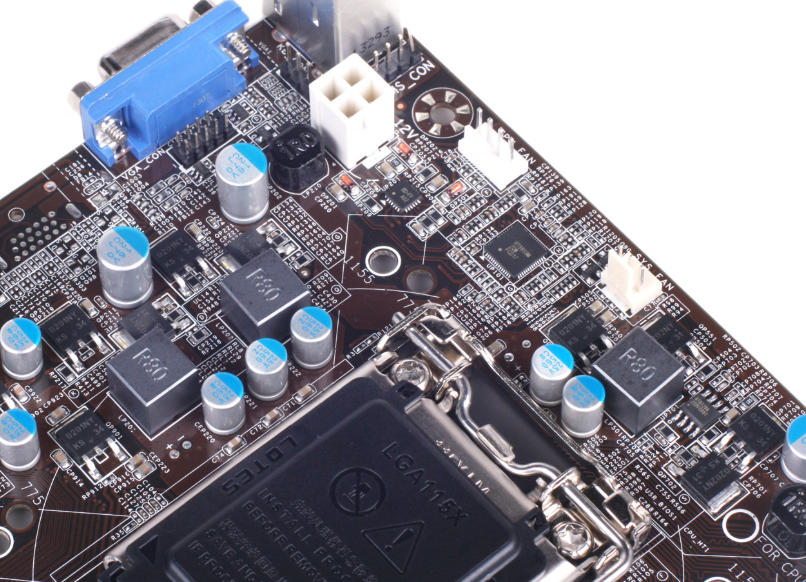
Wave soldering bar selection must closely align with actual production line performance. Sn99.3Cu0.7 solder bars are low-cost with acceptable oxidation resistance, but have weak wetting force. Silver-containing alloys improve fluidity and solder joint strength, but significantly increase costs. The differences between the two are particularly prominent in high-temperature continuous operation, fine-pitch through-hole soldering, and lead-free compatibility. Engineers must comprehensively determine the applicable boundaries of SnCu solders based on board thickness, component density, and rework rate.
Published: 2016-10-30When manually soldering wiring harness terminals, using large-size solder wire of 1.6mm or above with a soldering iron temperature of 350℃±10℃ can achieve full-formed solder joints at one time without cold soldering, sharp tips or dry joints, significantly improving the electrical connection reliability of the wiring harness under vibration conditions. This process has been batch verified on multiple new energy vehicle high-voltage wiring harness production lines of JJY.
Published: 2016-10-29Continuous oxidation on the surface of molten solder during wave soldering is the main cause of solder dross formation. High temperatures, air exposure, flux residues, and agitation of the solder bath collectively accelerate the rupture and agglomeration of the oxide film, leading to increased solder dross volume, higher solder consumption, and more frequent equipment maintenance. Field measurements on Jia Jinyuan production lines show that when the increase in solder dross per shift exceeds 1.2kg, solder costs rise by 8.6% year-on-year. Timely oxygen control and solder surface cleaning can reduce solder dross generation by more than 35%.
Published: 2016-09-07Adjusting solder paste process parameters under a nitrogen reflow environment can significantly reduce the solder paste void rate. It is necessary to simultaneously optimize the heating slope, peak temperature and atmospheric oxygen content of reflow soldering, and combine stencil aperture design with squeegee pressure to control printing accuracy, so as to avoid cold solder joints and poor wetting caused by uneven nitrogen displacement or hindered flux volatilization.
Published: 2016-08-11High tensile strength of connector solder joints directly improves the reliability of the whole machine. Jiajinyuan connector solder, by optimizing the ratio of tin-silver-copper and active flux components, achieves an average tensile strength ≥8.2N at a conventional reflow peak temperature of 235℃, with no solder joint detachment, no cold solder joint, and no solder joint cracks after 100 insertion and removal cycles. It is especially suitable for industrial control and automotive electronics production lines under high-frequency vibration conditions.
Published: 2016-08-02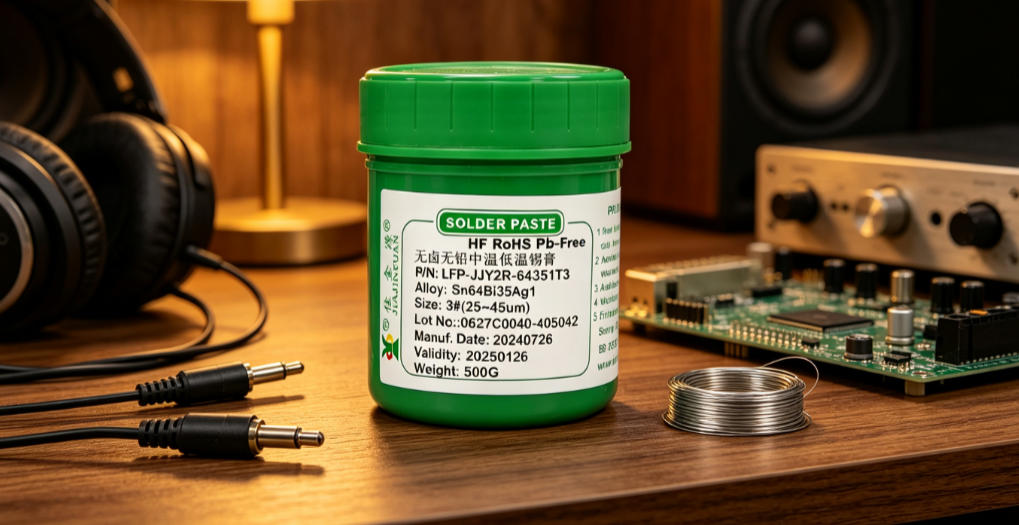
The poor wettability of lead-free solder paste requires simultaneous examination of both material and process pathways. The activity of the flux, metal content, and particle distribution in the solder paste directly affect its wetting and spreading ability, while process variables such as printing parameters, reflow profile, and PCB surface condition cannot be ignored. In actual production lines, approximately 68% of wetting defects are jointly caused by improper stencil aperture design and low reflow peak temperature.
Published: 2016-07-19AOI inspection after SMT reflow soldering can efficiently identify appearance soldering defects such as solder joint bridging, tombstoning, solder beads, and misalignment, greatly reducing the missed inspection rate of manual visual inspection. With a pixel accuracy of 0.015mm and the capability of multi-angle light source switching, Jia Jinyuan's AOI inspection equipment stably controls the false alarm rate within 1.2% for solder joint judgment of components below 0603.
Published: 2016-07-14To address the issue of solder joint cracking caused by concentrated thermal stress in energy storage new energy electronic control boards during frequent charge-discharge cycles, solder paste with high ductility, low elastic modulus, and excellent thermal cycle life must be selected. New energy solder paste must pass thermal shock verification at -40℃ to 125℃ for more than 1000 cycles, while reliability solder paste emphasizes the uniformity of the IMC layer and the stability of the Cu6Sn5 phase. The metal content, particle size distribution, and flux residue ion concentration of the solder paste jointly determine its long-term thermal fatigue resistance.
Published: 2016-07-02Soldering of 01005 components is highly sensitive to solder paste particle size and rheological properties. T6 ultra-fine solder paste (particle size 2~5μm) can significantly reduce the defect rates of solder balls and solder bridges. When its thixotropic index is controlled within the range of 0.75~0.85, it can still maintain clear edges and complete demolding under 0.1mm stencil apertures. Combined with fine-tuning of the printing parameters of Jiajinyuan J-603B solder paste, the measured solder bridge occurrence rate is reduced from 1200ppm to 86ppm.
Published: 2016-06-06The pricing method and process for solder paste and solder dross recycling are directly related to m
Published: 2016-05-18Our technical team is always ready to provide professional solder material selection advice and SMT process solutions.