SMT Solder Paste Manufacturers.

Focused on SMT soldering processes, a one-stop electronic soldering solutions provider.

Here you can find knowledge about Solder Bar, including but not limited to usage methods, installation techniques, troubleshooting and more. Focused on SMT soldering processes. If you can't find what you need, please contact us anytime.

In 2026, policy and regulation in the solder paste industry will become increasingly stringent, as environmental laws and regulations push enterprises to accelerate the R&D and promotion of halogen-free and low-VOCs products. As environmental requirements for electronics manufacturing continue to rise globally, solder paste enterprises face greater pressure in optimizing product formulations and upgrading production processes, while new opportunities for technological innovation and sustainable development are also brought to the industry.
Published: 2026-08-03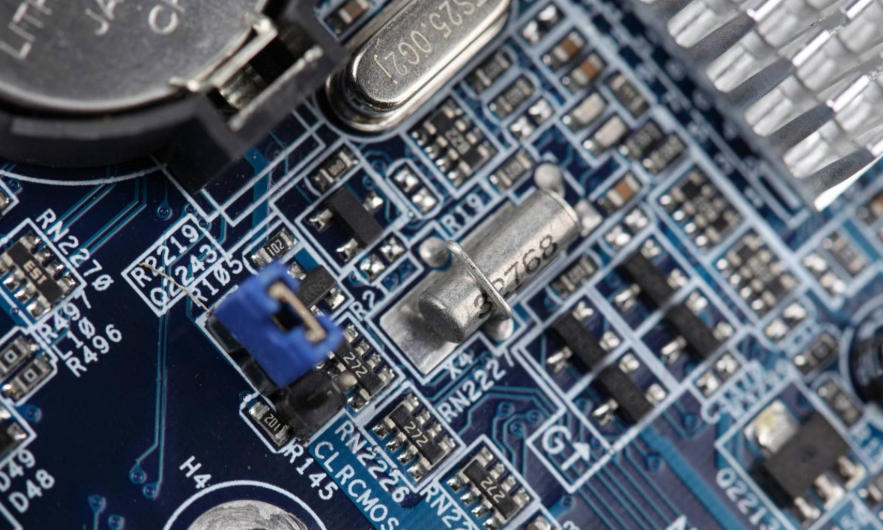
The SMT solder technical standards have achieved substantial collaborative progress in early 2026. IEC/TC91 and SJ/T 11827-2023 have completed alignment on key parameters, covering melting point range, residue ion content, and wettability testing methods. This has increased the mutual recognition rate of materials among the electronic manufacturing clusters in the Yangtze River Delta, Pearl River Delta, and Chengdu-Chongqing region to 76%, significantly reducing the process debugging cycle and incoming material inspection costs for cross-region contract manufacturers.
Published: 2026-07-15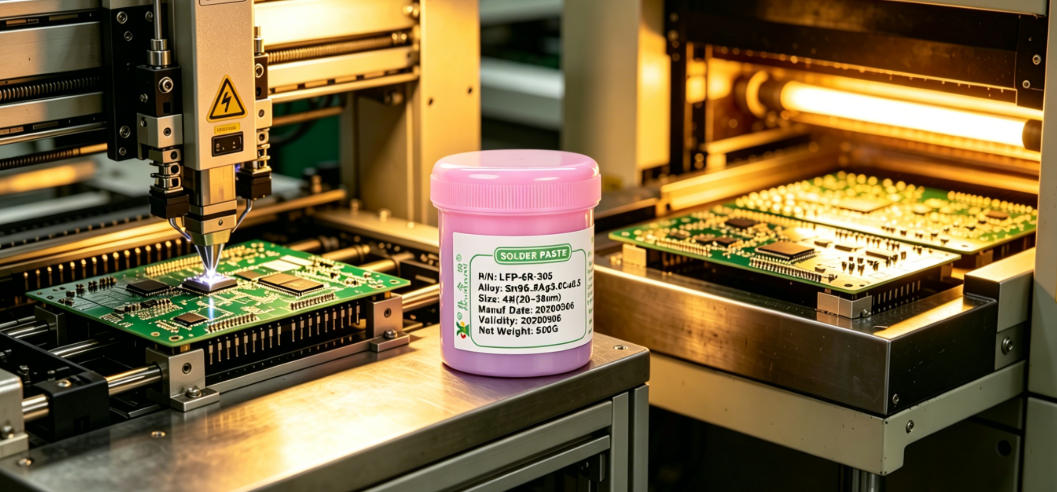
QFN soldering places extremely high demands on the activity, particle size distribution and metal content of solder paste. It is recommended to use Type 4 or Type 5 rosin-based no-clean solder paste with a metal content of 90.5±0.3%. In actual production lines, improper solder paste selection or mismatched printing parameters can easily lead to typical defects such as solder bridging, open soldering, tombstoning and bottom bridging.
Published: 2026-07-10Bridge is one of the most common and hardest-to-eliminate defects in fine-pitch IC soldering, manifesting as abnormal molten solder connection between adjacent pins that causes short circuits. Production line data from Jia Jinyuan shows that bridges account for over 67% in QFN0.4mm and BGA0.3mm packages, with the root causes concentrated in the combination of solder paste printing misalignment, improper stencil aperture design, and local overshoot of peak reflow soldering temperature.
Published: 2026-06-23
Solder technology iteration in SMT has accelerated significantly. Starting from January 2026, Senju Metal Industry, Shengmao Technology, Indium Corporation, and Loctite China have successively launched new SMT solder products featuring low void rate, high wettability, and halogen-free enhancement, covering packaging scenarios from 01005 to fine-pitch BGA. Some products have passed production line verification by leading EMS manufacturers and entered the small-batch introduction stage.
Published: 2026-06-22
From June 17 to 20, 2026, NEPCON Thailand 2026, hosted by Reed Exhibitions UK, grandly opened at Hall 100, BITEC Bangkok. As Southeast Asia’s most influential annual professional electronics manufactu
Published: 2026-06-18
As intelligent driving, in-vehicle infotainment systems, and electrified platforms accelerate their deployment, the demand for high-reliability SMT solder in automotive electronics has increased significantly. Starting from January 2026, multiple Tier1 suppliers have included lead-free high-silver solder in their AEC-Q200 certified bill of materials, and the application of SMT solder in automotive-grade PCBA is extending from traditional BCM modules to key components such as ADAS domain controllers, OBC, and BMS.
Published: 2026-06-17
The SMT solder industry is facing a dual shortage of skilled process engineers and on-site process technicians. In early 2026, several leading packaging enterprises and EMS foundries launched internal solder application capability certification programs, strengthening hands-on training in core processes such as solder paste printing and reflow profile optimization through joint training bases with universities and IPC standard courses, accelerating the transformation of SMT solder technical talent supply toward production line-adapted personnel.
Published: 2026-06-13
Driven by the accelerated iteration of consumer electronics, deepening domestic production of automotive electronics, and surging demand for multi-layer PCBs for AI servers, the 2026 SMT solder market will see structural growth. The shipment share of high-reliability lead-free solder, low-temperature solder, and silver-containing micro-alloyed products continues to rise. The overall industry demand scale will expand by about 12% compared with 2024, and the order backlog of leading material manufacturers has been extended to the third quarter of 2026.
Published: 2026-05-23
The "General Technical Specification for SMT Soldering Process" (GB/T 43287-2025), implemented on January 1, 2026, officially replaces the previous version of the standard. It adds 12 key technical indicators, including test methods for the thermal fatigue life of lead-free solders, requirements for the matching between stencil aperture and solder paste volume ratio, and dynamic deviation tolerance for reflow profiles. The batch consistency, wetting uniformity, and long-term reliability under high-temperature and high-humidity conditions of SMT solders have been systematically strengthened, providing a quantifiable basis for improving the manufacturing quality of PCBA in the consumer electronics, automotive electronics, and industrial control fields.
Published: 2026-05-18Our technical team is always ready to provide professional solder material selection advice and SMT process solutions.